Counting the dead has become a bureaucratic habit. We look at the charts, track the border funding, and read the press releases. Then we look away.
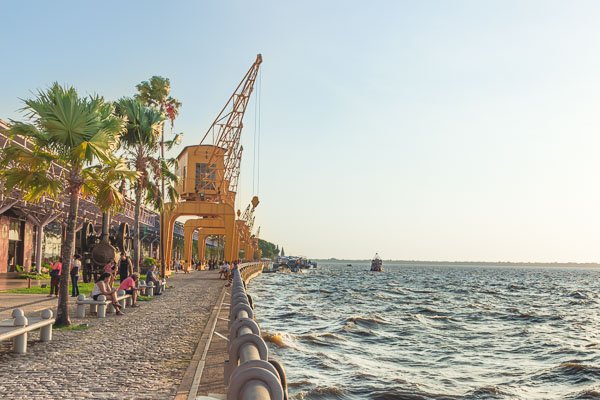
But standing on the concrete of Arguineguin port in the Canary Islands, you can't look away. This spot on Gran Canaria was nicknamed the "dock of shame" back in 2020 when thousands of exhausted human beings were left sleeping in the open under makeshift tarps. It became a permanent symbol of how European migration policy fractures under pressure.
Pope Leo XIV stood at that exact harbor on June 11, 2026, to break the comfortable silence of onlookers. He didn't offer the usual safe, diplomatic platitudes. Instead, standing before a simple blue cross built from the splintered wood of a shipwrecked migrant boat, he took aim at the collective apathy of wealthy nations.
"Human dignity has no passport," Leo told the crowd, which included Spanish Prime Minister Pedro Sánchez. "It does not lose its value when crossing a border."
The visit cuts to the heart of an ongoing humanitarian emergency that the world keeps trying to sweep under the rug. The Atlantic route to this Spanish archipelago is brutal, quiet, and exceptionally lethal. By traveling to this specific outpost, the leader of the Catholic Church forced a polarized continent to look at the human faces behind the messy political data.
The Lethal Reality of the Atlantic Route
Most global headlines focus heavily on the Mediterranean crossing to Italy or Greece. That's a mistake. The Atlantic route from West Africa to the Canary Islands is longer, wilder, and far more hazardous.
Migrants pack into overcrowded, open wooden boats called cayucos. They leave from coastlines in Mauritania, Senegal, The Gambia, or even further south in Guinea-Bissau. They face the unpredictable, crushing currents of the open Atlantic Ocean. If a boat misses the islands entirely due to a navigation error or engine failure, it drifts out into the empty ocean. It becomes a floating coffin.
Look at the numbers to understand the scale of what's happening. The Canary Islands saw an unprecedented spike in 2024, with a record 46,843 irregular arrivals. To understand how much pressure that places on local infrastructure, look at El Hierro. It's one of the smallest, most remote islands in the chain. In 2024, El Hierro received an influx of migrants that totaled roughly double its native population of 11,000 people.
Canary Islands Irregular Migration Trajectory:
2015: Fewer than 1,000 arrivals
2024: 46,843 arrivals (Historic peak)
2025: 17,788 arrivals (60% drop via border deals)
The drop to 17,788 arrivals in 2025 shows that aggressive bilateral border deals with transit states like Mauritania can suppress the numbers. But externalizing borders doesn't solve the desperation. It just pushes the departure points further down the African coast. That extension adds days to an already grueling sea journey. The non-governmental organization Caminando Fronteras documented that more than 3,000 people died in 2025 alone trying to make it to the Canaries. Since 2020, the death toll on this route exceeds 19,000 lives.
Beyond Border Statistics and Political Rhetoric
The core problem with current international migration management is its focus on logistics over humanity. Pope Leo argued that it isn't enough to manage arrivals, trade statistics, or build higher fences.
The political divide over migration in Spain and wider Europe is sharp. Right-wing factions demand total naval blockades. Meanwhile, local island communities are left to manage the immediate human fallout on their own. Local leaders like Jose Mazuelos, the bishop of the Canary Islands, have spent years begging for systemic European intervention. He noted that the papal visit was an attempt to transform a "pier of shame" into a "port of hope."
But hope requires structural change. True border policy must include the right not to migrate. People shouldn't be forced to flee their homes because of systemic corruption, proxy wars, or economic devastation that leaves families without bread. When survival at home becomes impossible, a border wall is just a temporary roadblock, not a real deterrent.
During the harbor ceremony, a statement was read from a Nigerian woman who couldn't attend due to severe security risks. Her story represents the ugly underbelly of human trafficking networks. She was brought to Spain by a criminal ring, assaulted during the journey, separated from her newborn child after giving birth, and forced into sex trafficking to pay off an artificial debt.
Her experience proves that migration isn't a simple theoretical policy debate for talk radio. It's a goldmine for transnational cartels that profit directly from human desperation.
What Actionable Sovereignty Looks Like Now
Fixing a systemic crisis requires moving past moral outrage. Governments and international bodies need to shift their approach immediately.
- Establish verifiable safe legal pathways: Criminal human smuggling networks thrive because legal options for seeking asylum or worker visas from West Africa are virtually non-existent. Providing clear, regulated centers for processing claims in origin countries collapses the market for illegal traffickers.
- Implement a fair European distribution mechanism: Island outposts like Lampedusa in Italy or El Hierro in Spain cannot act as permanent holding pens for mainland Europe. The European Union must enforce a functional, mandatory relocation framework that shares the responsibility of reception across all member states.
- Increase direct support for local civil networks: While politicians argue, local groups carry the actual weight. Organizations like Caritas have assisted over 22,000 migrants in the Las Palmas province alone since 2020. Funding should go directly to these frontline integration programs, language classes, and legal aid clinics.
- Audit international aid to transit nations: Financial agreements aimed at border enforcement with West African governments must include strict human rights clauses. We must ensure that funds are used for sustainable economic development rather than abusive containment operations.
The tragedy occurring off the coast of West Africa will continue as long as wealthy countries treat migration as a border security issue rather than a humanitarian reality. The Atlantic Ocean cannot remain an unmarked mass grave. True global leadership means building an international order where human dignity is recognized as an inherent trait, not a privilege granted by a passport stamp.