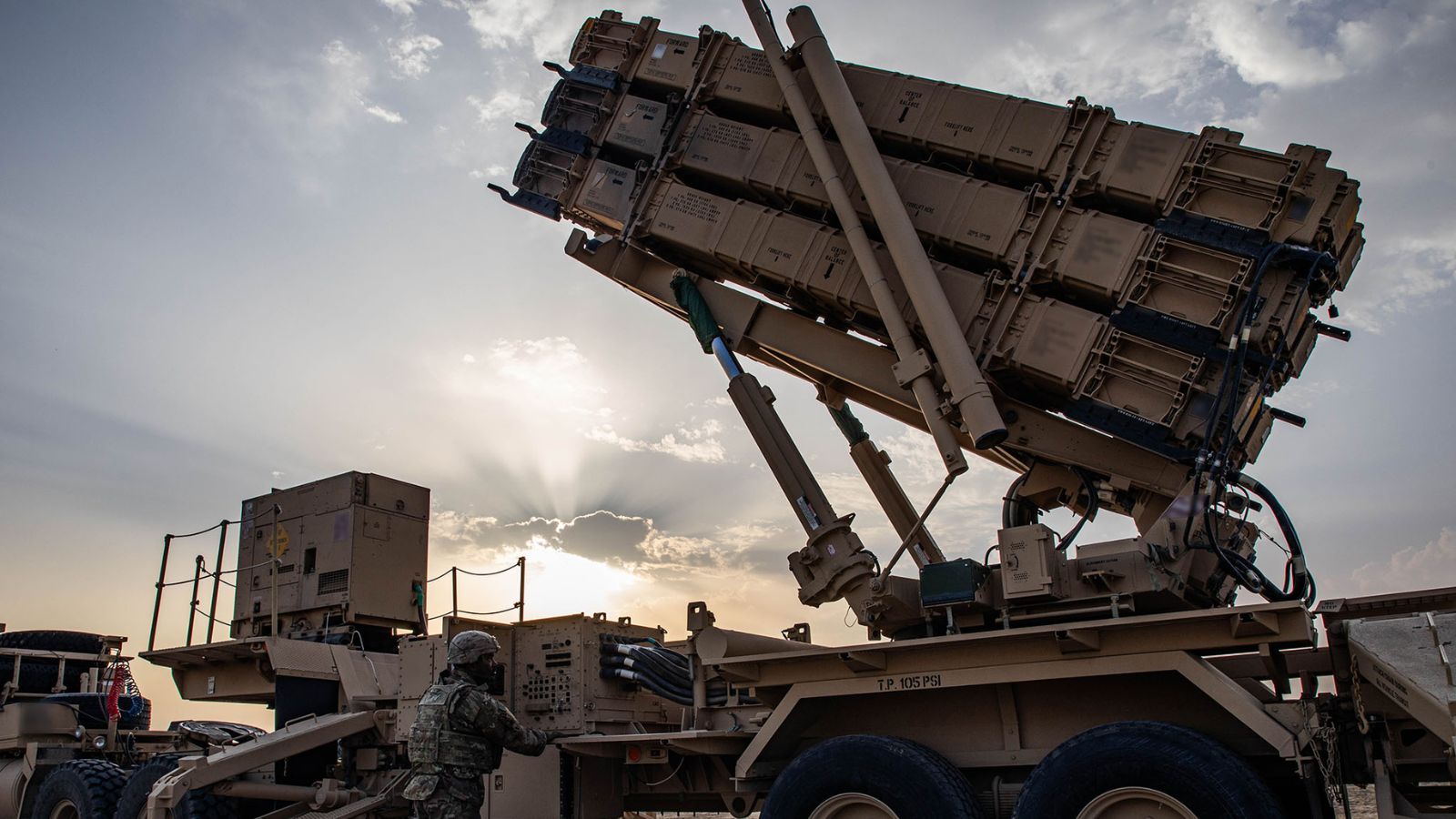
Strategic inventory depletion during sustained regional conflict exposes a fundamental structural vulnerability in modern defense economics: the velocity of consumption chronically outpaces the velocity of reconstitution. When major state actors engage in prolonged missile exchanges, the pressure shifts immediately from tactical battlefield execution to industrial capacity, supply chain bottlenecks, and the severe opportunity cost of modern interceptor production. Understanding this dynamic requires moving past generalized media narratives of empty arsenals and dissecting the exact economic, manufacturing, and operational mechanics that govern high-end ordnance reserves.
The Structural Drivers of Munition Depletion
Modern high-precision warfare relies on complex guidance systems, specialized rare-earth materials, and exacting tolerances that make rapid production scaling nearly impossible. Three primary vectors accelerate the drawdown of national missile inventories during active conflict:
- Defensive Interception Asymmetry: Defending against massed saturation attacks requires a high volume of expensive interceptors to neutralize incoming threats, which often cost a fraction of the defensive asset. This asymmetry creates an immediate financial and volumetric drain on static stockpiles.
- Offensive Strike Sustainment: Maintaining offensive pressure demands continuous deep-strike capabilities to suppress enemy launchers, command centers, and radar installations, steadily eroding the baseline reserve.
- Industrial Lead-Time Inelasticity: Tier-one munitions cannot be manufactured on commercial assembly lines. Specialized solid rocket motors, guidance chips, and warhead casings require certified suppliers, specialized testing facilities, and long-lead procurement cycles that span years rather than months.
Incoming Threat Volume ---> Defensive Saturation ---> Asymmetric Stockpile Drawdown
This structural reality means that active-combat consumption rates routinely exceed peacetime production rates by a factor of ten or more. When supply chains face raw material scarcity or single-source dependency for critical subcomponents, the entire system enters a state of structural deficit.
The Cost Function of Modern Interceptors
Evaluating the exhaustion of a nation's missile arsenal demands a rigorous look at the economics of precision strike and defense. Each missile represents a bundle of capital, labor, and technology that cannot be rapidly replicated.
The financial cost of a single interceptor often runs into millions of dollars. Beyond the raw unit cost, the opportunity cost dictates that every missile expended today is unavailable for potential theater contingencies elsewhere in the world. Defense planners operate under a strict threshold known as the War Reserve Material requirement. When active consumption breaches this threshold, military readiness metrics degrade sharply.
Manufacturing constraints compound this issue. Unlike conventional artillery shells, precision-guided munitions require microelectronics and optical sensors subject to strict quality control. A single bottleneck in the supply chain for thermal batteries or inertial measurement units halts final assembly across an entire production line. Consequently, throwing capital at the problem yields diminishing returns in the short term because factory footprints, skilled labor pools, and test-range availability cannot be expanded overnight.
Strategic Bottlenecks in the Industrial Base
The domestic defense industrial base operates on a lean manufacturing model designed for efficiency rather than surge capacity. Prime contractors maintain minimal active lines to optimize profit margins, relying on multi-year procurement contracts to justify capital expenditure.
This lean approach creates vulnerability when demand spikes unpredictably. Expanding capacity requires constructing new facilities, acquiring specialized environmental testing chambers, and navigating regulatory hurdles for hazardous material handling.
- Workforce Constraints: Highly skilled aerospace technicians and ordnance engineers require years of specialized training, making labor pools inelastic during rapid expansion phases.
- Subtier Supplier Vulnerability: Tier-two and tier-three suppliers often consist of single-source small businesses that lack the capital reserves to invest in surge infrastructure without long-term government guarantees.
- Raw Material Dependencies: Advanced propellants and guidance systems depend on specialized chemical inputs and strategic minerals, exposing production lines to geopolitical supply shocks.
Operational Adjustments and Alternative Mitigations
To manage inventory depletion without compromising strategic deterrence, defense planners must implement targeted operational adjustments. Relying exclusively on high-end, exquisite interceptors for every inbound threat is economically unsustainable.
Integrating lower-cost effectives, such as electronic warfare jamming, directed-energy solutions, and modified air-to-air missiles fired from surface launchers, relieves the pressure on primary strategic missile stocks. These alternatives preserve the most advanced tier of munitions for high-value targets where precision and standoff range are non-negotiable.
Concurrently, shifting procurement contracts toward multi-year batch buys provides suppliers with the financial predictability needed to invest in secondary production shifts and expanded tooling. Reforming the contracting process to incentivize surge readiness rather than pure cost minimization remains the single most effective lever for closing the gap between consumption velocity and industrial output.
Prioritize the diversification of subtier suppliers and mandate standardized component architectures across different military branches to streamline parts procurement. Institutionalizing these changes ensures that future industrial output scales linearly with operational demand rather than stalling at the first sign of sustained conflict.


