The rain in Hong Kong has a way of blurring the edges of the skyscrapers, turning the city’s concrete financial canyons into smudged charcoal drawings. Inside the High Court on a gray Monday morning, the air is different. It smells of old paper, damp wool, and the distinct, metallic tang of institutional panic.
courtrooms are usually stages for human drama—crimes of passion, broken promises, bitter divorces. But this room is hosting a post-mortem for a ghost.
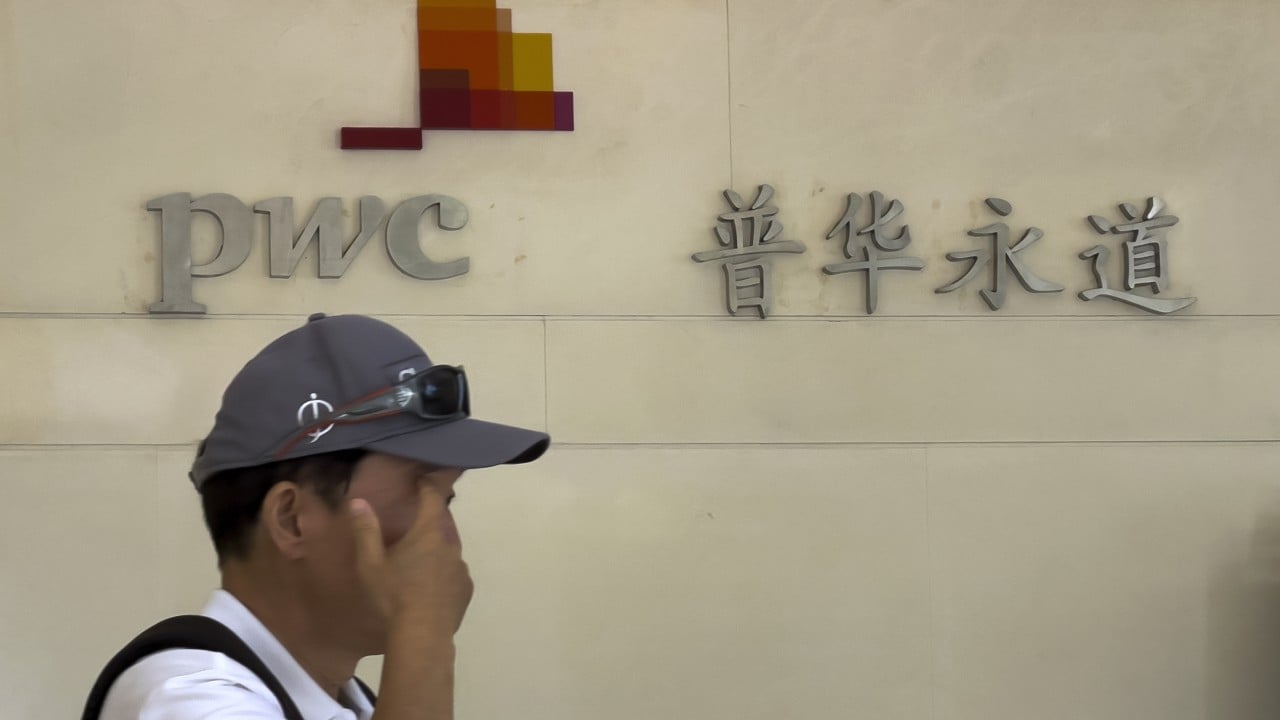
Evergrande, once a titan whose name was synonymous with the unstoppable rise of Chinese real estate, is dead. What remains is a carcass worth hundreds of billions of dollars in liabilities, a tangled web of angry creditors, and a team of court-appointed liquidators who have spent months digging through the wreckage. On this particular Monday, those liquidators aren't looking at the half-built concrete shells of apartment complexes gathering dust across mainland China. They are looking at the men and women in tailored suits representing PricewaterhouseCoopers.
This is not just a legal hearing. It is a reckoning for the invisible gatekeepers of global finance.
The Mirage of the Clean Bill of Health
To understand why a dry courtroom procedure matters to anyone outside of a corporate boardroom, you have to look past the spreadsheets. Think of a major global auditor as a lighthouse keeper. Investors, retirees, and ordinary citizens are captains of ships sailing through treacherous, fog-blanketed waters. They cannot see the jagged rocks of hidden debt or fraudulent accounting themselves. They rely entirely on that steady, blinking light to tell them the path is safe.
For over a decade, PwC kept the light green for Evergrande. Year after year, they signed off on the developer’s financial health, slapping a pristine rubber stamp of approval on balance sheets that were, in reality, ticking time bombs.
When the collapse finally came, it didn’t just hurt billionaires in Hong Kong or institutional funds in New York. It shattered lives. Consider a hypothetical but deeply representative figure: a retired schoolteacher in Guangzhou named Zhang Wei. For three decades, Zhang saved every spare yuan. He didn’t trust volatile stock markets. He trusted brick and mortar. He poured his life savings into a pre-sale Evergrande apartment, a home meant for his son’s future family.
Today, that apartment is an unfinished skeleton of rusted rebar. Zhang’s savings are gone. When he asks how this happened, the answer points directly back to the sterile courtrooms of Hong Kong. He believed the building would be finished because he believed the company was stable. He believed the company was stable because the world’s most prestigious accounting firm said it was.
Now, the liquidators are asking a simple, devastating question: How much did the lighthouse keeper see before the ship hit the rocks?
The Anatomy of an Oversight
The legal battle centered in the Hong Kong High Court is a massive blame-shifting exercise, but the core mechanics are simple. Liquidators act as corporate detectives. Their job is to salvage whatever cash is left to pay back the people who are owed money. When a company is as profoundly hollowed out as Evergrande, there is very little cash left in the bank accounts.
So, you look for the people who were supposed to prevent the disaster. You look at the auditors.
The lawsuit alleges that PwC failed in its fundamental duty. In the world of high finance, auditing isn't just about adding up columns of numbers. It is about professional skepticism. It requires kicking the tires, pulling at loose threads, and demanding proof when a company claims it has billions in revenue. The liquidators argue that if PwC had done its job properly, the alarm bells would have rung years earlier. The bleeding could have been stopped. Fewer life savings would have been incinerated.
Defenders of the auditing profession often point to a concept known as the expectation gap. This is the structural divide between what the public thinks an auditor does and what an auditor actually does. The industry argues that an audit is not a forensic investigation designed to uncover deep-seated, systemic fraud; it is merely a assessment of whether the financial statements fairly represent the company’s position based on the information provided.
But that argument feels incredibly hollow when the scale of the failure is this vast. If a doctor looks at a patient with terminal, systemic illness and pronounces them completely healthy year after year, "expectation gap" sounds less like a professional limitation and more like an excuse.
The Quiet Crisis of Faith
The atmosphere in the corporate world right now is thick with tension because everyone knows Evergrande is not an isolated incident. It is the symptom of a deeper, systemic rot.
For years, the Big Four auditing firms—PwC, Deloitte, EY, and KPMG—have operated under a fundamental conflict of interest. They are paid by the very companies they are supposed to investigate. If an auditor gets too tough, demands too many documents, or threatens to withhold a clean opinion, the client can simply take their multi-million-dollar fees to a competitor. It is a system built on a fragile foundation of honor, and when the numbers get large enough, honor tends to lose.
The real tragedy of the Evergrande collapse is the erosion of trust. Trust is the invisible currency that makes modern society function. We eat food from the grocery store trusting it isn't poisoned. We cross bridges trusting the engineers calculated the load correctly. We put our money into banks and pension funds trusting that the numbers on the screen correspond to reality.
When that trust is broken at the highest level, the entire structure begins to wobble.
The legal maneuvering in Hong Kong is bound to be a long, drawn-out affair. There will be mountains of motions, endless debates over technical accounting standards, and legions of lawyers billing by the hour. PwC will defend its processes. The liquidators will push for a massive settlement to recoup losses.
But as the arguments echo through the high-ceilinged courtroom, the true cost of the disaster remains outside, scattered across hundreds of half-built high-rises and broken households. The law can distribute blame, and occasionally it can even distribute money. What it cannot do is rebuild the faith of millions of people who realized, too late, that the lighthouse keeper had fallen asleep at the wheel.
The rain outside the courthouse shows no signs of stopping. Inside, the lawyers turn to the next page of their briefs, and the cold machinery of global finance grinds on, entirely indifferent to the wreckage left in its wake.