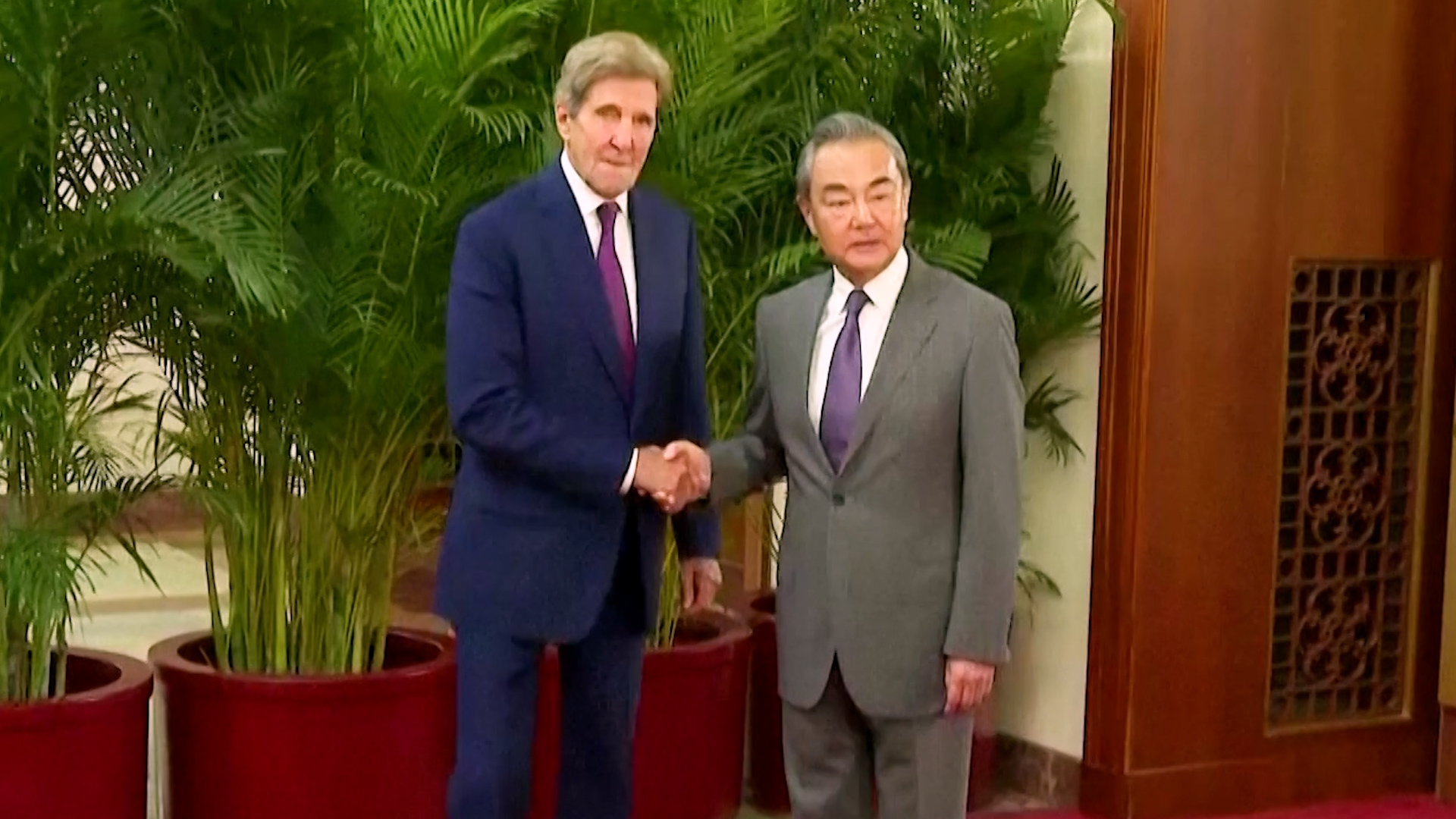
The diplomatic circuit loves a good photo op. A handshake in Beijing, a press release about "stabilizing ties," and a vague nod toward energy security. It makes for great headlines. It also hides the fact that the entire premise of these talks is built on a fundamental misunderstanding of how the global power grid actually works.
When Australia’s top diplomat lands in China to talk energy, the media treats it like a chess move. In reality, it’s a game of checkers played against a computer. The "lazy consensus" suggests that Australia is the lucky country, sitting on a pile of rocks and sun that China desperately needs to fuel its industrial machine. This view is dangerously outdated. It assumes the 2026 energy market looks like the 2006 coal market. It doesn't.
The Decoupling Myth
The standard narrative claims that "energy security" is something you negotiate over tea. That’s a fantasy. Security in the modern era isn't about signing a supply contract; it’s about who owns the intellectual property of the transition.
I have spent years watching boardrooms bleed capital because they mistake "resource wealth" for "market power." Australia exports iron ore, coal, and gas. China exports the solar panels, the wind turbines, and the lithium-ion batteries required to move away from those very commodities.
When we talk about "cooperation" on energy, we are ignoring the structural imbalance. Australia is effectively selling the flour to a baker and then asking for a seat at the table to discuss the price of bread. China has already vertically integrated the green supply chain. They don't need our "security" talks; they need our raw materials at the lowest possible price until their own domestic alternatives—like thorium reactors or deep-sea mining—render the Australian supply chain an expensive relic.
The Lithium Fallacy
Let’s look at the "critical minerals" obsession. The diplomatic talking points always lean on lithium. The logic? China needs our lithium to dominate the EV market.
Here is the truth: Lithium is not oil.
When you run out of oil, your car stops. When you have a lithium battery, you have an asset that can be recycled. We are approaching a point where the circular economy of battery metals will start to cannibalize the demand for virgin ore. By the time Australia builds out its high-cost extraction infrastructure, the "scarcity" that justifies our diplomatic leverage will have evaporated.
I’ve seen junior miners burn through hundreds of millions based on the assumption that China will always be a desperate buyer. They won't. China is currently investing in massive lithium projects across Africa and South America where environmental regulations are... flexible. They are diversifying away from us while we are doubling down on them. That isn't diplomacy. It’s a bad trade.
Hydrogen is a Distraction
The most egregious part of these high-level visits is the inevitable mention of the "Hydrogen Superpower" dream. It’s the ultimate buzzword for politicians who want to sound tech-literate without understanding basic physics.
To export green hydrogen from Australia to China, you have to:
- Use massive amounts of renewable energy to split water.
- Compress or liquify that hydrogen at immense energy cost.
- Ship it across an ocean.
- Convert it back into usable power.
The Round Trip Efficiency (RTE) is a joke. You lose roughly 60% to 70% of the energy in the process.
$$Energy_{out} = \eta_{electrolysis} \times \eta_{compression} \times \eta_{transport} \times \eta_{fuel_cell}$$
If you run the numbers, it is almost always cheaper to generate power locally or move the industry to where the energy is. China knows this. They aren't looking to Australia for hydrogen; they are looking to Australia to buy the electrolyzers they manufacture. We aren't the Saudi Arabia of the south; we are just a high-cost laboratory for Chinese hardware.
The Geopolitical Blind Spot
Diplomats talk about "energy security" as if it exists in a vacuum. It doesn’t. It’s a subset of national security.
Every ton of coal or m3 of gas we send to China fuels the industrial base of a strategic rival. At the same time, we rely on that same rival for the components of our own energy transition. We are in a circular dependency that leaves Australia with all the environmental risk and none of the high-value manufacturing.
If we were serious about energy security, the diplomat wouldn't be in Beijing talking about export volumes. They would be in Washington or Tokyo or Brussels, coordinating a massive, state-backed manufacturing base to break the monopoly on photovoltaic wafers and permanent magnets.
Stop Asking for Permission to Prosper
The "People Also Ask" sections of the internet are filled with queries like "How can Australia balance its relationship with China?"
The question is wrong. You don't "balance" a relationship where one side owns the factory and the other side owns the dirt. You pivot.
The real contrarian move isn't to fix the diplomatic rift; it’s to make the rift irrelevant.
- Onshore processing: Stop shipping dirt. If we don't process lithium into battery-grade chemicals on our own soil, we shouldn't dig it up.
- Nuclear realism: If we want "energy security," we need baseload power that doesn't rely on a 5,000-mile supply chain for solar glass.
- Strategic Stockpiling: Instead of worrying about China’s energy needs, we should be worried about our own 20-day liquid fuel reserve.
The Hard Truth
Diplomatic visits are theater. They provide a sense of stability that keeps the markets quiet for a fiscal quarter. But beneath the surface, the tectonic plates are shifting.
China is moving toward a post-commodity economy. They are building a world where energy is generated by technology, not extracted from the ground. Australia is still acting like the world’s quarry, hoping that if we are polite enough, the quarry will never run dry.
We are currently witnessing the sunset of the resource-export model. Every minute spent "talking energy" with a country that is actively trying to replace your exports with their own tech is a minute wasted.
The diplomat isn't there to secure our future. They are there to oversee the managed decline of an obsolete business model. If you want true energy security, stop looking for it in a Beijing boardroom. It isn't there. It never was.
The era of the "Lucky Country" is over; the era of the "Smart Country" hasn't started yet because we are too busy checking the price of iron ore.
Stop talking. Start building.