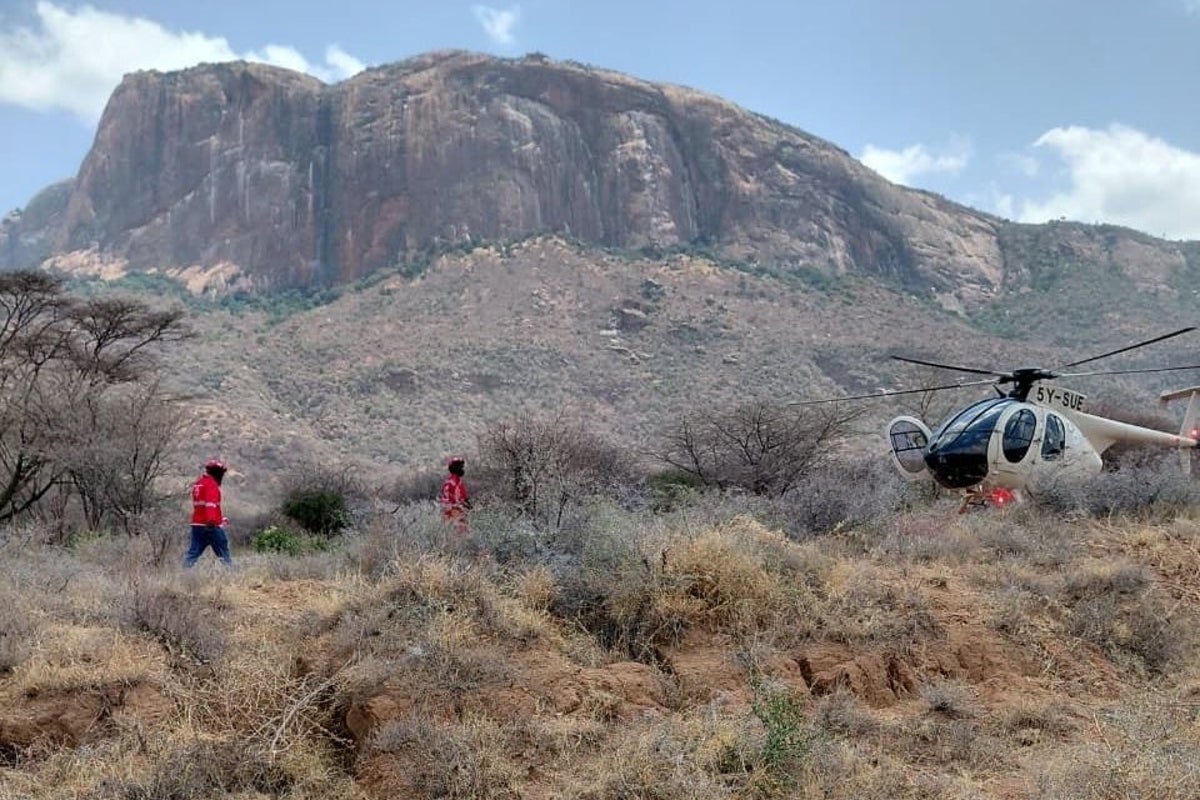
The recent loss of seven lives, including five American citizens, in a Eurocopter EC130 B4 crash near Mount Ololokwe, Kenya, exposes the structural vulnerabilities inherent in the high-end safari tourism sector. When aircraft operate in remote, topographically complex regions to service luxury demand, safety is no longer merely a regulatory requirement; it becomes a function of operational discipline, environmental variables, and the inherent limitations of rotorcraft performance.
The Operational Architecture of Remote Aviation
The flight path from Loisaba Conservancy to the Ewaso Nyiro River region represents a common transit route for high-net-worth tourism. In regions like Samburu County, the primary risk factors are not limited to mechanical failure but are compounded by the environmental profile of the operational environment.
- Topographic Complexity: Northern Kenya is characterized by dramatic elevation changes. Mount Ololokwe, a flat-topped monolith rising abruptly from the surrounding plains, creates localized microclimates and unpredictable downdrafts. Rotorcraft performance—specifically the power required to hover or maneuver near high-terrain features—diminishes significantly as air density changes with temperature and altitude.
- Infrastructure Deficits: Remote operations often lack real-time meteorological data and precision navigation aids. Pilots must rely on visual flight rules (VFR) in areas where "rugged terrain" makes emergency autorotation or forced landing profiles dangerous.
- The Charter Model: Luxury travel companies often function as intermediaries, contracting local operators like Lady Lori Helicopters. This disconnect between the brand promise of a luxury experience and the underlying aviation logistics creates a separation of safety oversight. The safari provider manages the guest experience; the aviation operator manages the flight risk.
Measuring Systemic Risk
The recurring nature of aviation incidents in Kenya’s tourism sector suggests that the current safety model is not scaling with industry growth. When the frequency of accidents increases, it indicates that the risk management frameworks are failing to account for three specific variables:
- Pilot Decision Fatigue: Maintaining a consistent schedule in remote environments imposes immense pressure on flight crews. High-demand tourism seasons compress flight hours, potentially limiting the buffer time required for maintenance or individual pilot recovery.
- The Eurocopter EC130 B4 Profile: The EC130 is a popular, reliable light-utility helicopter, yet its performance envelope is strictly dictated by weight and balance. In warm climates, "hot and high" conditions significantly reduce the machine’s payload capacity and rate of climb. If an operator underestimates the density altitude or exceeds load limits during a standard transit, the margin for error during a mechanical hiccup or a sudden shift in wind velocity vanishes.
- Regulatory Lag: Aviation authorities often struggle to enforce rigorous, site-specific safety audits in remote areas where oversight capacity is limited. Safety protocols frequently remain baseline-focused rather than risk-adaptive.
The Economic Cost of Operational Failure
The reputational impact of such an incident for a destination or a boutique safari operator is binary: they either absorb the loss and double down on safety, or they face an erosion of brand equity. For the aviation firms involved, the cost of an accident—measured in hull loss, insurance premiums, and litigation—far outweighs the margins of any single charter flight.
True safety in this context requires moving beyond compliance. It necessitates a shift toward predictive operational models. Operators must treat the flight not as a transit but as a mission-critical operation, requiring detailed flight-path risk analysis (FPRA) that considers the specific topographic features of Mount Ololokwe and current weather patterns as non-negotiable go/no-go criteria.
Strategic Action
Operators and travel entities must implement a mandatory multi-layered safety standard for all remote charter operations. This involves enforcing a rigid "weight-temperature" limit protocol that restricts passenger loads based on real-time ambient conditions, mandating satellite-based flight tracking with real-time telemetry to ground teams, and conducting independent safety audits of all third-party aviation contractors at least twice annually. Any operator failing to meet these forensic safety standards should be removed from the preferred vendor list, shifting the incentive structure from volume-based chartering to safety-verified operations.
This video provides visual context on the terrain and the scale of the emergency response operation following the crash.