The United States recently took the unprecedented step of utilizing regional backchannels to warn Tehran that Israel was actively planning to assassinate Iran's top diplomatic negotiators. According to disclosures first reported by The New York Times, senior American officials became deeply alarmed this spring that targeted operations against Iranian Foreign Minister Abbas Araghchi and Parliament Speaker Mohammad Bagher Ghalibaf would permanently shatter ongoing peace talks. This quiet intelligence sharing reveals a profound rift between Washington and its closest regional ally over the ultimate objectives of the recent conflict.
While the Trump administration pivoted toward securing an interim peace deal and reopening the critical transit lanes of the Strait of Hormuz, Israel maintained a strategy centered on the absolute decapitation of the Iranian state. The friction underscores a fundamental reality. Washington viewed the remaining pragmatic elements within Tehran as necessary partners for an exit strategy, while Israel viewed them merely as remaining targets on a hit list.
The Secret Flight to Mashhad
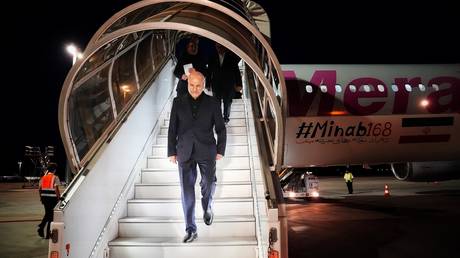
A stark demonstration of this friction occurred in mid-April. Following intensive diplomatic sessions in Islamabad with US Vice President JD Vance, Ghalibaf and his delegation boarded a flight back to Iran. They flew under the protection of Pakistani fighter jet escorts, an extraordinary measure requested by Tehran due to acute security fears.
The precautions were justified. Mid-flight, Iranian intelligence intercepted data indicating that two Israeli fighter jets had breached Iranian airspace from the Iraqi border with the intent to intercept the diplomatic aircraft.
The plane executed an emergency diversion to Mashhad in northeastern Iran. From there, the parliamentary speaker and his team were forced to complete an arduous eight-hour overland journey by vehicle to reach the capital.
The near-miss followed a pattern of narrow escapes for Ghalibaf, who had previously been extracted from the rubble of buildings struck by air operations during earlier phases of hostilities. This particular mid-air intercept, however, occurred well after an initial ceasefire had been established on April 8, signaling to American observers that Israel was operating on an independent timeline.
Diverging Objectives and the Decapitation Strategy
The early weeks of the war, which commenced on February 28, saw close alignment between American and Israeli intelligence. Joint operations successfully targeted key nodes of Iran's political structure, including Supreme Leader Ayatollah Ali Khamenei. However, the operational alliance began to fracture when the tactical focus shifted from neutralizing military capabilities to a systematic erasure of any potential diplomatic interlocutors.
The strategic breaking point for Washington arrived in mid-March with the assassination of Ali Larijani, Iran's top national security official. US planners had quietly earmarked Larijani as a vital conduit for future stabilization talks. His sudden elimination left American diplomats with a rapidly shrinking roster of individuals authorized to negotiate on behalf of the Iranian state.
When Israel subsequently targeted former Foreign Minister Kamal Kharazi, the message to Washington became unmistakable. Tel Aviv was systematically eliminating the very infrastructure required to execute a diplomatic exit.
American military operations had primarily focused on degrading Iran's naval assets and ballistic missile launch sites to protect global shipping lanes. Once those objectives were largely met, the White House sought a swift return to stability. Israel, conversely, remained committed to a total regime collapse, viewing any negotiated settlement as an unwelcome reprieve for a weakened adversary.
The Intermediary Network
Recognizing that direct pressure on Prime Minister Benjamin Netanyahu was yielding limited results, American officials took the extraordinary step of routing warnings through third-party nations. Qatar and Pakistan became the primary vessels for these sensitive transmissions.
The message conveyed to Tehran was clear but unorthodox. Washington was not coordinating the threatened strikes and was actively advising against them, but could not guarantee total control over Israeli unilateral actions.
This intelligence pipeline created a surreal diplomatic environment. US officials were essentially providing tactical threat assessments to the exact regime they had been actively fighting weeks prior, all to protect the integrity of the peace framework.
The Trump administration recognized that if Araghchi or Ghalibaf were eliminated, the internal political dynamics in Tehran would shift decisively back to ultra-hardliners, eliminating any possibility of a managed de-escalation.
The Israeli government has formally dismissed the reports, characterizing descriptions of the plot as entirely detached from reality. Yet diplomatic sources across the Middle East confirm that the threat level was deemed sufficiently high to alter the physical venue of subsequent meetings, pushing later rounds of face-to-face negotiations to highly secure locations in Switzerland.
The Pragmatist Dilemma
The reliance on Araghchi and Ghalibaf highlights a deeper systemic vulnerability in current Western policy toward the region. By protecting these specific figures, Washington has effectively gambled that the current bureaucratic survivors within Iran possess both the political will and the domestic authority to enforce a lasting agreement.
The strategy carries immense domestic risk for the White House. Critics in Congress and powerful pro-Israel lobbying groups have criticized the framework, arguing that providing economic sanctions relief to an unstable regime leaves the core threat unaddressed.
The policy also assumes that the Iranian public and the remaining elements of the Islamic Revolutionary Guard Corps will accept a deal negotiated by figures who fled mid-air ambushes.
The strategy provides a fragile scaffolding for peace, but it remains vulnerable to a single unauthorized drone strike or a lone fighter jet mission. The backchannel warnings did not resolve the underlying systemic rivalry; they merely bought enough time to discover whether diplomacy can function when the negotiators themselves are living on borrowed time.