The calendar on the wall in downtown Port-au-Prince is little more than a graveyard of crossed-out dates. Every square represents a postponed promise, a rescheduled vote, another morning when the shops stay shuttered behind corrugated iron and the streets belong entirely to the smoke of burning tires.
Elections are supposed to be a beginning. In Haiti, they have become an endless prelude.
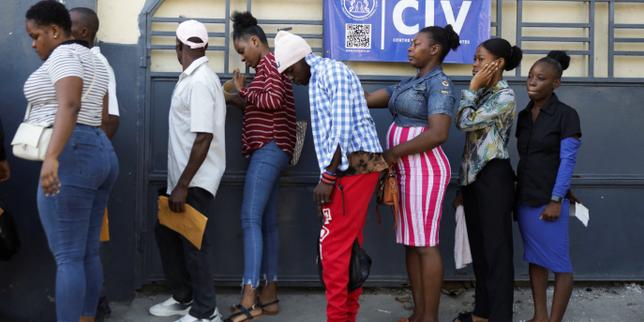
When the announcement came down that the latest round of voting would once again be pushed back, the reaction on the boulevards was not shock. It was a heavy, suffocating exhaustion. Silence speaks louder than gunfire in a city gripped by tension, and the silence that followed the news was absolute. People looked at each other across crumbling curbs, adjusted the straps of heavy bags, and kept walking. There is bread to find. There are children to shield.
To understand what happens when a democracy suspends its own heartbeat, you have to look beyond the cold statistics of political maneuvering. You have to look at the human cost of waiting.
Imagine standing in a crowded courtyard where the shade of a mango tree offers the only relief from a relentless sun. Marie, a market vendor whose calloused hands have measured out rice and beans for twenty years, does not care about the intricate constitutional debates happening in air-conditioned conference rooms miles away. She cares about the price of transport, the security of her stall, and whether today will be the day a stray bullet finds her youngest daughter.
"We are tired," she says, her voice steady but worn down to a whisper. "They talk about transitions. We are always transitioning. From one storm into the next."
Her reality is the invisible stake of every political delay. When elections are postponed under the heavy shadow of armed violence, the vacuum is not empty. It fills immediately with fear, with the unchecked power of gangs controlling neighborhoods, and with the desperate scramble for basic survival.
The political class speaks of stability as a prerequisite for voting. The streets tell a different story. Without a legitimate ballot, without a government tethered to the mandate of the people, stability is an illusion. Every postponement deepens the chasm between the governed and those who claim to govern. It turns hope into cynicism, and cynicism into rage.
History offers a brutal lesson here. Power vacuums do not remain vacant. When institutional pathways to change are blocked, other forces step into the breach. The armed groups that currently choke the capital do not negotiate with ballots. They feed on the absence of them. Every time an election date is wiped from the calendar, their grip tightens another notch.
Yet, beneath the surface of this unfolding crisis, there is a stubborn resilience that defies easy categorization. It lives in the neighborhood committees organizing mutual aid, the journalists risking their lives to document the truth, and the teachers holding makeshift classes in quiet corners of a fractured city.
The transition politics of Haiti are currently adrift in a sea of uncertainty, but the horizon is not entirely dark. The desire for a functioning democratic society has not been extinguished; it has simply been driven underground, waiting for an opening.
The calendar will eventually need a new page. The ink will have to dry on a date that actually sticks. Until then, the people of Port-au-Prince continue their daily march through the uncertainty, carrying the weight of a nation on their shoulders, waiting for the day when their voices are no longer deferred.