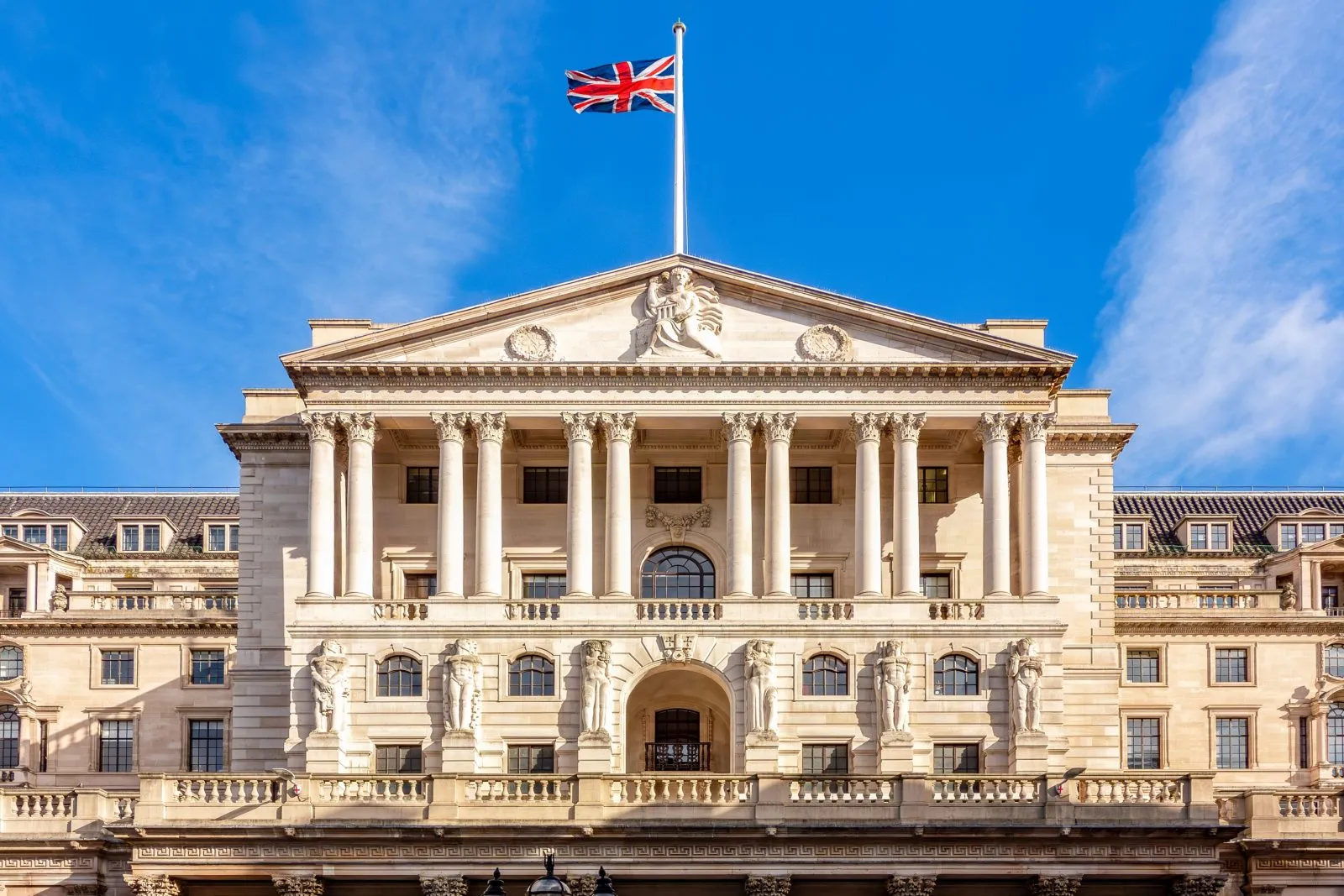
The headlines are reading like a script from a bygone era. "Bank of England holds rates at 3.75%." The pundits are out in force, nodding along to the melody of "stability" and "caution." They want you to believe that the Monetary Policy Committee (MPC) is a group of master mechanics fine-tuning a delicate engine.
They are wrong.
By holding rates steady, the Bank of England isn't managing the economy. It’s waving a white flag. This decision is a confession that the traditional tools of central banking—the blunt instrument of the base rate—have become practically useless in a world defined by structural supply shocks and fragmented global trade. We are witnessing the death of the interest rate as a scalpel. It is now a rusty sledgehammer, and the MPC is too terrified to swing it.
The Inflation Fetish and the Lag Myth
The "lazy consensus" among City analysts is that holding rates allows the previous hikes to "work through the system." This is a comforting fairy tale. It relies on the assumption that there is a predictable lag—usually cited as 18 months—between a rate change and its impact on the real economy.
I have spent two decades watching these "lags" fail to materialize in the way the textbooks promise. In a modern economy, the lag is a variable, not a constant. With a mortgage market dominated by fixed-term deals, the transmission mechanism is broken. Raising or holding rates doesn't squeeze the person spending money today; it punishes the person whose five-year fix expires tomorrow.
The Bank is targeting a 2% inflation figure that is increasingly arbitrary. Why 2%? It’s not a magic number derived from the laws of physics. It was a convenient target popularized in New Zealand in the late 1980s and adopted globally like a religious dogma. By clinging to it while the world’s energy costs and labor markets undergo a fundamental shift, the Bank is essentially trying to sail a ship using a map of the stars from the 15th century.
The Ghost of Productivity
Everyone asks: "When will rates come down?"
That is the wrong question. The question you should be asking is: "Why does our economy require cheap debt to show even a flicker of life?"
The obsession with the 3.75% figure masks the underlying rot. The UK has a productivity crisis that interest rates cannot fix. You could set the base rate at 0% or 10%, and it wouldn't change the fact that capital investment in this country is abysmal. We have traded innovation for asset bubbles.
When rates were near zero, did we build world-class infrastructure? No. We pumped up the price of semi-detached houses in the Home Counties. Now that rates have normalized—and 3.75% is normal by historical standards—the entire system is screaming because it can no longer survive without the life support of free money.
If the MPC really wanted to be bold, they wouldn't just "hold." They would admit that the cost of borrowing is no longer the primary lever of economic health. The real constraint is a lack of high-yield investment opportunities and a sclerotic planning system. But central bankers don't talk about that because it would mean admitting they aren't the protagonists of the story.
The Trap of Data Dependency
The Bank loves the phrase "data-dependent." It sounds scientific. It sounds rigorous. In reality, it’s a mask for indecision.
By the time the data—CPI, GDP, unemployment—reaches the mahogany table in Threadneedle Street, it is already a rearview mirror look at the economy. Leading the economy based on last month's CPI is like driving a car while looking exclusively through the back window.
Consider the current labor market. The MPC is terrified of a wage-price spiral. They see workers demanding 5% raises and they panic. But they ignore the nuance: these aren't inflationary demands; they are catch-up demands. Real wages have been stagnant for a decade. The Bank is effectively trying to solve a supply-side labor shortage by crushing demand until people are desperate enough to work for less. It is a brutal, 19th-century solution to a 21st-century problem.
The False Choice: Stability vs. Growth
The competitor's narrative suggests that by holding rates, the Bank is choosing "stability."
This is a lie.
Volatility is not the enemy; stagnation is. By keeping rates in this middle-ground purgatory, the Bank is ensuring that "zombie companies"—firms that can only pay the interest on their debt but never the principal—stay alive just long enough to suck the oxygen out of the room for more efficient competitors.
True stability comes from a "cleansing" of the market. High rates do this. Low rates prevent it. This middle-ground 3.75% is the worst of both worlds. It’s high enough to stifle new entrepreneurs who need credit to disrupt markets, but low enough to keep the dying giants on life support.
I’ve seen this play out in the tech sector. When the cost of capital rose, the "growth at all costs" charlatans were exposed. That was healthy. It was necessary. The Bank's current hesitation is preventing that same necessary correction from finishing its work in the wider UK economy.
Stop Asking About the "Pivot"
The financial press is obsessed with the "pivot"—the moment the Bank starts cutting. This is the ultimate distraction.
If you are a business owner or an investor waiting for a 25-basis-point cut to make your project viable, your project was never viable in the first place. You are operating on a margin of error so thin that you are essentially gambling on the whims of eight people in a room in London.
The unconventional truth? We should want rates to stay here, or go higher.
We need to rediscover the "hurdle rate." For too long, the cost of capital was so low that money flowed into garbage ideas. Buy-to-let empires built on 90% LTVs. Delivery apps that lose money on every sandwich. These are not signs of a healthy economy; they are symptoms of a liquidity glut.
A 3.75% or 4.25% base rate forces discipline. It forces investors to ask: "Is this business actually productive?" If the answer is no, the business should die. The Bank’s hesitation to move—either up to finish the job or down to admit defeat—is creating a "wait-and-see" paralysis that is more damaging than a rate hike would be.
The Credibility Gap
The Bank of England missed the boat on inflation when it was rising. They called it "transitory." They waited too long to act, and then they had to scramble. Now, they are terrified of making the same mistake in reverse.
This is "prestige management," not economic management. The MPC is protecting its own reputation rather than the purchasing power of the pound. They are holding because they don't have a better idea. They are out of ammo, and the "hold" is a way to stay relevant while they wait for the Federal Reserve in the US to make a move they can copy.
The Actionable Reality
Forget the MPC. Stop checking the news for the next rate announcement. It is noise.
Instead, look at your own balance sheet. If your business model relies on the Bank of England "saving" you with a rate cut, you are already dead; you just haven't stopped breathing yet.
- De-leverage aggressively: Not because rates are going up, but because the era of "easy money" as a structural floor is over.
- Focus on unit economics: If you can't make a profit with money costing 5%, your business is a hobby, not a venture.
- Ignore the 2% target: Inflation is going to be structurally higher due to de-globalization and the energy transition. Plan for 3-4% as the new "zero."
The Bank of England didn't "hold" rates to help you. They held rates because they are paralyzed by the realization that they no longer control the wind—they are just reporting on the weather.
The era of the all-powerful central banker is over. Act accordingly.