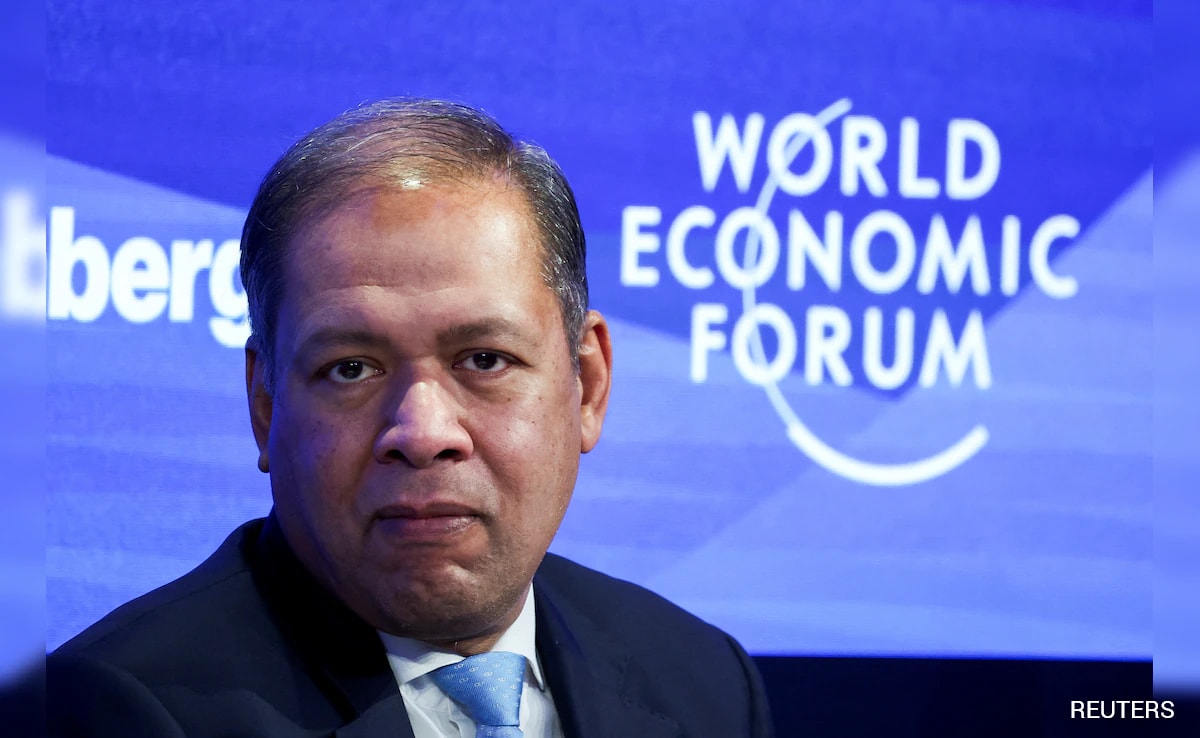
The Barclays CEO is Half-Right and Entirely Wrong
C.S. Venkatakrishnan is sweating. The Barclays CEO recently sounded the alarm on Mythos, calling it a "serious threat" and describing new financial models as "distressing." He wants you to believe that the established banking order is under siege by a chaotic, unregulated force that could destabilize the global economy.
He’s lying through his teeth. Not about the threat—Mythos is indeed an existential wrecking ball—but about why it’s distressing.
The distress isn't about "systemic risk." It’s about the death of the middleman. For decades, retail and investment banks have operated as glorified gatekeepers, charging exorbitant fees for the "privilege" of moving money through archaic, slow-motion plumbing. Mythos doesn't just improve the plumbing; it deletes the pipes entirely.
Venkatakrishnan’s rhetoric is a classic defensive crouch. When a legacy incumbent calls innovation "distressing," what they actually mean is "unprofitable for my specific bonus structure."
The Myth of the Unregulated Wild West
The "lazy consensus" among the suits in London and New York is that Mythos and its ilk succeed because they dodge regulation. They argue that if these new models had to follow the same rules as Barclays or JPMorgan, they would crumble.
This is a fundamental misunderstanding of the mechanics.
Traditional banks aren't slow because of regulation. They are slow because of technical debt. They are running multi-billion dollar operations on COBOL code written during the Nixon administration. They use regulation as a convenient excuse for why it takes three days to settle a cross-border transaction that should take three seconds.
Mythos-style models utilize decentralized ledger technology (DLT) and automated smart contracts to bake compliance directly into the protocol.
- Traditional Banking: Do the transaction $\rightarrow$ Audit the transaction weeks later $\rightarrow$ Fine the bank for errors.
- Mythos Model: The transaction cannot execute unless all regulatory conditions are met in the code.
The "threat" isn't a lack of rules. It’s the fact that the rules are becoming automated, transparent, and cheap to enforce. Banks make a fortune navigating—and occasionally "interpreting"—complexity. When you automate the complexity, you kill the profit margin.
Stop Asking if Mythos is Safe
The "People Also Ask" sections of the internet are flooded with questions like: Is my money safe in a Mythos-based model?
This is the wrong question. You should be asking: Is my money safe in a bank that leverages its deposits 10:1 and depends on a central bank bailout every time a housing bubble pops?
Banks operate on fractional reserve systems. They don't actually have your money; they have a promise to get it for you, provided everyone else doesn't ask for theirs at the same time. Mythos models often operate on Full Reserve or Over-collateralized principles.
In a liquidity crunch, I’d trust a transparent, math-based protocol over a boardroom of panicked executives any day of the week. I’ve watched banks blow through billions in "risk management" failures—from the London Whale to the Archegos collapse. Those weren't "distressing new models." They were old models operated by people with too much ego and too little oversight.
The Counter-Intuitive Truth: The Bank is the Vulnerability
Let’s run a thought experiment. Imagine a scenario where a global sovereign debt crisis hits.
In the traditional world, your assets are frozen. The bank closes its doors. You wait for a government-backed insurance scheme (like the FDIC or FSCS) to kick in, which could take weeks or months to make you whole—if the government itself isn't broke.
In a decentralized Mythos framework, the "bank" doesn't exist as a physical entity that can lock its doors. The assets are held in non-custodial smart contracts. As long as the internet functions, you have access.
The banking sector’s "Serious Threat" is actually a Safety Upgrade for the consumer. They just can't figure out how to tax you for it yet.
Why "Distressing" is a Code Word for "Transparent"
Barclays’ CEO is worried about the "distress" of new models. Let’s define what actually causes that distress: Real-time Price Discovery.
Banks thrive on "information asymmetry." They know what the money is worth before you do. They profit from the spread. Mythos models operate on open-source liquidity pools where the price is determined by an algorithm ($x \cdot y = k$) that anyone can audit.
There is no "dark pool" in a true Mythos implementation. There is no "preferred client" rate hidden from the public.
This transparency is distressing to an industry built on secrets. If everyone knows the real cost of capital, the bank can't charge you a 3% fee to move your own money across an ocean.
The Institutional Double Game
Watch what they do, not what they say.
While CEOs like Venkatakrishnan go on news circuits to warn about the dangers of these models, their R&D departments are quietly trying to patent the same technology. They want to co-opt the "Mythos" efficiency while keeping the "Bank" control.
They are trying to build "walled gardens"—private blockchains that offer none of the transparency but all of the cost-cutting for the bank.
It won't work.
You cannot have the benefits of a decentralized model within a centralized power structure. It’s like trying to put a jet engine on a horse-drawn carriage. The carriage will just disintegrate.
The Real Risk Nobody Admits
I’m not a zealot. There is a downside to the Mythos revolution, but it’s not the one the banks are telling you about.
The real risk is Permanent Loss of Agency.
In the old world, if you lose your password, you call the bank. A human being verifies your ID, and you get your money back. In the new world of Mythos, if you lose your private keys or mess up a smart contract interaction, the money is gone. Permanently.
There is no "Manager" to speak to.
This is the trade-off: Absolute sovereignty vs. Absolute safety nets.
Banks are banking on the fact that you are too lazy or too scared to be your own bank. They think you'll trade 2% of your wealth every year in fees just to have a "Forgot Password" button.
The Hard Truth for Investors
If you are holding bank stocks because you think they are a "safe haven" against the volatility of new fintech models, you are holding a bag of hot air.
The traditional banking moat is dry.
- Capital? Software scales faster than branches.
- Trust? Math is more trustworthy than a CEO under pressure from shareholders.
- Regulation? Code is the ultimate regulator.
The "Serious Threat" isn't Mythos. The serious threat is the refusal to admit that the business of "storing and moving value" has become a commodity service that should cost near-zero.
Barclays, HSBC, and the rest of the old guard are essentially trying to charge you for a long-distance phone call in the age of WhatsApp. They can call it "distressing" all they want, but the only people distressed are the ones whose yachts are funded by your transaction fees.
Stop listening to the people whose jobs depend on you staying ignorant. The distress isn't in the new model; it's in the death of the old one.
Adapt or get liquidated. There is no third option.