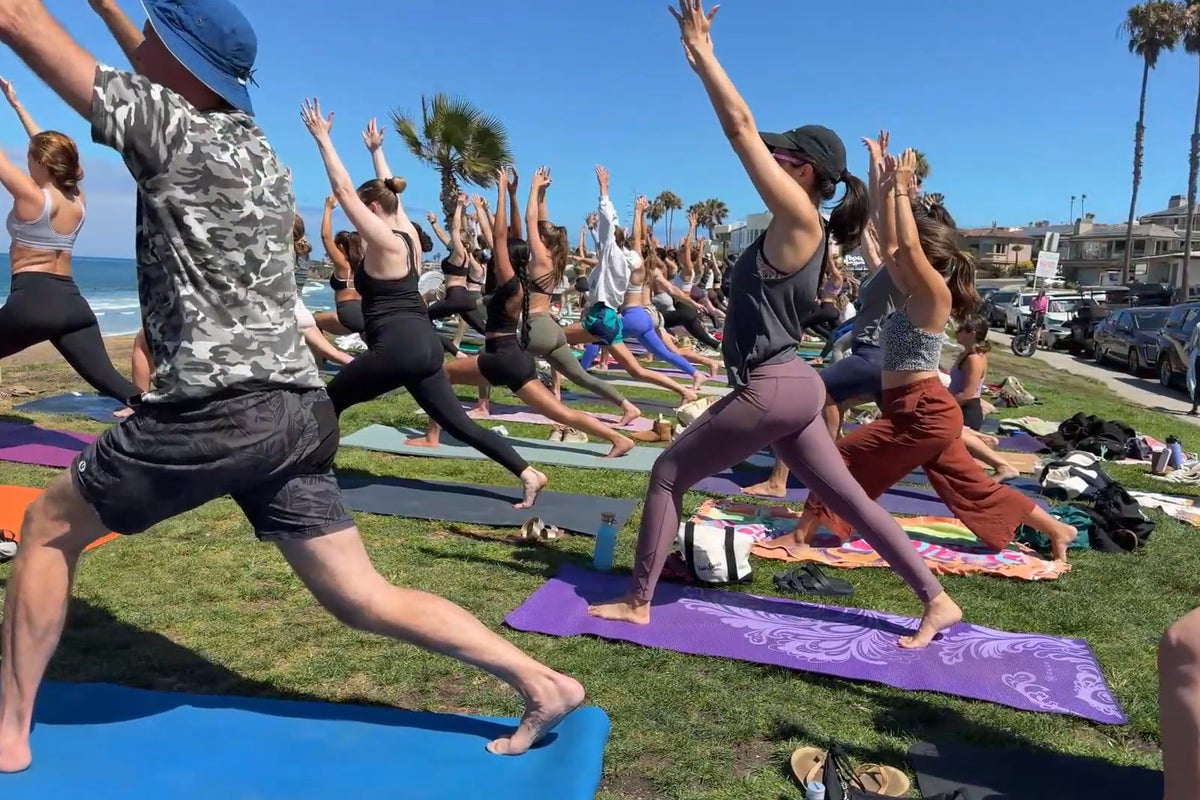
The Pacific Ocean does not care about city ordinances. It crashes against the jagged rocks of Sunset Cliffs, sending a cool, salted mist into the morning air, just as it has for millennia. At 8:30 AM, the dirt overlook is quiet. Then, people arrive. They carry faded woven mats and water bottles covered in stickers. They do not talk much. They just stand, waiting for the man everyone calls Namasteve.
Steve Hubbard has a graying beard, sun-deepened wrinkles around his eyes, and a voice that carries over the crashing surf without a microphone. For years, his routine was a San Diego staple. He would plant his feet in the dirt, look out at forty or fifty people gathered on the grass, and tell them to inhale.
Then came the park rangers.
Now, the cliffs are a battleground. It is a quiet war, fought with clipboards, municipal codes, and heavy fines. San Diego decided to sweep its coastline clean of unauthorized commercial activity. In doing so, the city threw a net so wide it caught the very soul of its coastal culture. Yoga on the beach is now contraband.
The Line in the Sand
To understand how a city known for surfboards and Zen vibes turned on its yogis, you have to look at the paperwork. In 2022, San Diego passed an ordinance targeting vendors. The goal seemed reasonable on paper. Sidewalks in tourist heavy areas like La Jolla and Mission Beach were clogged. T-shirt stands, pop-up crystal shops, and hot dog carts blocked the walkways, creating a chaotic, commercialized gauntlet.
The city wanted order. They wanted compliance.
But bureaucrats are not artists; they paint with a roller, not a fine brush. When the language of the law was finalized, it did not just regulate the hot dog carts. It banned any "commercial recreation" in coastal parks without a permit.
Here is the catch: the city stopped issuing permits for fitness classes in those zones altogether.
Suddenly, a group of people breathing together on a patch of grass became an illegal enterprise. Steve Hubbard found himself facing a choice. He could pack up his mats and move into a dark, mirror-lined studio with fluorescent lights and a high monthly lease. Or he could stand his ground on the dirt overlook where he believed healing actually happens.
He chose the dirt.
The Economics of a Free Breath
Let’s be honest about the fitness industry. It is a monster. If you want to take a high-end yoga class in Southern California, you are usually looking at a twenty-five-dollar drop-in fee. You walk past a front desk, buy a branded juice, and find a space twelve inches away from the next person's sweaty towel. It is exclusive. It is expensive.
Hubbard’s model was different. It operated on donations. If you had twenty bucks, you put it in the bucket. If you lost your job last week and only had a handful of change, you kept your money and took your spot on the grass anyway.
Consider the impact of that shift. In a city where the cost of living forces young professionals to live with three roommates and seniors to skimp on groceries, free or low-cost access to the ocean is a lifeline. The beach belongs to everyone. Or, at least, it used to.
The city's argument is rooted in space management. Officials claim that large, organized groups monopolize public land, preventing regular families from setting up a picnic or throwing a frisbee. They argue that if Steve can bring fifty people to the cliffs, then fifty bootcamp participants, fifty Zumba dancers, and fifty corporate team-building events can do the same. The grass would erode. The peace would vanish.
It is a classic tragedy of the commons dilemma. When everyone owns something, nobody does, and everyone fights for their piece of the dirt.
When Healing Becomes a Crime
Step away from the legal briefs for a moment. Look at who is actually on those mats.
Imagine a woman named Sarah. She is thirty-four, working a grueling corporate job in downtown San Diego, and navigating a painful divorce. She does not have the budget for a luxury wellness retreat. For two years, her Saturday morning routine was the only thing keeping her grounded. She would sit on the cliffs, listen to Steve’s voice blend with the gulls, and watch the dolphins break the surface of the water while practicing her downward dog.
For Sarah, this was not "commercial recreation." It was healthcare.
The human body reacts differently to nature. Scientists call it green exercise. Studies show that moving your body near open water drastically lowers cortisol levels compared to doing the exact same movements inside a gym. The sensory input of the ocean—the negative ions in the air, the rhythmic sound of the waves, the vast horizon—triggers a neurological reset.
When the park rangers showed up with their citation books, they did not just stop a class. They disrupted a sanctuary.
"We are treating people who are stressed, anxious, and broken," Hubbard says, his voice tightening. He is not a radical. He is a man who watched his community transform from a supportive gathering into a group of people looking over their shoulders for law enforcement.
The enforcement is real. Rangers have handed out citations that carry hefty fines. They stand at the edge of the grass, watching, waiting for a donation bucket to appear or for Hubbard to give an instruction that confirms a class is underway. It feels dystopian. A city with soaring homelessness and rising property crime is spending man-hours policing stretching.
The True Cost of Public Order
This conflict exposes a deeper, more uncomfortable question about American cities. Who is public space actually for?
If you walk down the boardwalk in Pacific Beach, you will see city-sanctioned construction, permitted café patios that spill onto public walkways, and massive events that bring in millions in tax revenue. The city likes those because they can be tracked, taxed, and audited.
But a loose collective of neighbors meeting to breathe under the open sky? That is messy. It cannot be easily monetized by the local government.
The real casualty here is nuance. A thriving city needs rules, yes, but it also needs loopholes for humanity. It needs spaces where the rigid structures of modern life melt away. When we over-regulate our parks, we turn them into museums—places to look at, not places to live in.
Hubbard is taking the city to court, fighting the ban on constitutional grounds, arguing freedom of assembly and speech. The legal battle will drag on for months, costing thousands of dollars and filling filing cabinets with endless jargon.
Meanwhile, the sun still rises over Sunset Cliffs.
On a recent Saturday, a small group gathered anyway. They did not use mats. They did not use a sound system. They just stood near the edge, looking out at the gray-blue expanse of the ocean. Steve was there, standing quiet, his back to the city, his face to the wind.
A ranger vehicle crawled slowly down the asphalt road, its tires crunching on the gravel, a silent warning wrapped in white paint and emergency lights. Nobody moved. They just stood their ground, took a deep breath of salt air, and held it.