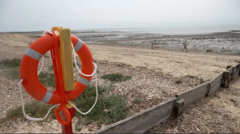
Another family is burying their dead. Another coroner is shaking his head at a preventable tragedy. Another municipal council is offering hollow condolences while hastily commissioning a review that will likely gather dust on a shelf.
When a family steps forward to demand a beach safety review following a fatal coastal incident, they are usually met with the standard bureaucratic playbook. Officials express deep sorrow, promise to look into existing protocols, and quietly hope the news cycle moves on before anyone asks why the warning signs were missing or why the lifeguard tower was unmanned three weeks after peak season officially ended.
We have seen this script before. We have reported on it for decades. The coastline is marketed as a playground, an untamed natural asset packaged for tourism brochures and real estate prospectuses. Yet the moment someone is pulled under by a rip current or swept off a slick rock ledge, the narrative shifts instantly from an economic engine to an unpredictable force of nature.
Nature is unpredictable, yes. But our response to it is entirely a matter of choice, funding, and priorities.
The Anatomy of a Coastal Oversight
To understand why beach tragedies keep happening with such depressing regularity, you have to look past the breaking news alerts and examine the institutional structures governing our shorelines. Jurisdictional fragmentation is the silent killer along most major coastlines.
One agency might own the parking lot. A different municipal department handles the dry sand. The state or national park service might control the dunes, while local emergency medical services are left scrambling when a distress call comes in from an unnumbered access point.
When emergency response is sliced up among competing bureaucratic silos, accountability vanishes.
A grieving family pushing for a beach safety review is not just asking for a signpost or a life ring. They are trying to pierce through a wall of administrative avoidance. They want to know why nobody owned the responsibility of warning the public that a specific stretch of water turns into a hydraulic trap during an incoming tide.
Municipalities hate spending money on infrastructure that does not generate immediate tax revenue. Lifeguards cost money. Comprehensive signage systems cost money. Real-time hazard monitoring equipment costs money. Meanwhile, drowning prevention is treated as a secondary concern until a high-profile fatality forces the issue into the public square.
The Myth of the Untamed Swimmer
Public safety officials often fall back on a convenient deflection when a coastal death occurs. They blame the victim.
The messaging is subtle, wrapped in paternalistic warnings about personal responsibility and ignoring red flags. Sometimes, tourists do ignore warnings. Sometimes, people overestimate their swimming abilities or wander into areas explicitly marked as hazardous.
Human error exists. That is an immutable reality.
However, building an entire safety philosophy around the premise that everyone should instinctively know how to read coastal geomorphology is absurd. Most visitors do not spend their winters studying bathymetry maps or wave refraction patterns. They drive three hours inland, park the car, walk over a dune, and see a wide expanse of flat blue water.
They do not see the underwater trench carving a highway of water straight out to sea. They do not see the submerged reef that creates unpredictable backwash.
When safety infrastructure relies entirely on the assumption that a casual beachgoer possesses expert-level oceanographic knowledge, the system is designed to fail. A robust beach safety review must start from a position of radical honesty: the general public is unequipped to spot hidden aquatic hazards without clear, aggressive, and unmistakable guidance.
Funding the Margins
Look at the budget allocations for coastal communities heavily reliant on tourism. Millions flow into marketing campaigns, boardwalk renovations, and hospitality grants. A tiny fraction of that revenue trickles down to water safety operations.
We interviewed a retired coastal rescue coordinator who spent thirty years managing beaches along a notoriously volatile stretch of coastline. He spoke on the condition of absolute candor about how local budgets are prioritized.
"Every year, we asked for two additional quad bikes and funding to keep the seasonal tower open through September," he told us. "Every year, the council approved the new tourist pavilion downtown while cutting our overtime budget. They want the beach packed with tourists, but they do not want to pay the overhead required to keep those tourists alive when the wind shifts."
This is the core contradiction of modern coastal management. Communities want the economic bounty of the ocean without accepting the operational cost of human safety.
When a beach safety review is finally forced onto the agenda, it almost always reveals the same systemic deficiencies:
- Insufficient staffing during shoulder seasons when water temperatures remain deceptively high.
- Antiquated communication systems that rely on cell service that drops out near the cliff bases.
- Outdated signage that uses small text and generic warnings instead of graphic, universally understood hazard symbols.
- Complete lack of rapid-deployment rescue equipment at remote access points where emergency vehicles take twenty minutes to arrive.
The Legal Shield of Sovereign Immunity
There is another reason municipal bodies drag their feet on comprehensive safety overhauls. Liability.
Admitting that a beach is unsafe, or that a specific hazard was known and left unmitigated, opens the door to devastating civil lawsuits. Consequently, municipal risk managers often advise against installing certain types of warning signs or safety devices if those additions could be interpreted as an admission of assumed responsibility for the area.
It is a perverse incentive structure. By keeping safety measures ambiguous or minimal, local governments attempt to shield themselves from legal culpability.
Families who lose loved ones find themselves fighting a dual battle. They are grieving a sudden, catastrophic loss while simultaneously navigating a stonewalling legal apparatus designed to protect government coffers.
When those families demand a beach safety review, they are not looking for a payout. They are trying to change a system that prioritizes legal self-preservation over human life. They want an independent investigation that cuts through municipal self-protection and exposes what went wrong.
What Real Reform Looks Like
If a coastal community actually wants to honor a tragedy and prevent the next one, the playbook for a legitimate safety review must look fundamentally different from the standard bureaucratic whitewash.
First, the review panel must be completely independent. Putting the same local officials who underfunded the department in charge of investigating the tragedy is an obvious conflict of interest. Bring in marine scientists, veteran rescue operators, and human factors engineers who understand how people actually behave under stress.
Second, the findings must lead to mandatory minimum standards, not optional guidelines. If a beach meets specific criteria for rip currents or heavy surf, it should be legally required to maintain a baseline level of active surveillance and hazard notification.
Third, technology needs to be integrated smartly. Automated hazard notification systems, drone surveillance for remote stretches of coastline, and geofenced emergency alerts sent directly to mobile phones within a specific radius of dangerous zones are no longer futuristic concepts. They are affordable, scalable solutions that many cities refuse to implement simply due to institutional inertia.
The Cost of Inaction
The ocean does not care about our budgets, our bureaucratic silos, or our legal liability shields. It remains indifferent to human suffering, operating entirely on the laws of physics and fluid dynamics.
Every time a community pushes a beach safety review under the rug, they are rolling the dice on someone else's child, someone else's parent, someone else's future.
The family members standing up at council meetings, holding framed photographs and demanding answers, deserve more than polite nods and promises of future study. They deserve a complete dismantling of the complacency that treats preventable drowning as an acceptable cost of doing business by the water.
The waves will keep rolling in. The question is whether we will finally decide to meet them with the seriousness they demand, or simply wait for the next funeral.