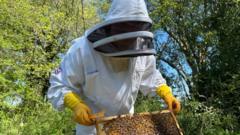
Forget the meditation apps that ping you every twenty minutes. If you really want to clear your mind, you need to stand in front of sixty thousand stinging insects. It sounds like a joke, but it’s the most effective way I’ve found to force my brain to stop cycling through stress. When you’re elbow-deep in a hive, the noise of the world just stops.
Beekeeping isn't just a hobby for people who like honey. It's a high-stakes focus exercise. You can't worry about your mortgage or that awkward email you sent yesterday when you're holding a frame of live bees. If you’re tense, they know it. If you move too fast, they react. You have to be present. You have to breathe. It’s a forced state of flow that most people spend hundreds of dollars trying to find in yoga retreats.
The reality is that our brains aren't built for the constant digital friction we face. We’re wired for tactile, physical tasks that require sensory awareness. Beekeeping satisfies that ancient itch. It’s loud, it’s sticky, it smells like wax and propolis, and it requires a level of calm that is increasingly rare today.
Why Bees Force You Into Better Headspace
Most people think beekeeping is about the honey. Honestly? The honey is just a nice side effect. The real value is the mental shift that happens the second you put on the veil. You enter a different time zone. Bees don't care about your schedule. They operate on sunlight, temperature, and nectar flow.
When you open a hive, you’re entering their world. To do it safely, you have to adopt a specific mindset. It’s a mix of clinical observation and deep empathy. You’re looking for the queen, checking for eggs, and watching for signs of disease like Varroa mites. This requires what psychologists call "soft fascination"—a state where your mind is focused but not drained.
Unlike a computer screen that sucks your energy, a hive gives it back. You aren't just looking at things; you're feeling the vibration of the colony. There’s a specific hum a healthy hive makes. It’s a low, steady thrum that’s strangely grounding. If that pitch changes, you feel it in your gut before you even see what’s wrong. That’s intuition. That’s something we lose when we spend all day in spreadsheets.
The Science of Working With Nature
There’s actual data behind why this feels so good. According to research from organizations like the Bees for Development trust and various studies on "Green Care," engaging in apiculture (that’s the fancy word for beekeeping) significantly lowers cortisol levels. It’s a form of Animal-Assisted Therapy, but without the fluff.
Biophilia is the idea that humans have an innate tendency to seek connections with nature. We aren't meant to be indoors 23 hours a day. When you work with bees, you're observing the complex social structure of a "superorganism." Every bee has a role. There’s a brutal, beautiful efficiency to it. Watching them work makes your own problems feel smaller. It’s a perspective shift. You realize you’re just one part of a much larger ecosystem.
The British Beekeepers Association (BBKA) often highlights how the hobby helps with social isolation and anxiety. It’s hard to feel lonely when you’re responsible for the lives of thousands of creatures that literally keep the planet running. You become a steward. That sense of responsibility provides a "why" that transcends the daily grind.
Breaking the Cycle of Overthinking
Overthinking is a hallmark of modern burnout. We loop. We ruminate. Beekeeping breaks that loop because it demands sensory integration.
- Smell: The smoke from your smoker, the earthy scent of the hive.
- Sound: The rhythmic buzzing.
- Touch: The weight of a full honey super (which can weigh 40-50 pounds).
- Sight: Spotting a tiny white egg the size of a grain of rice.
You can’t do this while scrolling on your phone. You can’t do it while watching TV. It is a mono-tasking sanctuary. In a world that prizes multitasking, beekeeping is a radical act of doing one thing at a time.
Common Mistakes That Kill the Zen
If you go into beekeeping thinking it’s going to be all sunshine and jars of gold, you’re going to get frustrated. That frustration ruins the headspace you’re trying to build. Beginners often make three big mistakes that turn a peaceful hobby into a stressful chore.
First, they don't prepare. They buy the bees before they read a book or take a local class. Then they panic when they see a swarm cell or a dead bee on the landing board. Knowledge is what keeps you calm. If you know that a few dead bees are normal, you won't spiral into a "the colony is dying" panic.
Second, they over-intervene. It’s tempting to open the hive every day because you’re excited. Don't. Every time you open the hive, you drop the internal temperature and stress the queen. Better headspace comes from patience. It’s about watching the entrance for ten minutes rather than ripping the roof off.
Third, they forget the gear. Getting stung isn't the end of the world, but if you’re constantly worried about it, you won't relax. Get a suit that makes you feel like an astronaut. If you feel safe, your brain can move from "survival mode" to "observation mode." That’s where the healing happens.
The Practical Path to Starting
Don't go out and buy a "flow hive" just because you saw an ad on Instagram. Those are expensive and don't teach you the fundamentals of bee biology. If you want the mental benefits, you have to do the work.
- Find a local association. This is non-negotiable. You need a mentor. Beekeeping is local. What works in Florida won't work in Scotland.
- Start with two hives. Why two? If one hive has a problem—like a lost queen—you can compare it to the healthy one. You can even move a frame of brood over to help the struggling colony. It reduces the "all eggs in one basket" anxiety.
- Commit to the schedule. You need to check your bees about once every seven to ten days during the spring and summer. This creates a rhythm in your life. It becomes an appointment with yourself and nature that you can't cancel.
Real Headspace is Earned
You won't find better headspace by sitting in a dark room trying to think about nothing. You find it by doing something that matters. Beekeeping gives you a reason to get outside, a reason to learn about botany, and a reason to slow down.
When you’re standing in your backyard, the sun hitting your back, and you hear that steady drone of the hive, the rest of the world fades out. The "to-do" list doesn't exist. There is only the queen, the foragers, and the smell of nectar. That’s not just a hobby. It’s a mental reset that actually works.
If you're ready to stop the mental noise, stop looking at screens. Go get a suit, find a local mentor, and start a colony. Your brain will thank you.