Everyone in global public health is cheering the wrong scoreboard. When Western governments scale back foreign medical assistance, the conventional narrative treats Beijing stepping into the funding gap as an unmitigated humanitarian triumph. Commentators frame this as a simple geopolitical substitution. One donor leaves the room; another fills the chair with cash, drugs, and infrastructure.
That view is dangerously naive.
I have spent decades watching foreign aid budgets turn into financial handcuffs. This is not about altruism, solidarity, or saving lives out of the goodness of an empire's heart. This is about procurement lock-in, resource extraction diplomacy, and the systematic export of industrial overcapacity disguised as benevolence.
Beijing does not write checks without reading the fine print. And the fine print in these health financing deals tells a story of structural dependency that leaves sovereign states trading one master for another, only this time with much worse terms on accountability.
The Lazy Consensus of Medical Benevolence
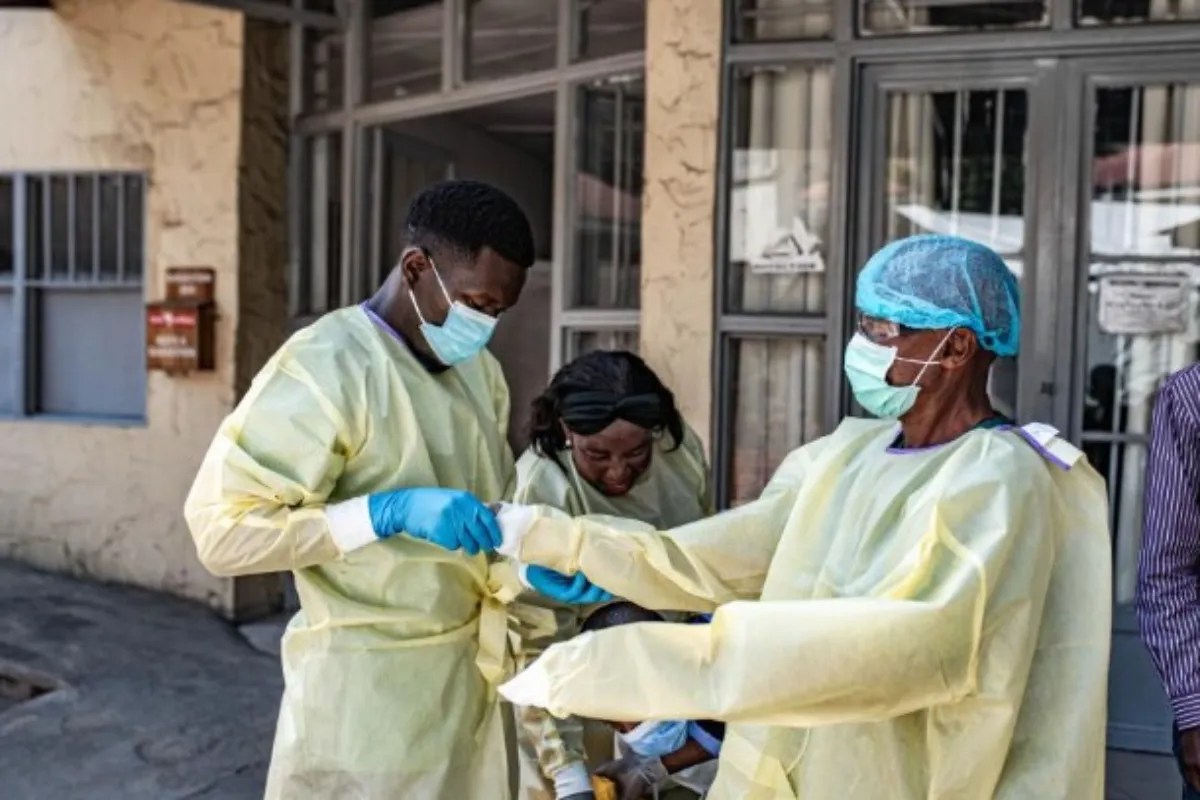
The standard media line goes something like this: Western nations are facing domestic budget fatigue, populist backlash, and shifting political winds, leading to retrenchment in overseas development assistance. Meanwhile, China's expanded funding for HIV and AIDS programs across the African continent proves its commitment to South-South cooperation.
This framing treats health aid as pure charity. It assumes that a dollar spent on antiretrovirals is agnostic about where it comes from.
It is not.
Aid is an instrument of industrial policy. When a state bank or a state-backed entity finances public health interventions abroad, those funds rarely circulate freely in a competitive global market. They are tied directly to supply chains, manufacturing centers, and service providers originating in the home country.
When Western donors funded these programs historically, they tied their money to bureaucratic compliance, human rights conditionalities, and rigid governance metrics. Those conditions were often patronizing, bureaucratic nightmares. But they also created space for local civil society organizations to push back against domestic corruption.
The new influx of capital operates under a different rulebook. The golden rule of non-interference sounds appealing in a diplomatic speech, but on the ground, it means zero leverage for local activists, absolute protection for ruling elites, and a closed loop where the money flows straight back to foreign state-owned enterprises.
Follow the Supply Chain
Let us talk about how money actually moves in these health interventions.
Imagine a scenario where a capital city receives a multi-million-dollar package for infectious disease mitigation. Under traditional models, procurement officers could source generic pharmaceuticals from competitive global suppliers, driving down costs through transparent tendering.
Under the expanded financing model, the supply architecture changes. The pharmaceuticals, the diagnostic equipment, the laboratory reagents, and even the technical consultants are bundled into the bilateral agreement. You do not just get the cash; you get the turnkey package.
This solves a massive domestic problem for the creditor: industrial overcapacity. Heavy manufacturing sectors at home are churning out surplus goods, steel, electronics, and medical equipment that domestic markets cannot absorb. Exporting these goods through tied health loans keeps factories humming thousands of miles away while building captive foreign markets that will rely on proprietary replacement parts and consumables for decades.
You are not buying medicine. You are leasing an ongoing dependency on an industrial ecosystem you do not control.
The Accountability Black Hole
Ask public health officials what happens when a government mismanages traditional aid funds. You get audits, congressional hearings, suspended disbursements, and public scandals. It is messy, humiliating, and imperfect, but it provides a mechanism for correction.
Now ask what happens when funding arrives with no strings attached regarding governance or human rights.
For marginalized populations most affected by HIV and AIDS—sex workers, men who have sex with men, injection drug users—this shift is catastrophic. Traditional Western funding, for all its paternalism, often mandated protections and targeted outreach for vulnerable groups because domestic ministries frequently wanted to ignore them.
When funding shifts to bilateral state-to-state agreements governed by strict non-interference principles, local governments gain absolute discretion over who gets treated and who gets criminalized. If a regime decides that certain populations are politically inconvenient, no foreign financier is going to demand inclusion metrics or civil rights protections. The money flows, the clinics open, but the people who need protection the most find themselves erased from the data.
This is the hidden human cost of unconditional money. Convenience for corrupt bureaucrats always comes at the expense of the vulnerable.
Why the Wrong Question Dominates the Debate
The media keeps asking: Can Beijing replace Washington as the primary financier of global health?
That is the wrong question entirely. It assumes the goal of public health funding is simply volume—keeping the cash flowing at any cost.
The right question is: How do we build sovereign health systems that do not require perpetual life support from any foreign empire?
By framing the issue as a geopolitical horse race, we normalize the idea that African nations must permanently exist as client states dependent on external largesse. Whether the check is signed in Washington or Beijing, dependency is still dependency. And dependency is the enemy of sustainability.
Look at the countries that have successfully transitioned away from disease burdens. They did not do it by swapping one external donor for another. They did it by building domestic tax bases, enforcing local pharmaceutical manufacturing capabilities, and treating health as a matter of national security rather than foreign charity.
The Uncomfortable Truth About Sovereignty
My contrarian approach has a downside: it strips away the comforting illusion that any superpower is acting out of pure goodwill.
Critics will call this cynicism. They will argue that people with HIV need drugs today, and asking philosophical questions about supply chains while patients go without treatment is an elite luxury.
They are wrong. Ignoring the structural consequences of where your medicine comes from is how you mortgage your grandchildren's sovereignty for a temporary supply of pills.
True partnership looks like technology transfer, intellectual property waivers, and local capacity building that makes foreign aid obsolete as fast as possible. Neither Washington nor Beijing has ever truly prioritized that goal, because obsolete aid means loss of influence.
Stop treating health financing as a sporting event where you root for your preferred geopolitical team. Start treating it as what it is: a hardnosed negotiation over power, markets, and control. Until health ministries across the continent demand true autonomy instead of trading one set of strings for another, the disease isn't the only thing keeping people down. The cure is keeping them chained.