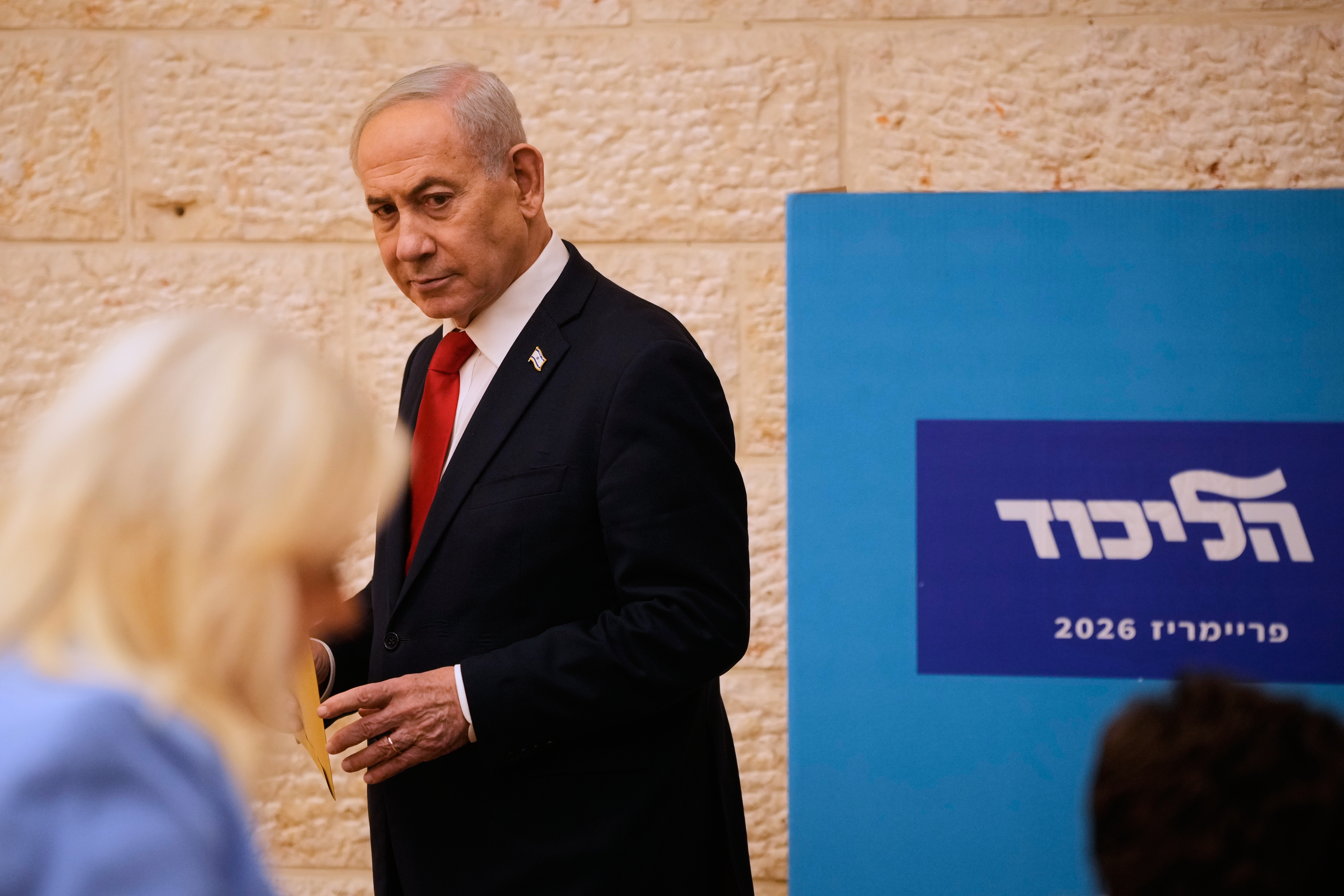
Benjamin Netanyahu has spent nearly two decades treating the Israeli premiership as personal property, yet he recently offered to relinquish the top spot to political rival Gadi Eisenkot in a proposed unity government aimed at confronting Iran. On the surface, the move looks like an extraordinary act of statesmanship during a period of existential regional tension. In reality, it is a calculated survival maneuver designed to fracture the opposition, neutralize right-wing coalition partners who have held him hostage, and buy time while his political capital sits at an all-time low.
To understand why Israel’s longest-serving prime minister would ever float the idea of serving under a former IDF Chief of Staff from the opposing camp, you have to look at the arithmetic of the Knesset and the brutal realities of wartime politics.
The Architecture of a Desperate Gambit
Netanyahu does not make concessions from positions of strength. Throughout his career, every major political pivot—from the 2005 disengagement from Gaza to his sudden 2020 rotation agreement with Benny Gantz—has occurred when the walls were closing in.
The 2020 precedent is the skeleton key to understanding the Eisenkot overture. Four years ago, Netanyahu signed a legally binding coalition deal promising to hand the prime minister’s office to Gantz after eighteen months. He never had any intention of honoring it. By exploiting a loophole regarding the state budget, Netanyahu collapsed his own government before Gantz could ever sit in the chair, triggering another election cycle and resetting the political chessboard.
Gadi Eisenkot knows this history intimately. He watched it happen from the sidelines before entering politics, and he watched it again from the inside when he joined the emergency war cabinet following the October 7 attacks. During his tenure in that cabinet, Eisenkot repeatedly clashed with Netanyahu over the lack of a post-war strategy in Gaza and the prioritization of political survival over hostage negotiations. Eisenkot eventually walked out, recognizing that his presence was being used as a fig leaf to legitimize a government dominated by far-right figures like Itamar Ben-Gvir and Bezalel Smotrich.
Now, with the threat from Tehran escalating from shadow warfare into direct, catastrophic confrontation, Netanyahu is attempting to run the exact same play with a different partner. By publicly dropping his demand to lead, he achieves three immediate tactical objectives without actually giving up an ounce of real power.
First, he shifts the burden of rejection onto the opposition. If Eisenkot refuses the offer—which he almost certainly must, given the zero-trust environment—Netanyahu can campaign on the narrative that he was willing to sacrifice his own ego for national unity against Iran, while his rivals prioritized petty political grudges over national security.
Second, it serves as a blunt warning shot to his current far-right coalition partners. Ben-Gvir and Smotrich have spent years extorting policy concessions from Netanyahu by threatening to bring down his government. By dangling a unity deal with Eisenkot, Netanyahu reminds them that they are replaceable, even if the replacement is largely theoretical.
Third, it buys precious diplomatic currency in Washington. An Israeli government led—even nominally—by a pragmatic, widely respected former military chief like Eisenkot would immediately lower the temperature with the White House and the Pentagon, potentially unlocking weapons shipments and strategic backing that have been stalled by distrust of Netanyahu’s current cabinet.
The Iran Factor Is Real Even If the Offer Isn't
It would be a mistake to dismiss the Iranian threat as mere window dressing for domestic political theater. The strategic reality facing Jerusalem is graver than at any point since 1973.
For years, Israel’s security doctrine relied on the "campaign between wars"—a steady drip of covert sabotage, targeted assassinations, and airstrikes in Syria designed to degrade Iranian capabilities without triggering a full-scale regional conflict. That doctrine is dead. Direct ballistic missile exchanges, the crippling of northern Israel by Hezbollah’s persistent rocket fire, and the looming threshold of Iran’s nuclear breakout have forced Israeli military planners into a corner.
Managing a multi-front war against a state actor like Iran requires a level of international legitimacy and domestic cohesion that Netanyahu’s current coalition simply cannot muster. You cannot rally a deeply fractured society to endure the economic and human toll of a major regional war when half the country believes the prime minister is prolonging the conflict to delay his corruption trial and avoid a state commission of inquiry into October 7.
Eisenkot brings something to the table that Netanyahu has permanently lost: institutional credibility. Having served at the highest levels of the Israel Defense Forces for decades, and having lost his own son, Gal, in the fighting in Gaza, Eisenkot possesses a moral authority that is virtually untouchable in Israeli public life.
If Israel is going to launch a major military operation against Iranian nuclear or energy infrastructure, or if it is going to negotiate a complex regional security architecture backed by the United States and moderate Arab states, having Eisenkot at the helm transforms the optics overnight. Allies trust him. The Israeli public trusts him. Most importantly, the military brass trusts him.
Why Eisenkot Cannot Take the Bait
Despite the sheer gravity of the Iranian threat, the probability of Gadi Eisenkot actually accepting Netanyahu’s offer remains exceptionally low. The reasons come down to structural impossibility and hard-earned political scar tissue.
In the Israeli parliamentary system, the title of Prime Minister means very little if you do not control the cabinet, the legislative agenda, or the budget. Under any hypothetical unity arrangement, Netanyahu’s Likud party would still represent the largest single bloc within the coalition. Netanyahu himself would likely assume the role of Defense Minister or Alternate Prime Minister, retaining a functional veto over every major strategic decision.
Consider a hypothetical scenario where Eisenkot agrees to the rotation and assumes the premiership on a Tuesday. By Wednesday morning, he would find himself presiding over a government where the Finance Ministry is still controlled by ideological hardliners, the police force answers to a far-right minister, and the parliamentary committees are chaired by Netanyahu loyalists. Eisenkot would hold the steering wheel, while Netanyahu and his allies control the engine, the brakes, and the fuel line.
Furthermore, joining forces with Netanyahu would instantly detonate the opposition bloc. Yair Lapid, Benny Gantz, and Avigdor Lieberman have spent years trying to build a cohesive alternative to Likud rule. If Eisenkot breaks ranks to rescue Netanyahu from his political isolation, he fractures the center-left and center-right opposition beyond repair, ensuring that Netanyahu remains the dominant gravitational force in Israeli politics for years to come.
Eisenkot has already seen how this movie ends. When he and Gantz entered the emergency government in late 2023, they believed they could steer the war effort from the inside and moderate the government's worst impulses. Instead, they found themselves sidelined during critical decision-making moments, excluded from key consultations, and ultimately used as political cover while Netanyahu maintained tight control over the levers of power.
The Erosion of the Likud Strongman Myth
Even if this gambit fails to produce a unity government—and all indicators suggest it is dead on arrival—the mere fact that Netanyahu made the offer marks a significant psychological shift in Israeli politics.
For a generation, Netanyahu’s entire political brand was built on the concept of irreplaceability. The Hebrew campaign slogan "Netanyahu: In a Different League" wasn't just marketing fluff; it was the foundational dogma of the Israeli right. The core argument was that only Netanyahu possessed the intellect, the international stature, and the diplomatic ruthlessnes to keep Israel safe from Iran and pressure from Washington.
By publicly stating that he is willing to step aside and let Gadi Eisenkot lead the country during a moment of supreme national peril, Netanyahu has implicitly shattered his own myth. He has admitted, if only as a tactical feint, that someone else is capable of sitting in the chair and managing the Iranian file.
Within Likud, this sends a quiet shockwave through the ranks of ambitious ministers like Yoav Gallant, Nir Barkat, and Israel Katz, who have spent years waiting in the wings, terrified to challenge the king. If Netanyahu is willing to hand the crown to an outsider like Eisenkot to save his own skin, what loyalty does he truly owe to the party faithful who have defended him through indictments, mass protests, and historic intelligence failures?
The Mechanics of the Stalemate
The broader tragedy of this political maneuvering is that it leaves Israel’s strategic posture paralyzed at the exact moment clarity is needed most.
Look at the competing pressures currently tearing at the Israeli government:
- The Military Imperative: The IDF leadership wants clear political directives, a sustainable exit strategy in Gaza, and a diplomatic framework to stabilize the northern border so exhausted reserve units can stand down and regroup.
- The Coalition Imperative: Far-right ministers demand permanent military occupation, the expansion of settlements, and an uncompromising escalation on all fronts, threatening to collapse the government the moment any ceasefire or hostage deal is signed.
- The Diplomatic Imperative: Washington demands a credible day-after plan for Palestinian governance and a containment strategy for Iran that does not drag American forces into a wider Middle Eastern quagmire.
- The Survival Imperative: Netanyahu needs to keep his coalition intact until the Knesset recess, prevent early elections that polls consistently show he would lose decisively, and control the narrative surrounding the October 7 failures.
These four imperatives are fundamentally incompatible. No amount of clever coalition engineering can reconcile them. Offering the premiership to Gadi Eisenkot is an attempt to bypass this gridlock through sleight of hand rather than confronting the underlying political rot.
What Happens When the Bluff Is Called
In high-stakes poker, a bluff only works if your opponent believes you have the cards—or at least the willingness to push all your chips into the center of the table. Netanyahu’s problem is that everyone at the table has been playing with him for twenty years. They know his tells.
Eisenkot’s camp has already signaled extreme skepticism, insisting that any genuine national emergency government requires an agreed-upon date for early elections—the one condition Netanyahu will never accept. Without an election date, a unity government isn't a rescue mission for the country; it is a life-support machine for a failing administration.
If Eisenkot holds firm and refuses to take the bait, Netanyahu will be forced back into the arms of the very extremists he just tried to outmaneuver. Ben-Gvir and Smotrich will extract an even higher price for their continued loyalty, knowing full well that the Prime Minister has nowhere else to go. Meanwhile, the Iranian clock keeps ticking, the northern border remains abandoned by tens of thousands of displaced citizens, and the Israeli public watches its leadership play zero-sum political games while the region teeters on the brink.
Netanyahu offered to give up his title to save the nation, fully aware that the mechanics of Israeli politics guarantee he will never have to actually hand over the keys.


