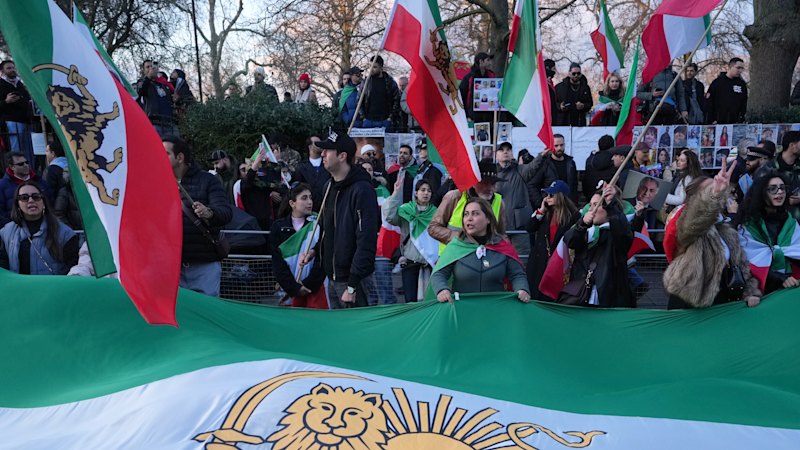
On a humid evening in late February 2026, the digital infrastructure of Tehran didn’t just flicker; it dissolved. As the first wave of Operation Epic Fury—a joint U.S.-Israeli kinetic and cyber campaign—neutralized the servers of the Islamic Revolutionary Guard Corps (IRGC), a peculiar phenomenon erupted on encrypted messaging apps. In the basement of a nondescript apartment in the Ekbatan district, a 24-year-old engineering student named Arash watched his phone glow with "Thank You Trump" memes. For Arash and a segment of the Iranian Gen Z, the arrival of foreign bombs was not seen as an act of aggression, but as a long-overdue eviction notice for a landlord that had stopped providing electricity, hope, or a future.
This sentiment is the uncomfortable pulse of a nation fractured beyond simple geopolitics. While Western analysts often debate the ethics of "regime change" from the safety of ivory towers, a desperate, exhausted portion of the Iranian populace has begun to view total war as the only scalpel sharp enough to excise a cancer that has metastasized over 47 years. But this is not a consensus. It is a gamble taken by those who feel they have already lost everything to inflation, which surged past 70% for food items in 2025.
The Mechanics of Desperation
To understand why an Iranian might cheer for a Tomahawk missile, one must look at the structural decay of the social contract. The Islamic Republic once traded ideological conformity for a semblance of middle-class stability. That deal is dead. The Rial didn't just devalue; it disintegrated, falling from 1.07 million per dollar in November 2025 to 1.4 million by late December.
When a month’s salary for a teacher barely covers a week of groceries, the "Axis of Resistance" begins to look like a luxury hobby funded by the starvation of the domestic public. The logic for the pro-intervention crowd is grimly binary:
- The Internal Wall: Decades of protests—2009, 2017, 2019, 2022, and the current 2025-26 wave—have shown that the regime’s coercive apparatus, specifically the Basij and the IRGC, is willing to kill thousands to maintain the status quo.
- The External Scalpel: With internal reform blocked and peaceful protest met with mass executions—over 1,500 in 2025 alone—some Iranians believe only an external force can break the back of the security state.
Operation Epic Fury and the High-Tech Siege
The 2026 strikes were different from the "surgical" pinpricks of the past. Operation Epic Fury targeted the very nervous system of the state. By focusing on the "Aghazadeh" (the children of the elite) assets and IRGC-controlled telecommunications, the U.S. and Israel attempted to decapitate the leadership without leveling city blocks.
However, the reality on the ground is messier than a Pentagon briefing. While the U.S. President urged Iranians to "take over your government" via Truth Social, the technical reality of doing so during a near-total internet blackout is nearly impossible. The regime’s "National Information Network"—a domestic intranet—allowed the state to maintain its internal coordination while the rest of the country was plunged into a digital dark age.
The gamble of the "Thank You Trump" crowd rests on the assumption that a weakened IRGC will lead to defections. But so far, the "Epic Fury" campaign has seen the top tier of the IRGC vanish into hardened bunkers, leaving the low-level conscripts—who share the same economic pains as the protesters—to face the brunt of the initial strikes. If these soldiers don't turn their guns around, the war doesn't liberate; it merely pulverizes the infrastructure the next government will need to survive.
The Silent Majority and the Shadow of 1953
The loudest voices on social media often mask a deeper, quieter terror among the Iranian middle class. For every student cheering a drone strike, there is a parent remembering the 1953 coup or the grueling eight-year war with Iraq. This "silent majority" views the current escalation with profound dread. They know that when the dust settles, "liberators" rarely stay to rebuild.
The divide is often socioeconomic and generational:
- The Accelerationists: Mostly younger, urban, and tech-savvy. They view the current system as a "zombie state" and believe the chaos of war is preferable to the certainty of a slow, suffocating death under sanctions and repression.
- The Preservationists: Often older, including bazaar merchants and civil servants. They despise the regime but fear a "Libya scenario"—a power vacuum filled by warring militias or a fragmented "IRGCistan" where various military factions carve up the country.
The Myth of the Clean Break
The fatal flaw in the pro-intervention narrative—and the Washington rhetoric supporting it—is the idea of a "short and decisive rupture." History suggests that when a central figurehead like Supreme Leader Ali Khamenei is removed or incapacitated by external force, the result is rarely a democratic spring.
Iran’s tech ecosystem provides a chilling parallel. Just as Iranian developers built "halal" versions of Amazon and Uber (Snapp and Digikala) to survive isolation, the IRGC has built a "halal" economy. They control the ports, the oil, and the black-market currency exchanges. You cannot bomb a military-industrial complex out of existence without also destroying the veins of the national economy.
The current strikes have damaged the Fordow nuclear facility and IRGC headquarters, but they have also sent the Rial into a fresh tailspin. In the markets of Isfahan and Shiraz, the price of bread is now the most accurate metric of "liberation."
The Narrow Path
If the goal of the current military campaign is truly to empower the Iranian people, it is currently failing the test of sustainability. Dropping bombs while maintaining a "Maximum Pressure" campaign that starves the private sector creates a paradox. It weakens the regime's hardware while destroying the people's software—the civil society, the small businesses, and the independent networks needed to manage a transition.
The Iranians shouting "Thank You" are not necessarily pro-American; they are anti-suffocation. They are using the only lever they see available to tilt a rigged game. But the hard truth of 2026 is that war is a blunt instrument for a delicate surgery. Without a clear plan for the "day after" that involves more than just tweets and Tomahawks, the U.S. risks providing the regime with the ultimate gift: a nationalist rallying cry that silences the very dissent it claims to support.
The streets of Tehran are quiet tonight, but it is the silence of a held breath. The next few weeks will determine if the "Epic Fury" was a catalyst for a new Iran or simply the opening chapter of its most violent disintegration.
Would you like me to analyze the specific economic data of the IRGC-controlled shadow companies to see how they are weathering the latest round of sanctions?


