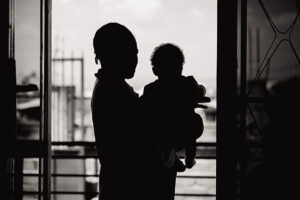
We teach children to look for the uniform when the world catches fire.
If you are lost, find a soldier. If there is an explosion, run toward the flashing lights. If the sky turns to ash, trust the men and women paid by the state to keep the perimeter secure. It is an instinct passed down through generations, an unspoken social contract printed on the back of every civilian passport. The state holds the monopoly on legitimate force, and in return, it protects the vulnerable.
But the data tracking global conflicts tells a different story.
The figures show an upending of that fundamental trust. In tracking violations against minors across global war zones, a stark reality emerged: state militaries and government security forces overindexed as the primary actors driving the statistics up. Not underground insurgencies. Not rogue militias operating out of the shadows. The very institutions designed to uphold international law were the ones driving the numbers.
Consider a hypothetical child named Samir. He is nine. He lives in a city where the power grid failed months ago. When artillery rounds begin to impact his neighborhood, Samir does not run toward the mountains where the rebel factions hide. He runs toward the checkpoint. He runs toward the concrete barriers painted with the national flag. He believes, with the pure certainty of childhood, that the flag is a shield.
Now consider what happens when the shell that strikes his bedroom originates from that same state apparatus. The physical injury is devastating. The architectural collapse of his reality is total. When the protector becomes the threat, there is no longer a safe direction to run.
The Weight of Verified Data
The shift is documented in the verified metrics of international monitors. For decades, the public narrative surrounding wartime atrocities focused heavily on non-state actors—terrorist networks, warlords, and loosely organized insurgencies. These groups dominated the headlines with kidnappings, forced recruitment, and asymmetric tactics. They remain a massive, undeniable threat.
Yet, the nature of modern warfare has shifted the balance of harm. Governments possess heavy weaponry. They fly fighter jets. They deploy long-range artillery and explosive weapons with wide-area effects in densely populated urban centers. When a state decides to root out an insurgency by shelling a neighborhood, the collateral damage is measured in young lives.
The numbers are cold, but the mechanics are simple. A mortar shell fired by a regular army private carries the same kinetic destruction as one fired by a guerrilla fighter. But the state operates at a scale the guerrilla can rarely match. When industrial military power is brought to bear on cities, hospitals, and schools, the civilian toll skyrockets.
This is not a matter of intent; it is a matter of physics and geography. When wars move into streets and apartment blocks, the distinction between a combatant and a child blurs beneath the rubble.
The Fiction of Precision
We are fed a steady diet of clean warfare terminology. We hear phrases like "surgical strikes," "precision-guided munitions," and "targeted neutralized objectives." These terms exist to reassure civilian populations at home that the violence is controlled, calculated, and contained.
It is an illusion.
An analogy helps clarify the scale of the problem. Imagine trying to perform surgery with a sledgehammer. No matter how skilled the surgeon, the surrounding tissue will be destroyed. When a state drops a 500-pound bomb on a suspected insurgent safehouse in a crowded alleyway, the precision of the guidance system matters very little to the family sleeping next door. The shockwave does not check identification papers. The shrapnel does not respect international borders.
The reality on the ground is messy, loud, and profoundly imprecise. Security forces often operate under immense pressure, navigating environments where the enemy dresses like the population. Fear drives decision-making. Rules of engagement, designed in sterile offices, disintegrate in the heat of an urban firefight.
The result is a systemic failure to protect. The data reflects this failure not as an anomaly, but as a consistent pattern across multiple theatres of war. The institutions bound by the Geneva Conventions are failing to clear the very bar they set for themselves.
The Invisible Aftershocks
The damage extends far beyond the immediate physical casualties. The psychological infrastructure of an entire generation is being systematically dismantled.
When a child is harmed by an insurgent group, the trauma is deep, but the moral universe remains intact. The bad actors did bad things. But when the harm is caused by the government, the trauma mutates. It turns into a profound, paralyzing cynicism. The world is revealed to be a place utterly devoid of rules.
Think about the long-term stability of a region where the youth grow up viewing the state not as a guarantor of rights, but as an engine of arbitrary violence. The uniform becomes a symbol of dread. The flag becomes a warning sign.
This creates a self-fulfilling cycle of instability. It erodes the legitimacy of governance, making reconciliation nearly impossible once the guns fall silent. The wounds heal into scars that dictate the political terrain for decades.
Confronting the Institutional Shield
Accountability is notoriously difficult to enforce when the perpetrator is the one holding the gavel.
Non-state actors can be placed on sanctions lists, hunted by international coalitions, and tried in absentia. But governments possess diplomatic shields. They have seats at the United Nations. They have trade agreements, intelligence-sharing partnerships, and geopolitical allies willing to look the other way in exchange for stability or strategic advantage.
This institutional protection creates a culture of impunity. When a government military unit commits a violation, the initial response is rarely confession. It is denial, followed by an internal investigation that drags on until the news cycle moves on. The bureaucratic machinery is incredibly effective at absorbing shock and deflecting blame.
We must look past the press releases and focus entirely on the verified outcomes. The identity of the shooter matters less than the age of the victim. If we are to take international law seriously, the standard of accountability must be higher for those who signed the treaties than for those who fight outside them.
The uniform should mean something. It should mean restraint, discipline, and the absolute protection of those who cannot protect themselves. Until the international community forces governments to reckon with the human cost of their tactics, the statistics will continue to rise, and the contract between the state and the vulnerable will remain broken.
Somewhere right now, a child is looking out a window, watching a military vehicle roll down the street. They are trying to decide whether to stay, or to run.