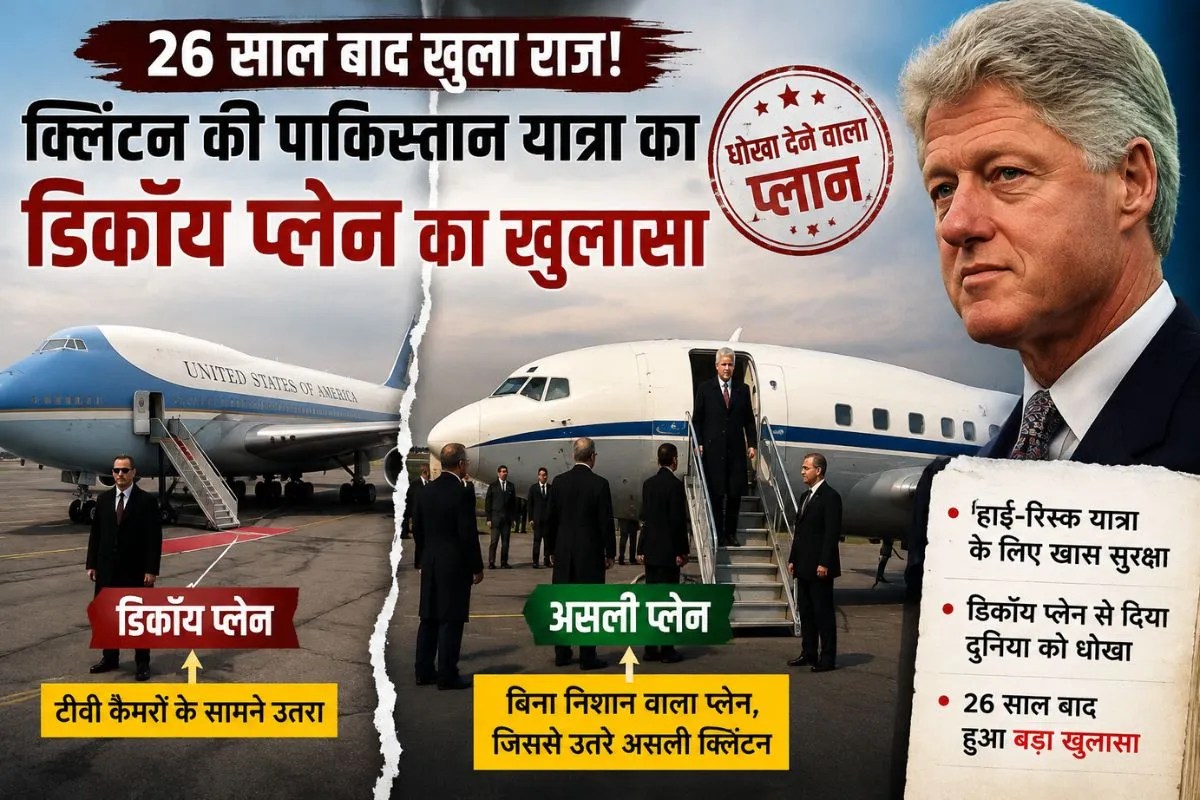
You would think the President of the United States travels with absolute transparency, but reality is far more calculated. Twenty-six years ago, a massive security deception played out quietly during Bill Clinton's historic South Asian tour.
Back in March 2000, Clinton wrapped up a successful, high-energy visit to India and prepared for a brief, incredibly tense six-hour stopover in Pakistan. General Pervez Musharraf had seized power in Islamabad just five months prior following a military coup, and the region was a powder keg. The threat level was so high that the Secret Service refused to rely on standard protocols.
Instead of flying into Islamabad on the iconic, highly visible Air Force One, Clinton pulled off a classic aviation bait-and-switch.
How the 2000 Pakistan Decoy Operation Worked
The deception began on the tarmac in Mumbai, India. Clinton appeared to publicly board a large US military transport aircraft. Cameras rolled, and reporters watched.
Except, he didn't stay there.
Once out of sight, the president was quietly transferred to a drab, unbranded Gulfstream executive jet painted silver and off-white. Meanwhile, a separate aircraft bearing official US markings and an American flag took off to serve as a decoy.
When the decoy plane touched down in Islamabad, it landed right in front of television cameras. A Secret Service agent who shared a striking physical resemblance to Bill Clinton stepped out first, waving to the crowd to trick any potential spotters or attackers. Minutes later, the actual unmarked jet carrying the real president landed safely from a completely different direction.
Senior white house journalists, including then-White House Correspondents' Association president Susan Page, were let in on the secret ahead of time. They received an off-the-record briefing because the danger wasn't just to the commander-in-chief—the traveling press corps was flying directly into the crosshairs too.
Why This Decoy Strategy Still Captures Attention Today
This quarter-century-old secret popped back into the global news cycle recently after modern executive travel security measures mirrored the exact same playbook. High-stakes political movement is rarely straightforward. When threats from hostile groups or state actors loom, intelligence agencies default to confusion and misdirection.
People often wonder why world leaders don't just use standard commercial airspace or obvious military escorts. The truth is simple. A recognized presidential silhouette is a primary target for insurgent factions, snipers, or missile attacks. By swapping planes, altering motorcade routes with identical duplicate vehicles, and scrubbing flight schedules, security teams turn the president into a moving target that cannot easily be pinned down.
Clinton's quick, high-risk dash to Pakistan ultimately forced difficult conversations about nuclear restraint, terrorism, and democracy directly to General Musharraf's doorstep. But the real masterclass happened before he even cleared customs.
Next time you watch a world leader step off an aircraft on live television, remember that what you see on the screen might just be the decoy act while the real cargo arrived safely through the back door. Take a closer look at the logistics of global power next time headlines talk about sudden itinerary changes, because the official narrative is usually only half the story.


