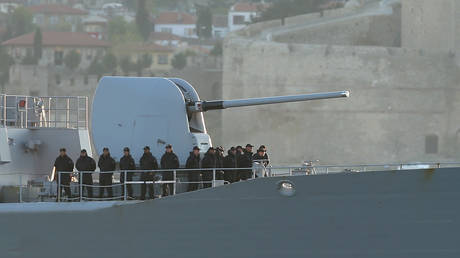
The Black Sea is boiling. Not literally, of course, but geopolitically it is a friction point that keeps naval commanders awake at night. If you look at a map of Europe, this body of water looks like an enclosed lake. Yet, it sits directly in the crosshairs of global conflict. It is the exact spot where NATO territory rubs directly against Russian military aggression.
For years, Western strategic focus drifted toward other regions. We talked about the South China Sea. We worried about the Baltic. Meanwhile, the Black Sea turned into a volatile theater of drone warfare, blockaded trade routes, and constant military shadowing. It is a vital waterway shared by three NATO members—Turkey, Romania, and Bulgaria—alongside Ukraine, Georgia, and Russia. This mix makes it a geopolitical tinderbox.
Understanding why this region matters isn't just for military theorists. It affects global grain prices, European energy security, and the stability of international shipping lanes.
The Strategic Importance of the Black Sea Bottleneck
Geography dictates destiny here. The Black Sea is a maritime gateway connecting Eastern Europe to the Mediterranean and the wider world. For Russia, it represents their only warm-water access route to the Middle East and Africa, operating out of naval bases in occupied Crimea. For Ukraine, it is the economic artery that allows agricultural exports to reach global markets.
Control is contested daily. Since Russia launched its full-scale invasion of Ukraine, the Black Sea became a primary combat zone. We saw the dramatic sinking of the Russian flagship Moskva. We watched the deployment of experimental, explosive naval drones. This isn't low-intensity friction. It is high-tech, high-stakes maritime warfare occurring right on NATO's doorstep.
The legal framework governing these waters complicates everything. The 1936 Montreux Convention gives Turkey control over the Bosporus and Dardanelles straits. Under these rules, Turkey blocks warships of belligerent nations from entering during wartime. This keeps additional Russian warships out, but it also limits how much naval muscle the United States or the United Kingdom can send into the sea to back up Romania and Bulgaria. NATO members inside the sea must handle the heavy lifting themselves.
Why the NATO Flank Feels Vulnerable
Walk along the coast of Romania or Bulgaria and the tension is palpable. Drone debris regularly washes up on Romanian soil. Floating naval mines drift southward, threatening commercial shipping and civilian vessels.
The alliance faces an asymmetric threat here. Russia doesn't need to launch an amphibious assault on a NATO member to cause chaos. They use hybrid tactics. They jam GPS signals, disrupting commercial aviation and maritime navigation across the region. They declare massive, arbitrary naval exercise zones that effectively blockade international waters for weeks.
- Floating Mines: Hundreds of naval mines are drifting loose. Romania, Bulgaria, and Turkey launched a joint mine countermeasures task force to hunt them down, but the threat remains constant.
- GPS Spoofing: Commercial pilots and ship captains regularly report lost or faked location signals near the Danube delta.
- Airspace Violations: Russian fighter jets routinely buzz NATO airspace, forcing Romanian and Bulgarian jets to scramble in tense, mid-air standoffs.
This isn't a distant problem. Romania shares a long border with Ukraine. The war is visible from its northern river ports. When Russian drones strike Ukrainian ports like Izmail and Reni on the Danube River, they are exploding just hundreds of meters away from NATO territory. The margin for error is razor-thin.
The Economic Stranglehold on Global Supplies
The battle for these waters is an economic war. Ukraine historically supplied a massive chunk of the world's grain. When Russia blockaded Ukrainian ports, food prices spiked globally, hitting developing nations hardest.
The creation of the temporary Black Sea humanitarian corridor by Ukraine changed the dynamics. Against the odds, and without a traditional navy, Ukraine used anti-ship missiles and sea drones to push the Russian surface fleet back from the western part of the sea. This allowed merchant ships to hug the coastlines of Romania and Bulgaria, staying inside protected NATO territorial waters.
It's a fragile victory. Shipping insurance rates in the region are astronomical. Every captain taking a vessel into these waters knows they are entering a zone where international law is treated as a suggestion. One stray missile or one unmapped mine could trigger a massive international crisis.
Energy Reserves in the Crosshairs
There is another layer to this conflict that rarely gets enough attention. Energy. The Black Sea holds significant untapped natural gas reserves. Romania is actively developing its Neptun Deep offshore gas project, aiming to become the largest gas producer in the European Union.
This energy independence drive directly threatens Russia's historical leverage over European energy markets. Consequently, these offshore gas platforms require constant military protection. They are prime targets for Russian sabotage, cyberattacks, or intimidation tactics. Protecting energy infrastructure in the sea is now just as critical as defending land borders.
Shifting Focus to the Southern Flank
For decades, NATO prioritized the defense of the Suwalki Gap and the Baltic states. That made sense when the primary threat was a land invasion through Poland. But the security landscape shifted permanently. The southern flank cannot be treated as a secondary priority anymore.
The alliance is slowly waking up to this reality. We see increased air policing missions over Romania and Bulgaria. Multi-national battlegroups are stationed in the region. Yet, naval presence remains limited by geography and international treaties. The three Black Sea NATO members must build up their own naval capabilities quickly, purchasing modern corvettes, submarines, and coastal defense missile systems.
Relying on old strategies won't work here. The region requires a dedicated, permanent NATO maritime strategy that accounts for drone warfare and hybrid threats.
If you want to track where the next major geopolitical flashpoint might erupt, stop looking exclusively at traditional borders. Watch the shipping lanes, the offshore gas rigs, and the contested waters of the Black Sea. To stay informed on how this impacts global markets, monitor daily shipping insurance indices and regional defense policy updates from Baltic and Black Sea security think tanks. Security starts with recognizing where the vulnerability lies.