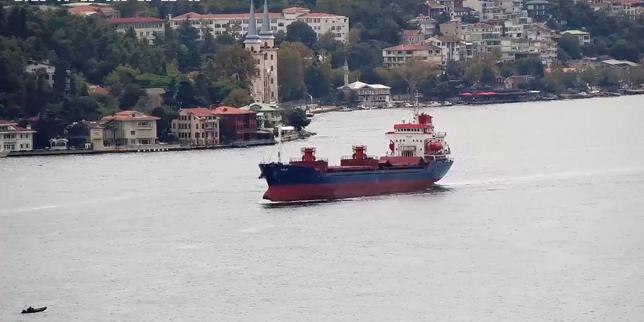
Commercial ships are getting hit in the Black Sea. Pundits immediately declare Ankara and Moscow on a collision course.
Lazy. Predictable. Wrong.
The standard media narrative treats every aerial drone strike, sea drone hit, or floating mine near commercial hulls as a diplomatic fuse burning down toward a Turkish-Russian rupture. Watch a vessel take fire off Bulgaria or near Ukrainian waters, watch Ankara threaten legal recourse or warn both combatants, and the commentary class writes the same obituary for bilateral ties.
It makes great copy. It misreads the incentives of both capitals.
Turkey and Russia are not drifting into hostility over merchant shipping. Their relationship is being repriced, not severed. Both states rely on pragmatic friction management because neither can afford an open maritime clash in an enclosed sea governed by the Montreux Convention—the 1936 treaty that gives Ankara sovereign control over naval transit through the Turkish Straits.
The Lazy Consensus Around Black Sea Hull Strikes
Conventional coverage assumes a neat chain reaction: attacks on commercial vessels hurt trade, trade pain breeds diplomatic anger, and anger fractures the Ankara-Moscow balancing act.
Look closer at what is actually happening on the water. Strikes hit vessels across multiple flags, crews, and routes—from drone hits on cargo ships in the Black Sea to sea drones striking Turkish-crewed tonnage off Bulgaria and drifting mines threatening hulls. Ankara pushes back firmly against attacks on commercial vessels and reserves legal rights when Turkish-owned or Turkish-flagged ships are hit, while simultaneously engaging both Moscow and Kyiv on grain and maritime security talks.
Calling that a "test to destruction" confuses diplomatic posturing with strategic divorce.
In maritime trade and geopolitical risk advisory, I have watched supply-chain managers blow millions hedging against binary geopolitical collapses that never materialize, while ignoring slow-motion unit-cost explosions that wreck margins quietly. When Black Sea container and bulk routes get choked by drones, mines, and port strikes, cargo does not vanish overnight. It reroutes. Voyages stretch from days to weeks. Per-container costs jump multiples higher when shipments shift to longer corridors like the Baltic. Turkish shipping groups have warned of massive economic drag—up to $20 billion in potential disruption costs cited by Turkey's shipping board—yet Ankara still refuses to surrender its broker seat in Moscow.
Why Both Ankara and Moscow Need the Friction
Strip away the diplomatic theater and examine what each side actually gains—and risks—from the current standoff.
Ankara’s Lever Is Leverage Itself
Turkey sits at the choke point between the Black Sea and the Mediterranean. If Ankara cuts ties with Moscow over maritime strikes, it forfeits its single most valuable card: being the only major regional power with open channels to both Russia and Ukraine—and to NATO and the European Union.
Ankara’s warnings to both belligerents to keep commercial shipping out of the line of fire serve two purposes at once. First, they protect Turkish crews, shipowners, and domestic trade interests. Second, they position Turkish President Recep Tayyip Erdoğan and Foreign Minister Hakan Fidan as indispensable mediators whenever grain corridors or Black Sea security frameworks are negotiated.
Moscow’s Constraint Is Geography, Not Sentiment
Russia has far more to lose from escalating directly against Turkey than from grumbling through diplomatic channels. Russian exports—including grain, energy, and industrial goods—depend heavily on southern maritime outlets and regional trade partners. When southern container traffic slows or shifts to longer routes like St. Petersburg, transit times lengthen and logistics costs climb sharply.
Picking a direct fight with Turkey at sea would turn a contested war zone into a multi-front naval crisis right outside the Bosphorus. Moscow knows that. Turkish officials have noted that Russia resists temporary shipping deals unless broader peace terms are addressed, showing how tightly Moscow links maritime security to wider territorial demands. Still, that is hard bargaining, not an invitation to naval war with Ankara.
| Dimension | Lazy Media Narrative | Operational Reality on the Water |
|---|---|---|
| Primary Driver | Bilateral anger over ship attacks breaks ties | Asymmetric drone/mine warfare and port risk reshape trade routes |
| Ankara’s Posture | Forced to choose sides or escalate | Protects commercial interests while preserving mediation leverage |
| Moscow’s Calculus | Willing to risk direct clash with Turkey | Avoids direct naval war with a Straits power while linking deals to broader talks |
| Commercial Impact | Sudden total halt of all trade | Higher insurance, longer transit times, and costly route diversions |
The Wrong Question Everyone Is Asking
People keep asking: Will attacks on commercial ships in the Black Sea destroy Turkey-Russia relations?
Wrong question.
The real question is: How much commercial risk and transit cost can Black Sea trade absorb before regional supply chains permanently rewire around the basin?
Think about that shift. A diplomatic spat makes headlines for forty-eight hours. A permanent shift in container routing, charter rates, and marine war-risk premiums alters balance sheets for years.
Imagine a scenario where drone and mine threats in the northwestern and eastern Black Sea remain elevated enough to keep war-risk insurance steep, while diplomatic talks stall repeatedly. No single strike triggers a formal rupture between Ankara and Moscow. Yet shippers quietly move higher-value containers to longer rail or Baltic routes, leaving lower-margin bulk cargo to brave higher freight and insurance bills. Relations survive on paper. Trade flows quietly erode.
What People Also Ask—Answered Without Fluff
Does Turkey blame only Russia for commercial ship attacks in the Black Sea?
No. Ankara has criticized attacks by both Russia and Ukraine on commercial vessels and urged both sides to keep merchant shipping away from hostilities. Blaming only one actor would blow up Turkey’s dual-channel diplomatic position.
Can Turkey simply escort every commercial ship across the Black Sea?
Escorting every merchant hull in an active drone-and-mine environment is a fantasy. Unmanned surface vessels, aerial drones, and drifting naval mines create saturation threats that traditional escort doctrine struggles to guarantee at scale, especially outside tight territorial lanes.
What should shippers and logistics teams actually do right now?
Stop treating Black Sea risk as a binary headline event. Audit single-route exposure across Novorossiysk, Odesa, and regional feeder ports. Price in multi-week transit contingencies and alternative corridors before spot rates spike. Build contract flexibility on demurrage, routing clauses, and war-risk allocation rather than betting on a sudden diplomatic breakthrough.
Where This Contrarian View Can Fail
Any sharp thesis carries blind spots, and pretending otherwise is dishonest.
This analysis assumes both Ankara and Moscow stay rational actors managing risk inside clear boundaries. A miscalculation can break that assumption fast. If a stray or targeted strike kills dozens of Turkish sailors on a major commercial vessel, or hits critical infrastructure inside Turkish territorial waters or the Straits approaches, domestic political pressure in Ankara could force sharper retaliation than calculated pragmatism allows. Likewise, if broader peace negotiations collapse completely and maritime escalation spills further west, restraint could give way to reactive moves.
Even then, watching incentives rather than headlines gives you the clearest warning signs first.
Ankara and Moscow will keep clashing in statements, negotiating in back rooms, and trading across contested waters because neither holds a better hand by blowing up the table. The real casualty in the Black Sea is not diplomatic drama—it is cheap, predictable shipping.