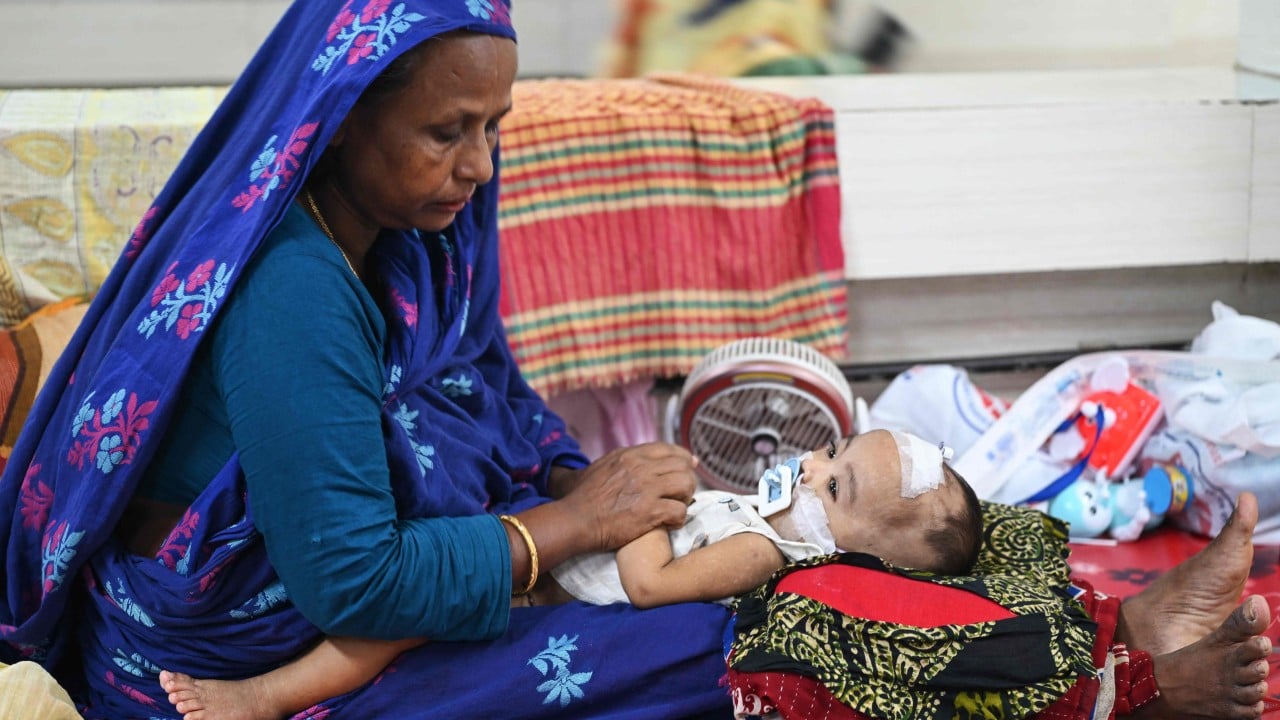
Every time a pediatric ward overflows in Dhaka or Chittagong, international wire services roll out the same tragic script. They talk about overstretched staff, broken supply chains, and parents arriving too late. They point at the symptom and call it the disease. It is a lazy narrative designed for quick outrage, and it completely misses why children are actually dying.
Let us be entirely clear about what is happening on the ground. The consensus argument claims that thousands of child deaths in Bangladesh stem purely from acute medical mismanagement and a lack of secondary hospital beds once the outbreak takes hold. This is false. Treating a measles infection at the tertiary level is already a failure of infrastructure. By the time a child reaches an urban ward gasping for air with severe pneumonia or acute malnutrition, the system has broken down months earlier at the primary community level.
I have walked through field clinics where health workers spend hours arguing with families about oral rehydration salts while basic cold-chain infrastructure sits idle yards away. The tragedy is not merely that hospitals lack cots. The tragedy is that we treat measles as an emergency room crisis when it is an epidemiological failure of basic primary delivery.
The Misdiagnosis of the Outbreak
When headlines scream about overflowing children's wards, they invite a predictable policy response: buy more IV drips, build more temporary triage tents, and ship in foreign medical teams. This is throwing money at a bonfire.
Measles is one of the most contagious viral pathogens known to humanity. It does not negotiate with emergency room capacity. If your vaccination coverage dips below the herd immunity threshold in densely populated settlements, the virus will find every unprotected host. No amount of hospital beds can stop a measles wave once it achieves critical mass in an under-immunized pocket.
Imagine a scenario where every single child currently waiting in a Dhaka corridor suddenly received a secondary care bed. Mortality rates would still remain stubbornly high if those children return to homes where vitamin A supplementation is non-existent and baseline nutritional status is compromised. Measles does not kill primarily through the rash. It kills by obliterating the immune system's memory cells, leaving the host vulnerable to secondary bacterial infections like severe pneumonia and dysentery.
Fixing the hospital wards is like bailing out a sinking ship with a teaspoon while ignoring the gaping hole in the hull. The hole is routine immunization delivery and community-level tracking.
Dismantling the Supply Chain Myth
The mainstream commentary loves to blame global vaccine shortages and logistical bottlenecks. Officials point to damaged cold chains during monsoon seasons or remote geography. While these factors exist, they are convenient excuses for domestic administrative inertia.
Bangladesh has proven capable of executing massive, world-class vaccination campaigns in the past. The infrastructure for polio eradication and national immunization days exists. The breakdown during this measles resurgence is structural complacency. When infection rates drop for a few consecutive years, local health authorities shift resources and attention to newer donor-funded priorities. Routine surveillance becomes a ghost town of unchecked registers and unvisited rural outposts.
Communities do not reject vaccines out of abstract ideological malice. They drift away because the local health outpost is locked, staffed by an absentee nurse, or because nobody bothered to explain why a second dose matters as much as the first. When trust erodes, coverage drops. When coverage drops, outbreaks become inevitable.
The Uncomfortable Truth About Nutritional Synergy
You cannot talk about measles mortality without talking about hunger, yet international reports frequently decouple the two. A well-nourished child infected with measles experiences a miserable week, a fever, a rash, and recovery. A malnourished child infected with measles faces a systemic collapse.
Vitamin A deficiency acts as an accelerant for measles complications, turning a manageable childhood infection into a blinding or fatal ordeal. Yet, distribution of high-dose vitamin A capsules remains sporadic in peri-urban slums and remote riverine islands.
Let us stop pretending that medical heroism in overcrowded urban hospitals can substitute for basic public health nutrition. If public health agencies spent half the energy on aggressive vitamin A supplementation and proactive community sweeps that they spend drafting emergency press releases about bed shortages, mortality rates would plummet overnight.
What Needs to Happen Now
If we want to stop treating the symptoms and start curing the disease, we must abandon the emergency room mindset entirely.
- Shift budgets upstream: Divert emergency funding away from temporary urban triage units and into aggressive door-to-door catch-up campaigns in districts with documented coverage drops.
- Enforce micro-planning: Stop relying on macro-level national estimates. Every single union and ward must track zero-dose children by name.
- Integrate nutrition: Never administer a measles vaccine without simultaneously checking nutritional status and delivering micronutrient supplements.
The next time an international outlet publishes photos of crowded hospital corridors in Bangladesh, do not look at the beds. Look at the calendar. Ask why those children were never reached six months ago when they were still running around their villages.
Stop funding the panic. Fix the foundation.