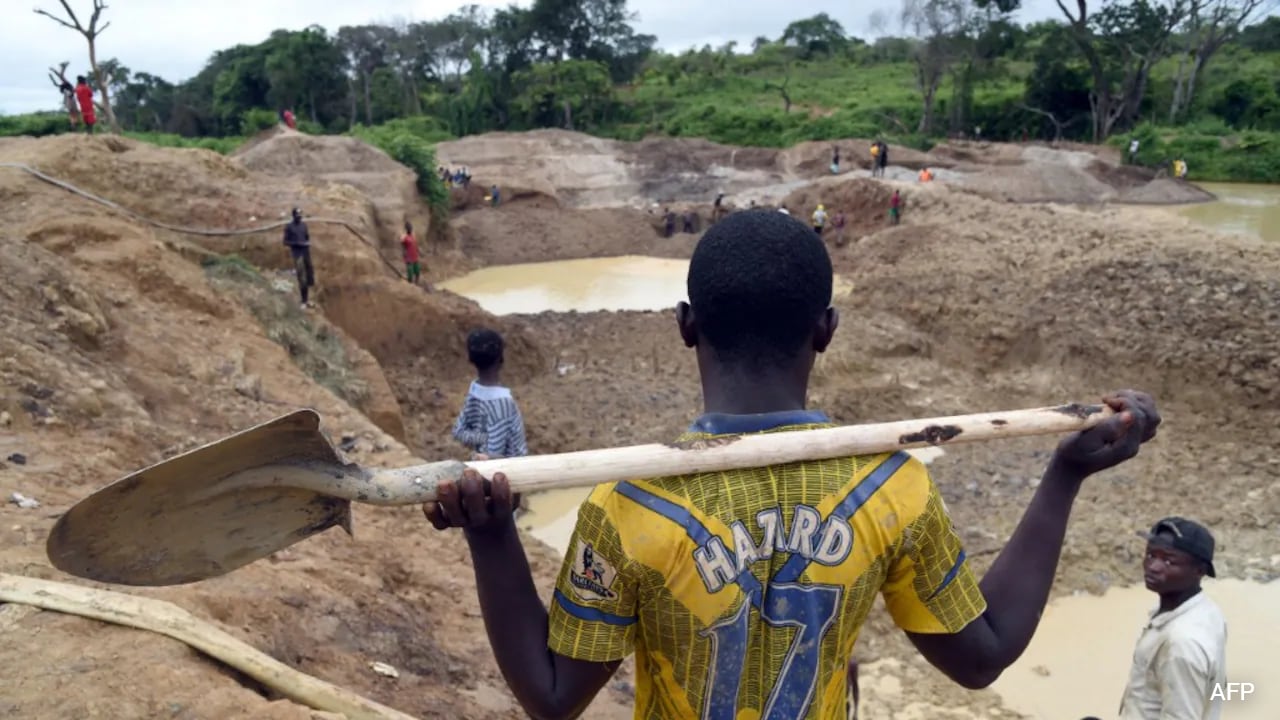
Every time a pit caves in across the Central African Republic and bodies pile up, the global commentariat dusts off the same tired script. They point a collective finger at artisanal gold mining, mutter about reckless local operators, and demand heavy-handed crackdowns.
It is a lazy narrative. It is also completely wrong.
When thirty people die in a mine collapse, the media treats it as a sudden act of God or a tragic consequence of individual greed. They miss the macro picture entirely. Artisanal miners do not die because they enjoy digging graves with their bare hands. They die because global supply chains, predatory licensing systems, and economic strangulation leave them zero margin for safety.
I have spent years tracking mineral flows across Central Africa. I have watched international conglomerates squeeze supply lines while domestic authorities squeeze permits, leaving the actual extraction workforce to operate in absolute destitution. When you strip people of capital, technology, and legal protection, safety equipment becomes an unaffordable luxury.
Blaming the miners for dying is like blaming a drowning man for not wearing a designer life jacket while you hold his head underwater.
The Economics Of Desperation
To understand why miners keep entering unstable shafts, look at the math of survival. A standard artisanal miner in the CAR operates under crushing economic pressure. They do not own the land. They rarely own the tools. They exist at the absolute bottom of a hyper-extractive commercial pyramid.
When gold prices fluctuate on London exchanges, shockwaves ripple straight down to the red clay of Ndassima or the remote pits of the east. If the local price drops, a miner has to dig twice as fast and twice as deep just to buy basic food. Shoring up tunnel walls with expensive timber or importing hydraulic props costs money. Money these workers do not possess.
The mainstream press loves to run headlines about illicit mining syndicates and rogue operators. This frames the crisis as a law enforcement problem. If we just send in more inspectors, the thinking goes, the tunnels will magically become safe.
That is an administrative fantasy.
You cannot regulate poverty out of existence with a clipboard. Every time authorities shut down an artisanal site under the banner of safety reform, they do not save lives. They simply drive thousands of desperate people into deeper, more dangerous, and entirely undocumented shafts where oversight is zero and corruption is the only currency that matters.
The Global Complicity Nobody Discusses
Let us talk about where that gold actually ends up.
The narrative suggests that CAR gold stays local or feeds sketchy regional black markets. That is only half the story. Global markets have an insatiable appetite for precious metals, and the supply chain possesses a remarkable talent for laundering origin. Gold is easily melted down, recast, and funneled through neighboring trade hubs until its bloody history is scrubbed clean.
Multinational jewelry brands and tech manufacturers purchase refined gold with clean conscience clauses signed by middlemen. They profit from the low baseline cost of production driven by unprotected labor. When a disaster strikes and thirty miners vanish beneath tons of wet earth, those same corporations release generic statements of condolence, completely detached from the fact that their supply chain economics dictated the very conditions that caused the collapse.
The western approach to African resource extraction has always relied on a neat trick: outsource the lethal risk to the locals, then moralize about their safety standards from a safe distance.
Dismantling The Safety Myth
People ask why these operations do not adopt modern engineering methods. It sounds like a reasonable question if you have never stepped foot inside an artisanal zone.
Imagine a scenario where a subsistence farmer is asked to install a commercial-grade irrigation network using only a plastic spoon. That is essentially what critics are demanding when they lecture artisanal miners about geotechnical engineering.
Modern mining safety requires capital investment, geological surveys, ventilation systems, and mechanization. None of these things are accessible to a cooperative of local workers whose entire daily yield might be worth less than a decent pair of work boots.
Worse still, formalizing these sectors often turns into a bureaucratic shakedown. Governments slap exorbitant fees on licensing, effectively locking out local operators and handing concessions over to foreign mega-corporations with political connections. The locals are then pushed back in as wage slaves on their own ancestral land, working the exact same dangerous walls under armed supervision.
So when thirty people die, do not look at it as an isolated local tragedy. Look at it as the inevitable structural output of a global system that treats human life as a rounding error on a balance sheet.
Stop buying the fiction that better policing will fix a structural crisis born of engineered poverty. The next time a mine collapses, remember that the true weight crushing those workers is not just the mud and stone above them. It is the entire global economic architecture pressing down from the top.