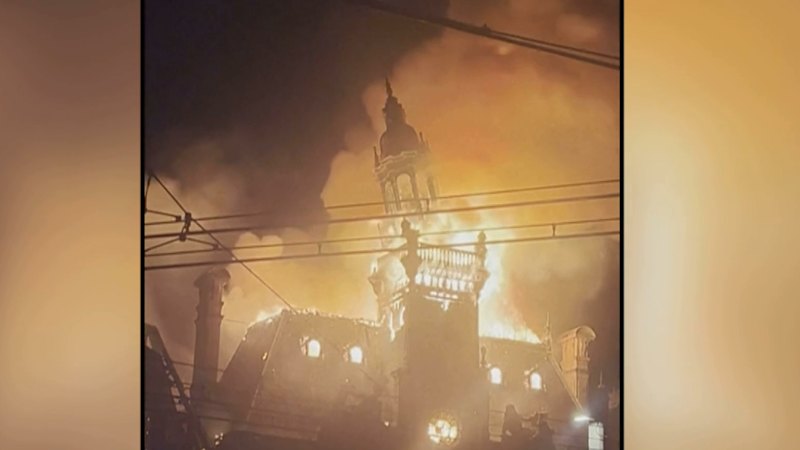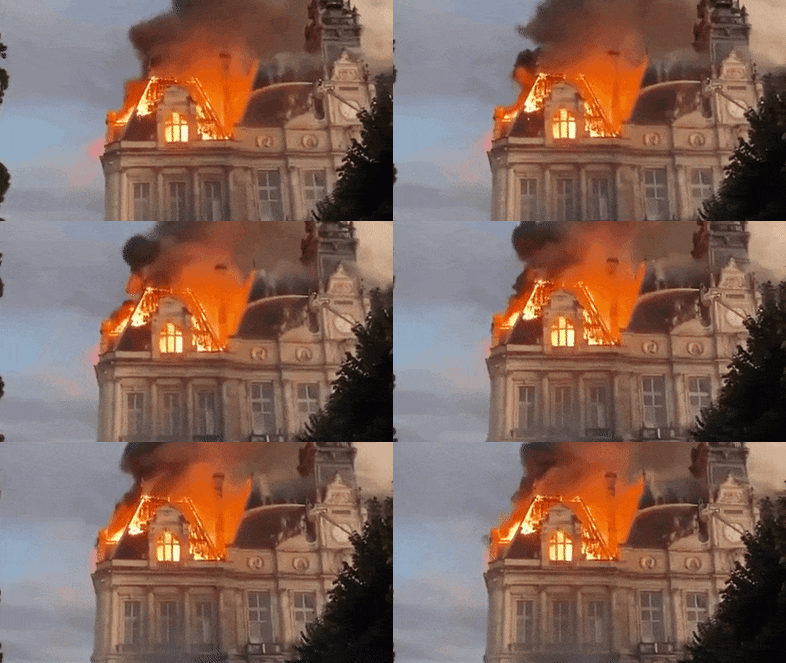
Every time smoke clears from a European street corner after a night of burned cars and smashed storefronts, the script prints itself automatically. Politicians step up to microphones, furrow their brows, and point an immediate, convenient finger at migration. It is the oldest trick in the political playbook. It shifts blame away from systemic failures, structural decay, and decades of policy neglect, wrapping a complex sociological crisis into a neat, easily digestible soundbite for the evening news.
The lazy consensus holds that civil unrest is simply an import. If you seal the borders, the theory goes, the discontent evaporates. That is a comforting fiction for leaders who refuse to look in the mirror. I have spent years analyzing urban governance and municipal policy across Western Europe, and I can tell you firsthand that municipal authorities love nothing more than a foreign scapegoat. It hides the rot underneath.
Look at the mechanics of recent riots in France. When Emmanuel Macron addresses the nation after nights of looting, the narrative is instantly polarized between law-and-order rhetoric and foreign influence. Donald Trump chimes in from across the Atlantic, diagnosing European unrest purely through the lens of migration failures. Both viewpoints miss the forest for the trees. They mistake the match for the oxygen, the dry wood, and the faulty electrical grid combined.
The real driver of civil unrest is spatial segregation and economic abandonment. Decades ago, French urban planners built massive housing projects on the peripheries of major cities. These banlieues were designed to warehouse working-class families and immigrants alike, physically cutting them off from the economic core of Paris, Lyon, and Marseille. Public transport links are atrocious. Job prospects are dismal. When a young person grows up in an environment where the state only appears in the form of a heavily armed police patrol, alienation is not a byproduct; it is the inevitable product.
Blaming migration assumes that people born outside a country possess some inherent predisposition toward arson. That is not just offensive; it is analytically lazy. Second and third-generation citizens are the ones torching garbage bins and clashing with riot police. These are individuals who hold French passports, speak fluent French, and learned about the French Revolution in French schools. If the integration model failed them, the failure belongs to the Republic's social contract, not a passport office three thousand miles away.
Consider the economic reality. Youth unemployment in these marginalized suburbs has hovered at double-digit rates for generations. When you strip away economic mobility, formal education, and dignity, you create a parallel economy. In that shadow market, informal power structures take over. Gangs and local strongmen provide the security and status that the state fails to offer. When a tragic flashpoint occurs—such as the fatal police shooting of a teenager—the powder keg does not need an external spark from foreign actors. The pressure is already past the critical threshold.
Leaders who lean into the anti-migration narrative are engaging in strategic misdirection. They want voters arguing over cultural identity because cultural debates are cheap to stage and impossible to resolve. Fixing a broken public education system in the projects? That takes billions of euros, decades of sustained political will, and actual administrative competence. Reforming a police culture that relies on intimidation rather than community policing? That invites direct confrontation with powerful police unions. Shouting about borders requires none of that hard work.
We need to redefine the core question. Instead of asking how many people crossed a border, we should be asking why entire neighborhoods have been turned into domestic colonies where the rule of law is replaced by a permanent standoff.
Imagine a scenario where every migrant is instantly integrated, borders are hermetically sealed, and demographic composition freezes overnight. Would the structural inequality in the peripheral housing estates vanish? Would public transit suddenly connect the ignored suburbs to downtown job hubs? Would marginalized youth suddenly find themselves welcomed into corporate boardrooms? No. The underlying economic engine would still be broken. The spatial apartheid would still exist.
This brings us to the uncomfortable truth about law enforcement responses. Saturating a volatile neighborhood with tactical units might clear the streets for the night, but it guarantees a worse explosion down the road. Every heavy-handed intervention reinforces the narrative that the state is an occupying force rather than a public service provider.
We are witnessing the bankruptcy of reactionary governance. Leaders offer tough talk because they have run out of solutions. They treat symptoms with sledgehammers while the disease mutates beneath the surface.
If you want to stop the burning, stop rewarding the politicians who watch the flames and reach for matches marked border control. Fix the geography of exclusion. Fund the schools that teach the forgotten. Demolish the physical and economic walls that trap millions in hopelessness. Until then, keep your fire extinguishers ready, because the current script guarantees a sequel.