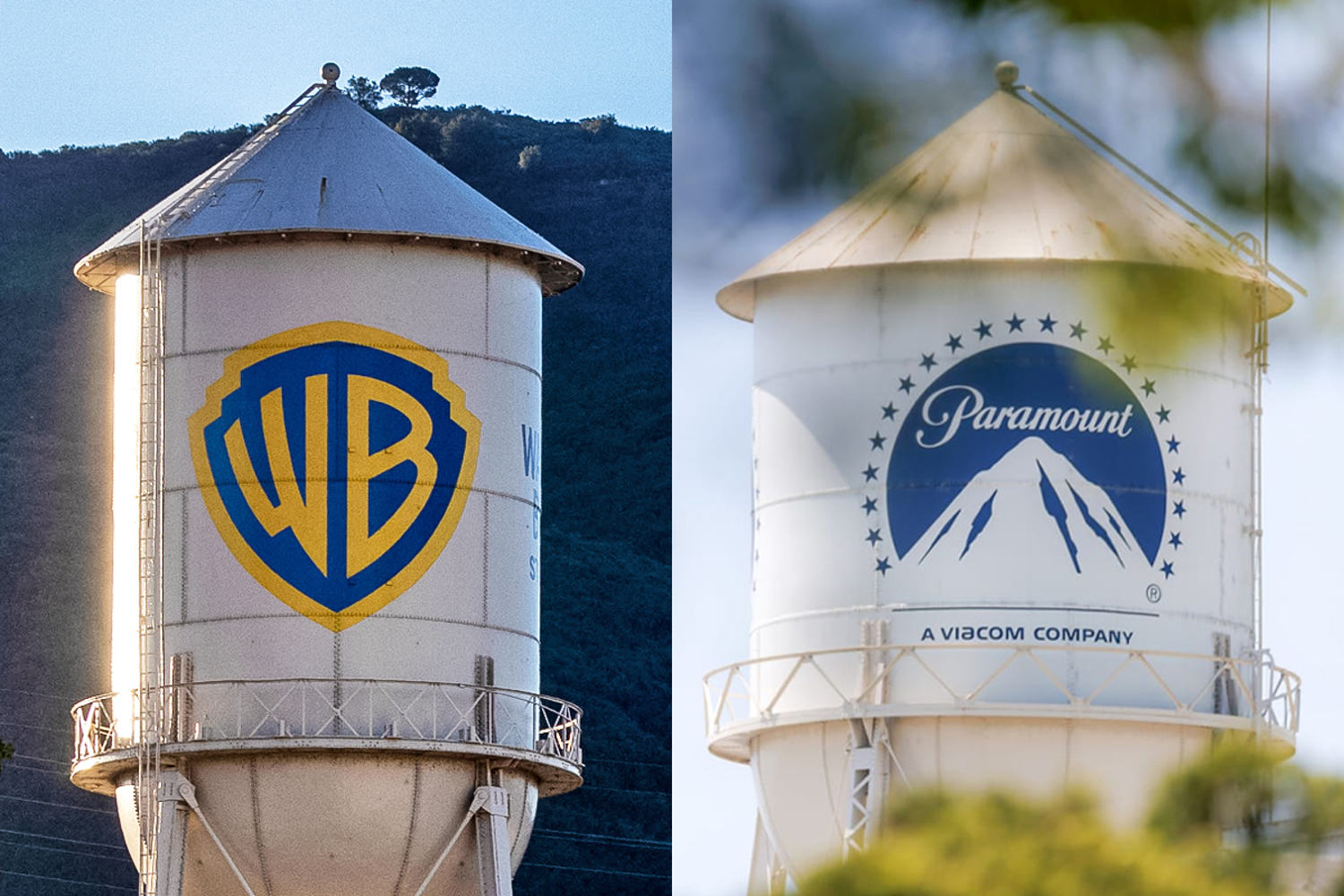
The hand-wringing inside the Beltway has reached a fever pitch. Regulators are sharpening their knives, antitrust lawyers are booking cable news segments, and independent film advocates are weeping into their artisanal coffees. The narrative is comforting, simple, and entirely wrong: If we just stop this latest media consolidation, we can save the soul of cinema.
It is a beautiful fantasy. It is also financially illiterate.
The conventional wisdom insists that blocking massive media mergers protects competition, preserves jobs, and ensures a diverse marketplace for ideas. The reality is far uglier. In the current economic climate, forced stagnation does not preserve the status quo. It accelerates decay. By preventing legacy media giants from scaling up to face the existential threat of tech monopolies, regulators are not saving Hollywood. They are signing its death warrant.
The Trillion Dollar Elephant in the Room
Every antitrust argument against the current wave of entertainment consolidation treats the industry as if it still exists in 1995. Regulators look at traditional studios and calculate market share based on theatrical box office and linear television subscribers.
This is a fundamental misunderstanding of the modern ecosystem.
Hollywood is no longer fighting Hollywood. Disney, Warner Bros. Discovery, Paramount, and Sony are not each other's primary competitors. They are locked in a desperate, asymmetric war against trillion-dollar Silicon Valley platforms for whom content is merely a loss leader to drive hardware sales, cloud subscriptions, and user data collection.
Consider the raw math of the situation.
Apple has a market cap hovering around $3 trillion. Amazon sits comfortably over $2 trillion. Alphabet is in the same stratosphere. To these entities, a $200 million film budget is a rounding error. It is a line item in a marketing budget designed to sell prime subscriptions or upgraded iPhones.
Now look at traditional studios. A standalone legacy media company cannot survive spending $15 billion a year on content when its primary revenue streams—cable affiliate fees and theatrical distribution—are secularly declining. I have watched boards panic as their legacy cash cows dry up. Their only hope of survival is to scale up, combine libraries, eliminate redundant corporate overhead, and build a unified platform that can achieve a sustainable cash flow.
When regulators step in to block a merger between two legacy media entities, they are not protecting the consumer from a monopoly. They are actively disarming the native inhabitants of Hollywood and leaving them defenseless against an invading force that does not care if the theatrical window lives or dies.
The Myth of the Independent Savior
The most vocal opponents of consolidation are often independent creators and mid-tier production companies. They argue that fewer studios mean fewer buyers, lower fees, and less creative freedom.
Let's dismantle this premise.
The golden age of independent cinema in the 1990s and early 2000s was not funded by pure, altruistic indie capital. It was funded by the specialized boutique divisions of massive media conglomerates. Miramax was owned by Disney. Focus Features was owned by Universal. Fox Searchlight was backed by the deep pockets of 20th Century Fox.
These conglomerates used the massive, predictable profits from their tentpole blockbusters and corporate scale to subsidize prestige, low-margin filmmaking. A studio could afford to lose money on three arthouse dramas if their summer superhero sequel cleared $800 million globally.
What happens when you strip away that corporate safety net by forcing these companies to remain small and fractured?
- Risk aversion skyrockets. A mid-sized studio fighting for its life on a quarter-by-quarter basis cannot afford to take a chance on an unproven director or a polarizing script.
- The "Middle" completely evaporates. You are left with a barbell market: $250 million intellectual property plays at one end, and $2 million micro-budget indies at the other. The $40 million adult drama disappears entirely.
- Distribution infrastructure crumbles. Without the leverage of a massive corporate library, smaller studios cannot command the necessary theatrical screen real estate or favorable revenue splits from exhibition chains.
By forcing traditional studios to remain fragmented, regulators ensure that these companies must focus exclusively on safe, homogenized, global IP to survive. The irony is delicious, if tragic: antitrust intervention produces the exact creative monoculture it claims to prevent.
People Also Ask: The Wrong Questions Driving Policy
The public debate around media consolidation is dominated by flawed assumptions. Let's address the most common queries with the brutal honesty the industry avoids in public relations statements.
Won't fewer studios lead to higher streaming prices for consumers?
No. This assumes subscription pricing is determined solely by the number of Hollywood options. Streaming prices are rising because the initial model of charging $7 a month for a bottomless pit of premium content was a financially unsustainable customer-acquisition strategy. Every player lost billions. Prices are correcting to reflect the actual cost of production, regardless of whether there are four studios or eight. Furthermore, consolidation often allows companies to bundle services, offering more content under a single subscription fee rather than forcing consumers to manage a dozen different digital wallets.
Doesn't consolidation destroy jobs for creators and crew?
In the immediate aftermath of a merger, yes. Corporate redundancies are eliminated, and overlapping development executives are let go. It is brutal, and I have seen talented colleagues lose their livelihoods in these transitions. But look at the alternative. If these companies do not merge and instead go bankrupt or get slowly cannibalized by tech platforms that outsource production globally, the job losses are permanent and structural. A combined, profitable studio hires crews. A bankrupt studio files for Chapter 11.
Why can't tech companies just be the new Hollywood?
Because their incentives are entirely different. When a traditional studio makes a movie, that movie must be profitable through theatrical windows, home entertainment, or licensing. The focus remains entirely on the value of the storytelling. When a tech platform makes a movie, the metric of success is engagement retention or ecosystem lock-in. If the strategic priority of the tech parent shifts, the content spend can be slashed overnight without warning. Relying on Silicon Valley to fund the arts is a dangerous gamble built on shifting algorithmic sands.
The True Cost of Regulatory Virtue Signaling
Regulators love targeting Hollywood mergers because the brands are recognizable and the headlines are guaranteed. It looks like populist, pro-consumer action.
In reality, it is a form of regulatory virtue signaling that ignores the fundamental mechanics of modern corporate finance.
When the government blocks a merger like the proposed combination of mid-tier media assets, they do not create a vibrant, competitive market. They create a zombie state. Companies are left too small to compete effectively in the global streaming wars, yet too burdened by debt and legacy infrastructure to pivots to new business models.
They become trapped in a financial purgatory. To survive, they execute rolling layoffs every six months, slash their development slates, and stop taking risks.
+-----------------------------------------------------------------+
|               THE CONTRARIAN MEDIA ECOSYSTEM                    |
+-----------------------------------------------------------------+
|                                                                 |
|  [ Tech Monopolies ] <--- Real Threat (Trillion-dollar scale)   |
|          ^                                                      |
|          | (Requires massive defensive scale)                   |
|          v                                                      |
|  [ Megamerged Studios ]                                         |
|          |                                                      |
|          | (Subsidizes and distributes)                         |
|          v                                                      |
|  [ Prestige / Independent Cinema ]                              |
|                                                                 |
+-----------------------------------------------------------------+
If you actually want to protect independent filmmaking and preserve diversity of voice in media, the solution is counter-intuitive: Let the legacy giants merge. Allow them to build the corporate scale necessary to construct a viable, profitable bulwark against tech platform dominance. Let them achieve the financial stability that allows for long-term planning, talent incubation, and artistic risk-taking.
The downside to this approach is obvious: it creates massive corporate entities with immense gatekeeping power. It requires constant, vigilant oversight regarding labor practices and talent compensation. It is not a perfect solution.
But the alternative is far worse. The alternative is a hollowed-out Hollywood where traditional studios are reduced to mere content factories for algorithmic platforms, and where the independent film infrastructure is completely starved of the corporate subsidies that have kept it alive for three decades.
Stop trying to save Hollywood by keeping it weak. Scale is the only shield left.
.jpg)