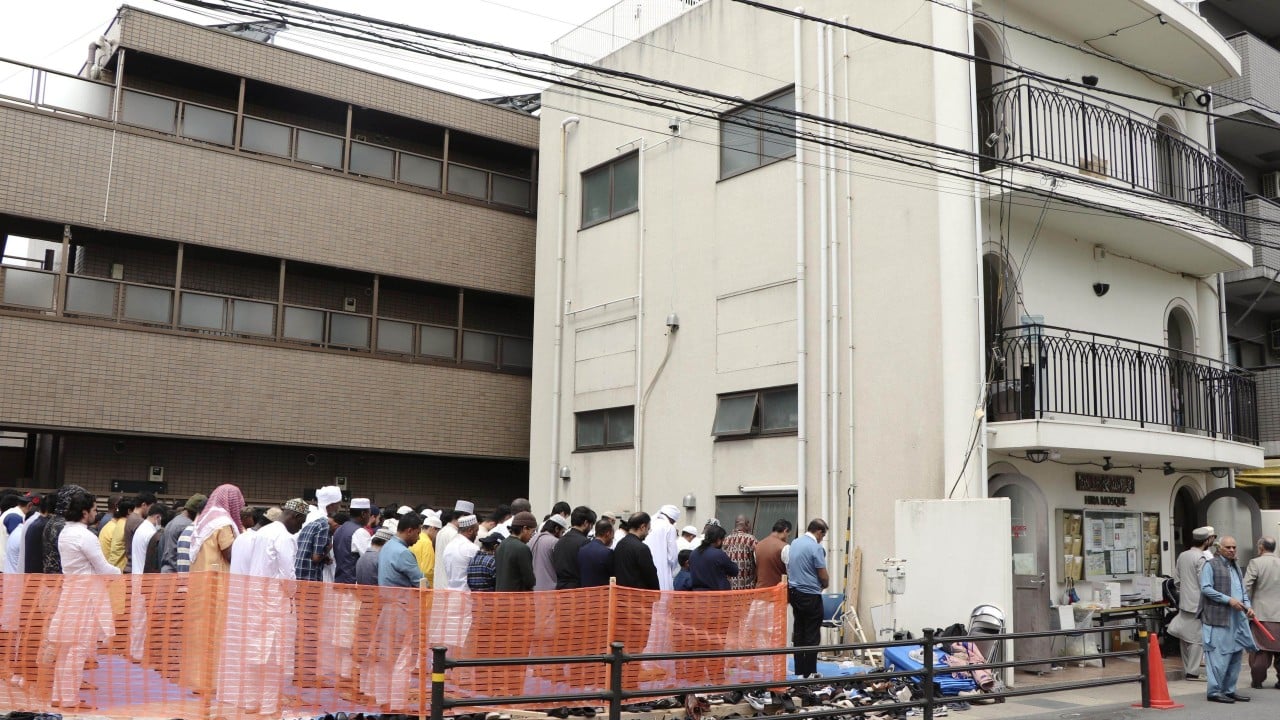
The grass underfoot at Minamioki Park is a dull, unpretentious green, the kind you find in any standard municipal square just across the river from Tokyo. For nearly thirty years, this little patch of land in Ichikawa, Chiba Prefecture, woke up twice a year to something vibrant.
Picture a crisp morning during Eid. Since 1997, the local worshippers from the Hira Masjid Gyotoku mosque would arrive early, unrolling vast sheets of blue plastic tarp across the grass. They did this not to claim the territory, but to keep their clothes clean from the damp earth during prostration. To an outsider, the sight of two hundred people kneeling in unison, shoulders pressed together under the open sky, might have seemed striking. To the neighborhood kids playing near the swings, it was just May. It was just Tuesday. It was just the rhythm of the city.
Then, the algorithms noticed.
Last autumn, a bystander captured a video of the outdoor prayer session. It was uploaded to social media. It was stripped of context, framed as an "invasion" of a public space, and shared tens of thousands of times. The digital world roared. Consequently, the phones at Ichikawa City Hall began to ring. They did not stop ringing.
When the mosque applied for its usual permit ahead of the festival, the answer that came back from the city was different. Terrified by the viral backlash and shifting political winds, officials asked the mosque to withdraw its application. The official rationale cited safety concerns and public-use interference. But the subtext was written in neon.
The Algorithm in the Garden
Consider what happens when local governance is dictated by the panic of a smartphone screen. Ichikawa Mayor Ko Tanaka held a press conference, candidly admitting that his decision was heavily influenced by the online storm. He questioned whether the image of prayers being streamed across the internet was a positive or negative for the city’s brand.
"For local residents, group prayer can cause unease because it is unfamiliar," the mayor noted. "I believe the way the park was being used had moved away from what multicultural coexistence should look like."
It is a bizarre paradox. True coexistence is messy, visible, and shared. Yet here, the definition of harmony was inverted to mean invisibility. The city offered a compromise: the cultural festival could go on, the social gathering was permitted, but the collective prayers were strictly banned.
Imagine being a member of that congregation. You have paid taxes in this town for decades. You have sorted your garbage according to the strict local guidelines, kept your noise down, and contributed to the local economy. Yet, because an online mob found your faith "unfamiliar," your community is forced to retreat.
On the day of the festival, the blue tarps stayed in the closet. Because the small mosque building cannot physically hold hundreds of people at once, the worshippers had to split up, fracturing their holiday into multiple, cramped indoor shifts.
The Fiction of Neutrality
The city’s park management division pointed to internal rules that prohibit the use of public spaces to promote religious or political beliefs. But this defense crumbles under closer inspection. In Japan, seasonal festivals rooted deeply in Shinto and Buddhist traditions routinely take over public streets and parks with municipal blessings. No one bats an eye at a neighborhood festival featuring mikoshi portable shrines, because those traditions are grandfathered into the cultural wallpaper.
The problem isn't the presence of faith in public; it is the presence of a different faith.
As a traveler or an outsider living in Japan, you quickly learn that the country’s greatest strength—its hyper-attunement to public harmony and avoiding friction—can easily curdle into a crushing mechanism for exclusion. Japan is facing a massive demographic crisis, desperately needing foreign labor to keep its aging infrastructure afloat. Yet, it remains profoundly conflicted about the human beings attached to that labor.
The mosque’s representative director, choosing grace over grievance, voiced the quiet heartbreak of a community trying desperately to fit in. He called the sudden decision disappointing and sad, but emphasized that they complied because they did not want to cause trouble for the neighborhood.
That quiet compliance is the most tragic part of the story. It proves that the worshippers understood the ultimate rule of survival as a minority in a homogenous society: do not make a scene.
But the real problem lies elsewhere, far beyond the borders of Ichikawa. When public institutions capitulate to anonymous internet outrage, they establish a dangerous precedent. They signal that thirty years of quiet, peaceful neighborliness can be erased by twenty-four hours of viral hostility. They choose the comfort of a digital echo chamber over the flesh-and-blood reality of the people living right across the street.
The next time you walk past a quiet municipal park in a Japanese suburb, look closely at the empty grass. The true cost of this policy isn't a disruption to public safety. It is the eerie, manufactured silence left behind when a city decides that the easiest way to get along is to pretend a part of its soul doesn't exist.