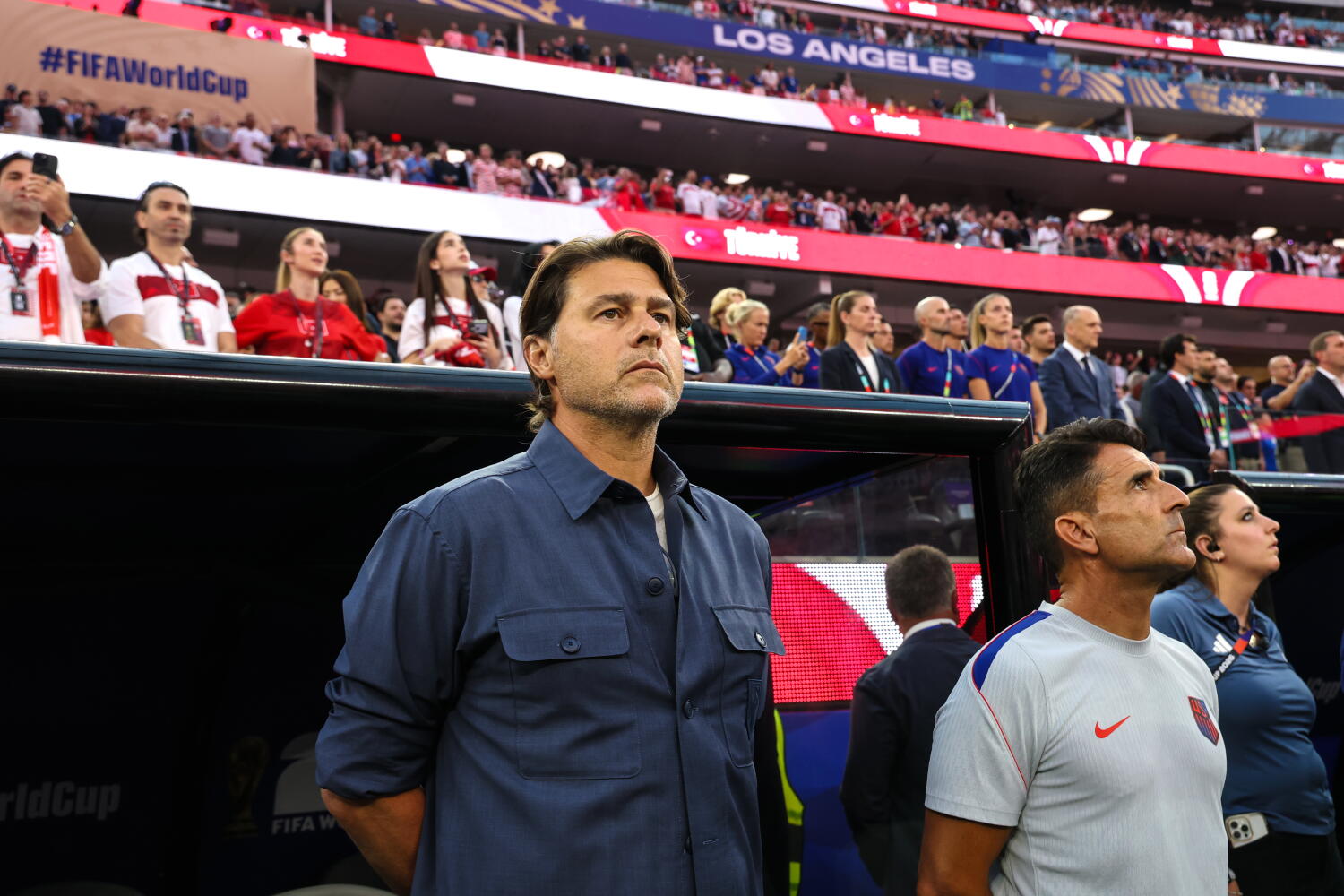
The winter wind bites at the edges of a Chicago training pitch, carrying that particular, Midwestern brand of chill that seeps straight through cotton and wool alike. Out on the grass, breath rises in short, white plumes. A man stands motionless, hands buried deep inside the pockets of a heavy dark coat, watching twenty-two pairs of cleats tear into the turf. He does not yell. He does not gesture wildly. He simply watches, absorbing every micro-movement, every failed recovery run, every hesitant pass, calculating an equation that stretches four long years into the future.
Mauricio Pochettino knows cold. He knows the biting winters of northern Europe and the humid nights of the Americas. More importantly, he knows the specific, suffocating chill of expectation. For a more detailed analysis into this area, we recommend: this related article.
When a nation looks at a soccer team that has spent decades flirting with greatness only to stumble on the final step, it doesn't just want a coach. It wants an architect. It wants someone willing to tear down the drywall, check the foundation for cracks, and rebuild the entire house while the lights are still on.
For the United States men's national team, the upcoming World Cup cycle is not merely a sequence of matches on a calendar. It is a referendum on identity. When Pochettino took the helm, the noise was deafening. Fans and pundits demanded immediate answers, quick fixes, and tactical masterclasses that would instantly bridge the canyon separating American soccer from global royalty. But true builders do not start with the roof. They start in the dirt. For broader information on this development, detailed coverage is available at NBC Sports.
Consider what happens when a player steps onto the pitch wearing the crest. To the outside observer, it looks like a simple game of twenty-two people chasing a ball. To the man in the coat, it is a psychological pressure cooker. Pochettino is searching for something far rarer than raw speed or a clean cross. He is looking for the invisible wiring of resilience.
He wants to know who breaks when the stadium turns hostile.
During his introductory months, the training sessions became laboratories of character. The drills were designed to fail, forcing players into uncomfortable spaces where natural talent alone couldn't save them. In those moments, body language speaks volumes. Does a midfielder drop his head after a misplaced ball? Does a seasoned European regular scream at a younger teammate, or does he pull him close and point to the next assignment? These are the data points that don't show up on a traditional scouting report. They are the currency of tournament success.
The modern soccer landscape often worships at the altar of the tactical spreadsheet. We love our heat maps, our expected goals percentages, and our progressive passing metrics. Yet, soccer remains fundamentally chaotic. It is a sport dictated by bounces off shins, referee decisions made in milliseconds, and the sheer human will to win a fifty-fifty ball in the ninety-fourth minute. Pochettino understands that tactics are only as good as the stomach of the player executing them when his legs are burning and his lungs are screaming for oxygen.
That is why his primary pursuit for this cycle is an uncommon commodity: competitive cruelty packaged as brotherhood.
American soccer has produced a golden generation of athletes playing in top European leagues. They are technically proficient, physically imposing, and tactically sophisticated compared to any generation that came before them. The cupboard is not bare. In fact, it is overflowing with talent. But talent without an unifying spine is just a collection of expensive parts sitting in a garage.
Pochettino is trying to forge that spine.
He demands an uncomfortable level of honesty from his players. In private meetings and tactical walk-throughs, the polite deference often found in American sports culture is stripped away. If you didn't run back, you hear about it. If you hid from the ball when the pressure mounted, you confront it on film. It is jarring for players accustomed to the insulating bubble of modern club academies. It feels harsh. But growth rarely happens in comfort.
Think back to the great international sides of the past. The Brazilian squads of swagger, the Italian units of unbreakable defensive solidarity, the German machines of relentless efficiency. None of them were just collections of good players. They were micro-cultures built on shared suffering and absolute trust. When a player looked to his left and right, he knew his teammate would walk through fire for him.
Building that kind of collective consciousness on a national team is uniquely difficult. Players arrive from different clubs across continents, speaking different tactical dialects, exhausted from grueling domestic league schedules. They have mere days to transform from rivals into comrades.
Pochettino is attacking this challenge by simplifying the language of the game. He wants a recognizable shape, a fierce, suffocating press, and a vertical urgency that takes the breath away from opponents. But beneath the Xs and Os lies the human core. He is attempting to instill a collective paranoia—the healthy kind that keeps a team from ever taking an opponent lightly, whether they are facing a global powerhouse in a sold-out stadium or a gritty regional rival on a bumpy pitch away from home.
The stakes are uniquely high because the tournament is on home soil.
Imagine walking out into a sun-drenched stadium in North America in front of seventy thousand screaming fans, knowing that millions more are watching through screens in living rooms, bars, and backyards across the country. The weight of that atmosphere can either lift a team to historic heights or crush them under the sheer gravity of home expectations.
Pochettino is preparing his players for that exact psychological shock wave. He knows that tactics alone will not insulate them from the noise. Only a hardened, unshakeable internal culture can block out the roar of a home crowd demanding perfection.
As the winter sun dips below the horizon, turning the Chicago sky a bruised shade of purple, the training session finally winds down. The players gather their gear, laughing tiredly as they trudge toward the warmth of the locker rooms.
Pochettino lingers for a moment longer. He bends down, picks up a stray cone, and tosses it into the bag. There are no cameras rolling in this exact second, no reporters asking about formations or starting lineups. There is only the grass, the cold air, and the quiet, relentless work of building something that has never existed quite like this before.
The transformation will not happen overnight. There will be ugly matches, tactical missteps, and frustrating nights where the progress feels painfully slow. But out there in the freezing wind, the foundation is being poured. And when the world tunes in to watch the story unfold, the answer to what he is seeking will be written not on a tactical board, but in the fierce, unyielding eyes of eleven men who finally learned how to fight as one.