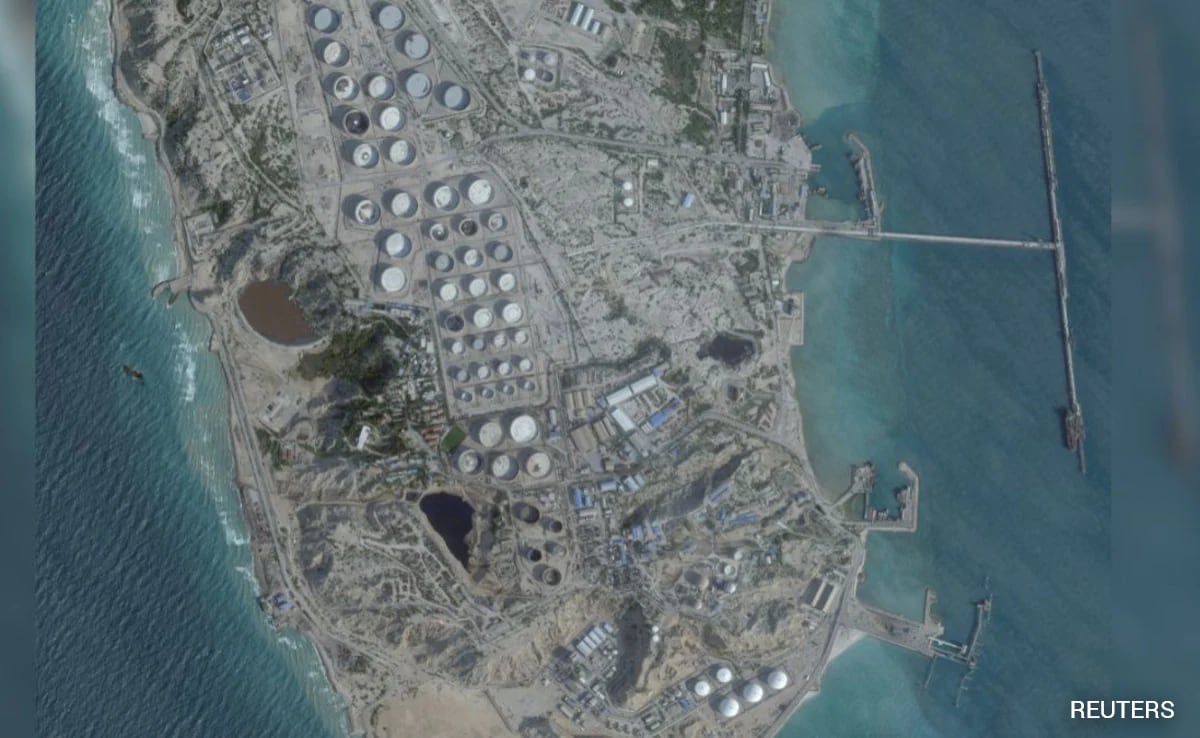
The headlines are screaming about "the most powerful bombing raid in history." Pundits are high on the fumes of jet fuel and tactical bravado. They see a pillar of smoke over the Persian Gulf and call it a masterstroke. They are wrong. They are looking at a tactical explosion while ignoring a strategic implosion.
Destroying Iran’s Kharg Island terminal isn't a chess move. It’s knocking over the board because you don't know how to play. If you think taking out a single geographic chokepoint solves the Iranian nuclear or regional equation, you’ve been reading too many Tom Clancy novels and not enough supply chain manifests. You might also find this similar story insightful: The $2 Billion Pause and the High Stakes of Silence.
The Myth of the Knockout Blow
The "lazy consensus" among armchair generals is that if you cut off the money, the regime collapses. It’s a seductive, linear logic. Iran exports roughly 90% of its crude through Kharg. Ergo, no Kharg, no cash, no IRGC.
It sounds perfect on paper. In reality, it’s a fundamental misunderstanding of how resilient, ideologically driven states function under existential pressure. I’ve watched analysts make this same mistake with sanctions for forty years. They assume a state is a business that files for Chapter 11 when the revenue hits zero. It isn't. As highlighted in recent coverage by The New York Times, the effects are notable.
When you vaporize a nation's primary economic artery, you don't trigger a democratic uprising. You trigger a "war economy" mentality. You give the hardliners exactly what they need: a permanent, undeniable external enemy to justify absolute internal repression. You don't "starve the beast." You turn it into a cornered predator with nothing left to lose.
The $200 Barrel Reality Check
Let’s talk about the math the "victory" crowd conveniently ignores. Kharg Island isn't just an Iranian asset; it’s a structural pillar of global energy stability.
Imagine a scenario where 1.5 million barrels of oil vanish from the daily global supply overnight. The markets don't just "adjust." They panic. We aren't living in the shale-boom era of 2014 where the US could mask global deficits. Spare capacity in the rest of the world is a thin margin, often held by players who aren't exactly eager to do the West any favors.
- Global Inflation Spike: You thought 9% inflation was a political nightmare? Try 15% driven by a permanent energy floor.
- The China Factor: China is the primary buyer of Iranian "teapot" crude. By destroying Kharg, you aren't just hitting Tehran; you are declaring economic war on Beijing’s energy security. They won't sit on their hands. They will accelerate their workarounds, likely involving direct military or economic escalations that the US is currently ill-equipped to handle simultaneously.
Tactical Brilliance, Strategic Bankruptcy
The raid itself might have been a marvel of engineering and bravery. I’ve seen the specs on the ordnance used. It’s impressive. But tactical success is the most dangerous drug in Washington. It creates the illusion of progress.
We have spent twenty years "winning" tactical engagements in the Middle East only to find ourselves in a worse strategic position a decade later. We "won" in Baghdad. We "won" in Kabul. Each time, the victory was a vacuum.
By hitting Kharg, the US has signaled it has run out of diplomatic and covert options. It is the ultimate admission of failure. It tells the world that the only tool left in the box is a hammer. When your only tool is a hammer, every complex, nuanced geopolitical problem starts to look like a nail. But the Middle East isn't a nail; it's a hornet's nest.
The Asymmetric Counter-Strike Nobody is Ready For
What happens the day after the smoke clears?
Iran does not need a blue-water navy to retaliate. They have spent decades perfecting the art of "swarming" and proxy disruption.
- The Strait of Hormuz: If Kharg is gone, Iran has zero incentive to keep the Strait open. They can litter the floor with smart mines that cost $20,000 to destroy tankers worth $200 million.
- Cyber Vulnerabilities: I’ve worked with firms that audit the SCADA systems of Western refineries. They are sieves. A focused Iranian cyber retaliation against the Port of Houston or European energy grids would cause more economic damage than ten Kharg Islands.
- The Nuclear Acceleration: If you take away their conventional economic leverage, you leave them with one path to survival: the ultimate deterrent. A bombed Kharg Island is the fastest way to ensure a nuclear-armed Iran.
The Professional’s Admission
Is there a downside to my skepticism? Of course. Keeping Kharg intact allows the status quo of Iranian regional influence to continue. It allows the funding of proxies. It feels like "weakness."
But professional statecraft isn't about feeling strong; it's about being effective. Kinetic action against a primary economic hub is a high-risk, low-reward gamble. It’s a "Hail Mary" passed off as a "Touchdown."
We are currently celebrating the destruction of a terminal while the entire regional architecture is catching fire. We are prioritizing the spectacle of the explosion over the stability of the system.
Stop cheering for the fireworks. Start worrying about the fallout.
The most powerful bombing raid in history didn't solve the Iran problem. It just ensured that the problem will now be solved on Iran’s terms: through chaos, asymmetry, and a global energy crisis we cannot afford.
The mission wasn't accomplished. It was just made infinitely more expensive.
Check the oil tickers in three months and tell me I'm wrong.