The hum of a stamping press does not sound like politics. It sounds like iron meeting iron, a rhythmic, heavy thud that vibrates straight through the soles of steel-toed boots and settles somewhere behind the ribs. After ten hours on a plant floor, your ears keep ringing with a ghost of that cadence long after the shift horn blows, long after you have washed grease from under your fingernails and climbed into a pickup truck still smelling of coffee and cold vinyl.
For decades, that rhythm was tied to an invisible conveyor belt crossing a river or a bridge. A bracket stamped in southern Ontario might ride south to Michigan, take on a coating or a sensor, and come back north before a vehicle ever rolled off a line. To economists reading quarterly briefs in glass towers, that was integrated supply chains. To the people standing beside the presses, it was just Tuesday. It was mortgage payments clearing on the first of the month. It was braces for a twelve-year-old. It was knowing that if you showed up, kept your head down, and did clean work, the machine would keep turning.
Then trade friction hits, and the air inside a factory changes before a single layoff notice is printed.
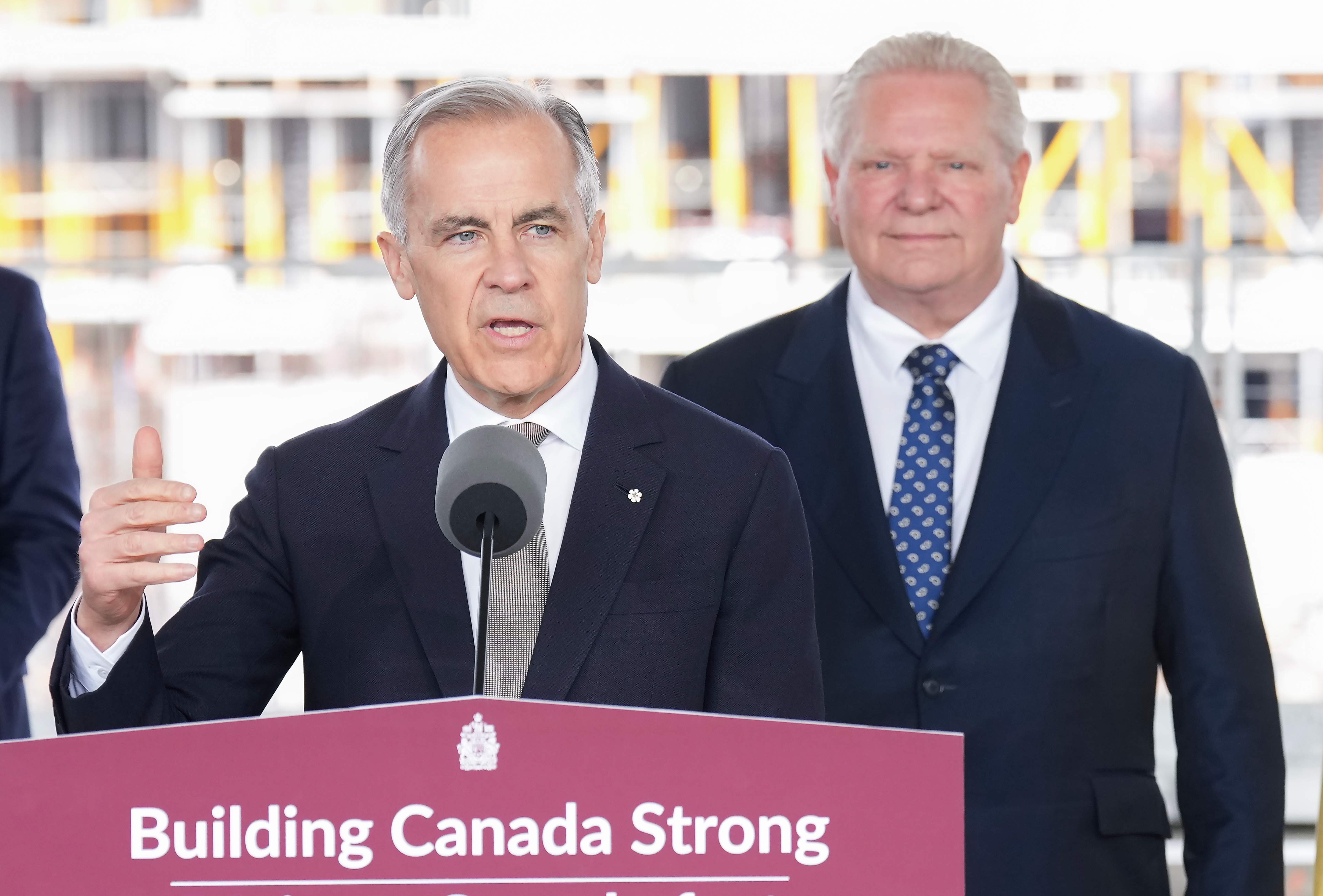
Talk slows down on the breakroom benches. Someone mentions a rumor from a cousin who hauls freight across the crossings. Someone else checks a phone during a five-minute breather, scrolling through headlines about tariffs, retaliatory duties, and high-level negotiations between Ottawa and Queen's Park. When Prime Minister Mark Carney and Ontario Premier Doug Ford step up to announce support for workers caught in a trade war, those announcements land on ears already tuned to every shift in volume on the line.
I have stood on enough concrete shop floors—and sat across enough kitchen tables where a pay stub was spread out like a map of coming weather—to know how quickly abstract policy turns personal. You don't experience a tariff as a percentage point on a customs form. You experience it as a supervisor walking down the aisle with a clipboard, or a quiet Tuesday afternoon when the parts bins run half-empty and nobody can quite meet your eyes.
The Quiet Math of a Trade Dispute
Let's be honest about what happens when two trading partners start swinging economic weight. On paper, it looks like a chessboard. Tariffs go up on steel, aluminum, auto parts, or manufactured goods; counter-tariffs answer back; leaders talk tough about sovereignty, leverage, and standing firm. It is easy for observers at a distance to treat a trade war like a sporting match where one side scores points and the other defends its goal.
Here is a metaphor to help picture the machinery behind it: think of a cross-border supply chain like a long relay race where runners hand off a baton every few hundred yards without slowing down. Each handoff depends on timing, trust, and smooth footing. A sudden tariff is like scattering gravel across the track right before the exchange. Even if the runners stay upright, they lose stride. Every stumble costs seconds, and when enough runners slow down, the whole team falls behind schedule.
That slowdown is where ordinary households feel the shock first. Not always through an immediate pink slip, though those happen when orders dry up or margins collapse. Often, the pressure arrives sideways: overtime hours vanish, temporary contracts aren't renewed, suppliers squeeze prices, or companies freeze hiring while waiting to see whether a duty is temporary posturing or a permanent wall.
To make that friction concrete, consider a hypothetical character—let's call her Nadia, a quality-control technician at an auto-parts plant outside Hamilton. Nadia isn't a character from a government press release; she is a composite of dozens of industrial workers whose lives hinge on whether parts keep moving smoothly across the border. In Nadia's world, a delay at a customs crossing doesn't stay trapped in Ottawa or Washington. It shows up as a stalled assembly line, a tense team huddle before the shift starts, and a mental calculation about grocery bills if hours get trimmed by six a week.
When leaders like Carney and Ford prepare to roll out worker support measures during a trade standoff, they are stepping into that exact gap between macro-level brinkmanship and household survival. Federal authority and provincial muscle operate on different levers—macroeconomic policy, employment insurance, trade negotiation, and international diplomacy on one side; provincial workforce programs, regional industrial support, and direct advocacy for Ontario's manufacturing heartland on the other.
When those two levels of government align around protecting workers, it signals something vital even before the fine print is read: the people doing the physical labor are not supposed to be treated as collateral damage.
Why Announcements Alone Rarely Quiet the Room
Still, if you have spent enough time around working families, you know better than to celebrate a press conference before the checks clear or the retraining seats actually open.
Workers have seen grand promises before. They have watched industries hollow out over twenty or thirty years while politicians spoke in soothing generalities about "transition" and "resilience." To someone paying property taxes and raising kids, "resilience" can sound suspiciously like being told to absorb more pain quietly.
Confusion is part of the weight, too. When trade disputes flare up, rules shift fast. One week a product faces a proposed tariff; the next week there is an exemption, an extension, or a retaliatory measure targeting a different sector entirely. Even seasoned plant managers struggle to forecast orders thirty days out. If the people running the business cannot see clearly past next month, how is a line worker supposed to plan for six months from now?
I will admit freely: untangling cross-border trade policy, industrial subsidies, wage supports, and skills programs is messy, dense work. Anyone who claims a trade war has a neat, painless button to push is selling simplicity where none exists. Governments have to walk a razor's edge—defending national and provincial interests without bankrupting domestic industries, supporting displaced or under-employed workers without creating endless red tape, and keeping businesses anchored at home rather than fleeing elsewhere.
That tension is real. Ignoring it does nobody any favors.
What Real Support Has to Look Like on Monday Morning
If worker support during a trade war is going to mean anything more than headlines, it has to survive contact with ordinary life.
Think about what happens when a plant cuts shifts or a supplier loses a major export contract. Bills do not pause while trade envoys argue. Rent still comes due. Childcare still costs what it costs. A worker whose hours get slashed—or whose job disappears altogether—needs bridge support that arrives fast enough to keep the lights on, not six months later after navigating a labyrinth of forms.
Equally important is protecting the skills that took years to build. A machinist, a tool-and-die maker, a logistics coordinator, or a line operator carries practical knowledge you cannot download from a manual. You feel it in how a veteran worker hears a bearing going bad before the gauge even flickers. When trade shocks hit manufacturing regions, losing experienced talent isn't just a personal blow to the worker; it weakens the whole industrial base for the next recovery.
Targeted wage cushions, flexible income support for reduced hours, and practical retraining tied to real regional demand matter far more than abstract pledges. And just as crucial is giving smaller and mid-sized suppliers breathing room so they don't get crushed between rising input costs and frozen buyers while governments negotiate.
Consider what happens next: suppose a mid-sized metal fabricator sees export orders stall because of border duties. Without bridge financing and workforce stabilization, that shop might lay off seasoned staff and never scale back up even after trade terms shift. With smart, timely intervention, the company can keep its crew intact, retool where needed, and weather the storm without gutting a town's livelihood.
That is the difference between reactive damage control and deliberate protection.
History Doesn't Repeat, Until It Rhymes in Steel
Anyone who knows North American industrial history recognizes the echo in moments like this. Trade friction between the United States and Canada isn't a brand-new phenomenon; it has flared up across decades over lumber, dairy, steel, autos, and energy. Whenever borders tighten, the same pattern tends to repeat: capital looks for safety, supply chains reroute, and industrial towns wait to see whether they will be strengthened or sidelined.
Sometimes those moments spark overdue investment in domestic capacity and modern manufacturing. Other times, indecisiveness leaves workers holding the bag while larger players adjust.
That is why coordination between federal leadership under Carney and provincial leadership under Ford carries such weight right now. Trade policy is federal territory, yet the factories, auto corridors, steel hubs, and logistics networks sit squarely inside provinces like Ontario, where millions of livelihoods are woven into cross-border commerce. When federal and provincial leaders step forward together to back workers, the test isn't who gets credit at the podium. The test is whether a household in Oshawa, Windsor, Hamilton, or Sault Ste. Marie feels real footing under its boots.
Cold facts tell you a trade war is underway and leaders are announcing worker aid. They give you the skeleton of the story.
They don't tell you about the quiet at the breakfast table when a shift schedule looks thinner than last month. They don't tell you about the pride of turning out honest work with your own two hands, or the knot in your stomach when forces thousands of miles away threaten to yank the rug out from under it.
The presses will keep thudding in the dark. Somewhere, a welder's arc will flare blue against gray steel, and another shift will start before dawn, carried forward by people who only ever asked for a fair shot to do their job and come home whole.