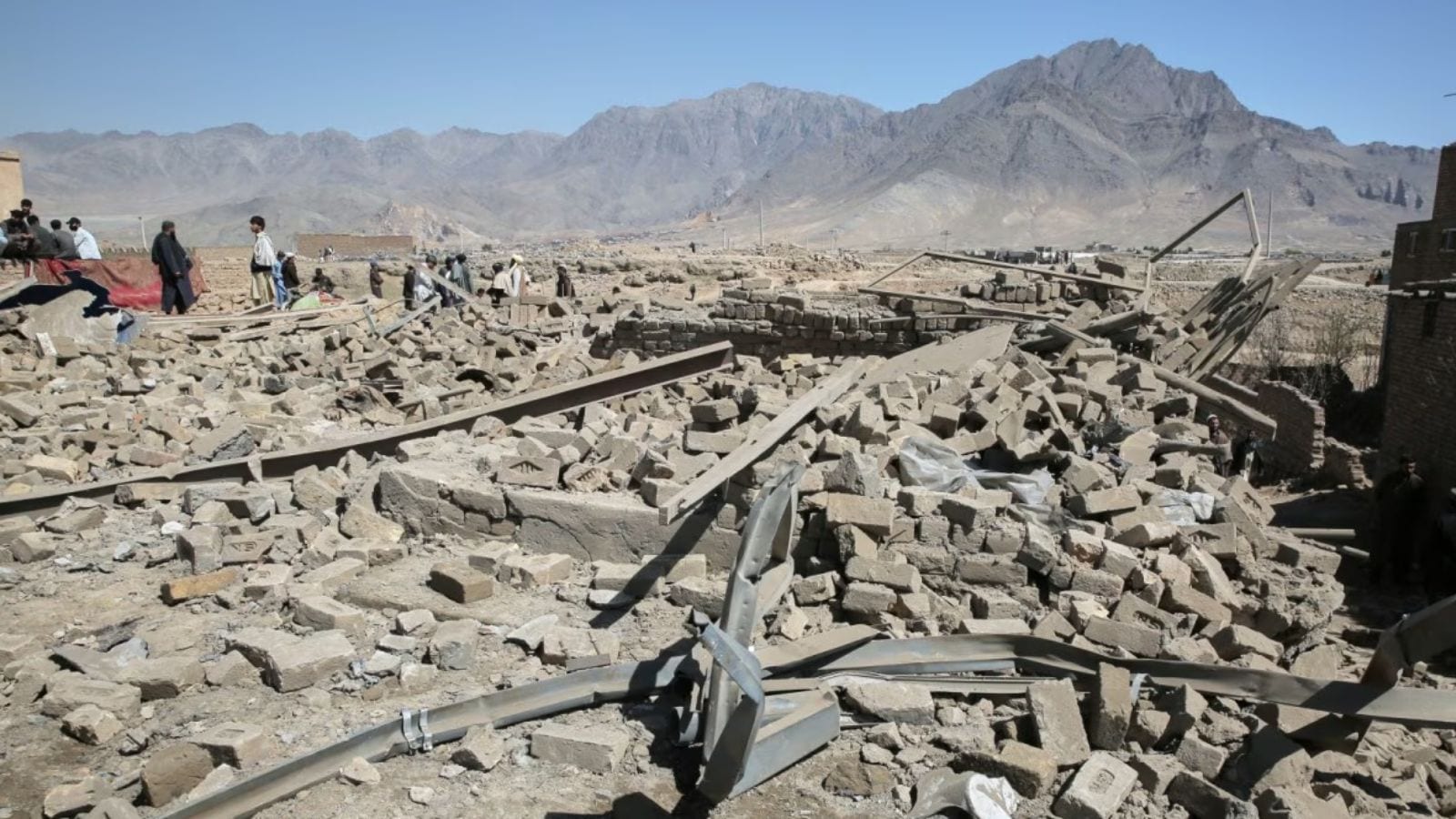
Media coverage of cross-border military strikes along the Durand Line follows a stale, predictable script. A strike occurs. A state government claims it targeted precise insurgent hideouts. An insurgent-led administration counters with allegations of civilian casualties, specifically highlighting vulnerable demographics to maximize international outrage. The public consumes the outrage, pundits argue over the sovereignty of an artificial 1,400-mile line drawn in 1893, and the foundational misunderstanding of asymmetric warfare remains entirely unchallenged.
The lazy consensus treats these cross-border kinetic actions as isolated diplomatic failures or sudden escalations. This view is fundamentally wrong.
These operations are the inevitable, structural consequence of a deep security asymmetry that traditional nation-state frameworks are utterly unequipped to handle. When an internationally unrecognized regime manages a territory, conventional diplomatic leverage ceases to exist. Expecting standard border management protocols to function in such an environment is like expecting a typewriter to run software. It is a category error.
The Sovereign Fallacy in Asymmetric Sanctuaries
The core error in mainstream analysis is the assumption of symmetrical sovereignty. In textbook international relations, State A negotiates with State B to police its internal territories. But when State B is governed by a non-state actor that relies on ideological alignment rather than institutional legitimacy, the model collapses.
Consider the mechanics of safe havens. For decades, insurgent groups like the Tehrik-i-Taliban Pakistan (TTP) have utilized the rugged terrain of provinces like Khost, Kunar, and Paktika. To conventional military planners, these are geographical coordinates inside a sovereign country. To asymmetric actors, these provinces are a seamless logistical rear-guard.
[Conventional View]  State A <====== Border ======> State B (Accountable)
[Asymmetric Reality] State A <====== Border ======> Safe Haven (Unaccountable Hub)
When a state faces persistent, lethal incursions from these zones, it confronts a brutal strategic calculus. It can either absorb the losses indefinitely to preserve a fictional standard of border integrity, or it can execute unilateral kinetic strikes to disrupt the threat vector at its source.
I have watched policy analysts debate the legality of these cross-border operations for years, treating them as choices made by hawkish generals. They are not choices. They are structural mathematical certainties. If an entity cannot or will not police its side of the line, the opposing state will eventually cross that line to do it for them. The outcry over violated sovereignty is noise; the kinetic disruption is the underlying signal.
The Information Warfare Trap
Every incident of this nature triggers an immediate, aggressive information operation. The standard playbook for an insurgent administration is to control the narrative by dominating the casualty report. Because independent journalists face extreme restrictions or physical danger in remote border provinces, the international community relies on data funneled directly through interested parties.
This creates a massive blind spot. Media outlets routinely run headlines based entirely on the allegations of a regime whose primary strategic goal is to delegitimize its neighbor.
- The Propaganda Metric: Casualty counts are weaponized instantly to trigger international condemnation and shift focus away from the insurgent infrastructure that triggered the strike in the first place.
- The Attribution Vacuum: In remote mountain villages, separating active combatants, active logistical supporters, and completely innocent bystanders is an operational nightmare. Yet, press releases issued within hours of a strike claim absolute certainty regarding identity and intent.
The hard truth nobody wants to say out loud is that in modern asymmetric conflict, civilian presence is actively leveraged as a strategic shield. Placing operational headquarters, training centers, or communication nodes within or adjacent to civilian settlements is a deliberate tactic. It creates a win-win scenario for the insurgent: either the state holds its fire and the insurgent remains safe, or the state strikes and the insurgent wins the global public relations war.
Dismantling the Practicality of Traditional Diplomacy
Go to any regional security conference, and you will hear the same tired prescription: "Both sides must return to the negotiating table and establish a joint border security mechanism."
This advice is worse than useless; it is counterproductive. It presumes that both parties want the same outcome—a stable, demarcated, tightly policed border.
They do not.
An insurgent regime thrives on the ambiguity of the border. A porous border allows for the illicit flow of revenue, weapons, and personnel that keeps the movement alive. Forcing a conventional bureaucratic framework onto an entity that fundamentally rejects the Westphalian state system is an exercise in futility. It gives the illusion of diplomatic progress while allowing the underlying security threat to fester and grow.
If you want to understand why these conflicts are never resolved, look at the incentives. The state cannot stop striking because its domestic security depends on disruption. The insurgent regime cannot stop hosting proxies because those proxies provide the ideological muscle and leverage needed to maintain internal control.
The High Cost of the Counter-Intuitive Reality
Accepting this reality requires abandoning the comfort of clear-cut moral narratives. The contrarian approach recognizes that cross-border strikes are not a policy failure; they are the policy. They are a brutal, recurring maintenance cost of managing an unfixable security dynamic.
The downside to this reality is stark. Unilateral kinetic actions never actually solve the problem. They buy time. They disrupt networks for six months, twelve months, or two years. They eliminate key commanders and force the remaining networks to rebuild their communication lines. But they do not cure the underlying infection of an ungoverned space.
The cycle is fixed, predictable, and endless. Kinetic strike, narrative warfare, diplomatic posture, temporary lull, reorganization, subsequent attack, and back to the beginning. Stop looking for a diplomatic breakthrough that is never coming. Stop expecting a line drawn on a map over a century ago to suddenly hold back the tide of asymmetric warfare. The strikes will continue because, in the absence of a real sovereign partner on the other side of the mountain, there is literally no other option available on the strategic chessboard.