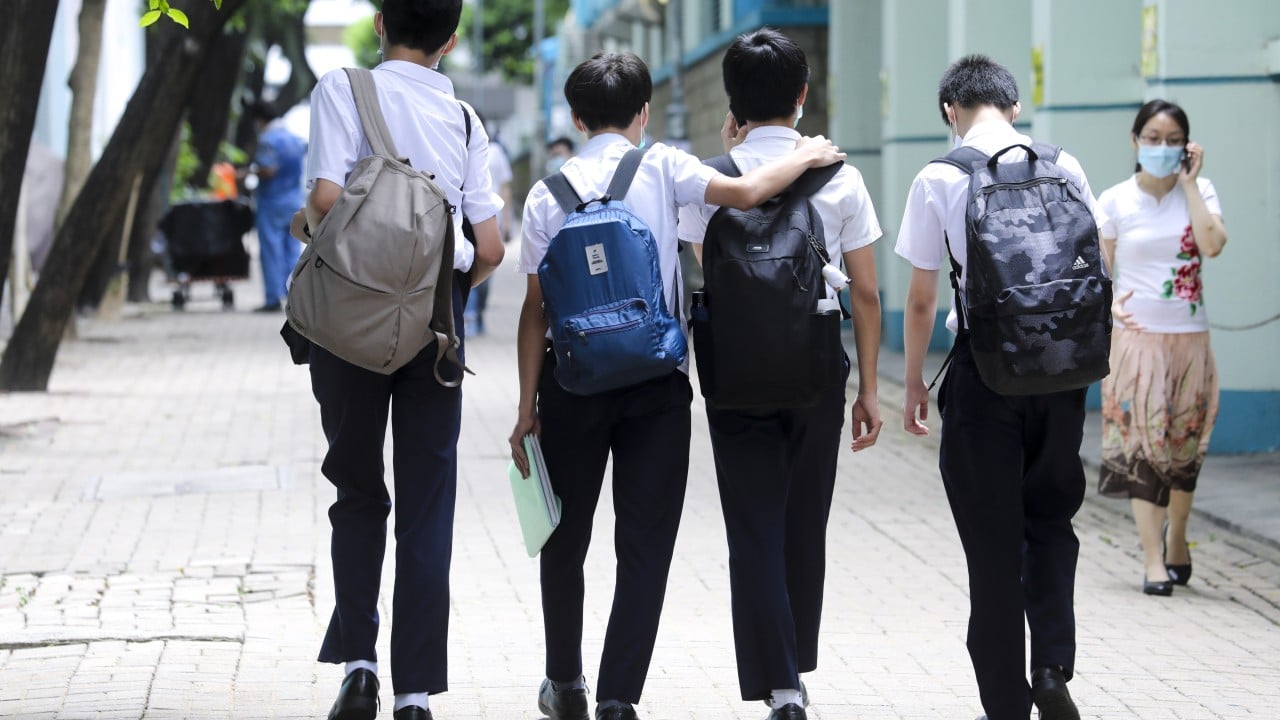
The bell rings, a harsh, metallic clang that cuts through the morning chatter of three hundred teenagers. Instantly, the hallway becomes a roaring river of elbows, backpacks, and overlapping voices. Kids are shouting across the corridor, slamming locker doors, and comparing notes on yesterday’s math quiz.
But if you stand still and let the crowd wash past you, you will notice him. For another perspective, consider: this related article.
He is sitting against the wall just outside the biology lab, staring intently at the screen of a phone that isn't buzzed by any incoming notifications. He adjusts his backpack straps. He looks up, watches a group of laughing peers walk by, and looks back down. To a passing teacher, he looks perfectly fine. He isn't disruptive. He isn't crying. He is just... there.
Let’s call him Leo. Leo is a hypothetical composite of a very real, very quiet crisis unfolding in secondary schools right now. He represents the student who occupies a desk but never truly occupies the space. Similar coverage on this trend has been shared by The Washington Post.
A recent sweeping survey of secondary students dropped a chilling statistic into the laps of educators and parents: one in every twelve students is now classified as socially disengaged on campus.
One in twelve.
In a standard classroom of thirty kids, that means two or three students are sitting in total emotional isolation. They are the ghosts in the hallway. They are physically present for homeroom, chemistry, and lunch, but socially and emotionally, they have drifted entirely out to sea. And the most terrifying part of this reality is how easily they blend into the background.
The Architecture of Creative Isolation
We have spent years hyper-focusing on the loud problems in education. We watch for the bullies, the kids acting out, the ones failing every class, or the ones skipping school entirely. Those problems are loud. They demand resources, intervention, and immediate attention.
Social disengagement is different. It is silent.
When a student becomes socially disengaged, they don't break the rules. Instead, they follow them with a haunting, robotic precision. They show up on time. They turn in their worksheets. They sit in the third row, blending perfectly into the paint on the walls. They have mastered the art of invisibility because invisibility is safe.
Consider the anatomy of a typical school day through Leo’s eyes.
The morning starts with group work in English class. The teacher says the words every introverted or disconnected kid dreads: "Find a partner." For the socially engaged student, this triggers a frantic, exciting flurry of eye contact and hand-waving. For Leo, it triggers a familiar, cold spike of dread. He waits. He pretends to look for his pen while the pairs form around him like ice freezing over water. Eventually, he is the odd man out, assigned to a group by a well-meaning teacher who says, "Leo can join you guys."
He sits at the edge of their desks. He does the reading. He writes down the answers. But he does not speak, and the group does not speak to him. He is a ghost writer for a script he isn't allowed to act in.
Then comes lunch. The cafeteria is the most brutal ecosystem on the planet. It is a stadium-sized arena where your social currency is validated or rejected in real-time. For a disengaged student, walking into that room with a tray is an exercise in public humiliation. Where do you sit when every table is an exclusive club?
Some of these kids find a dark corner of the library. Others hide in a bathroom stall, eating a sandwich in silence while counting the minutes until the bell rings. Most just find a bench outside, pull out their phones, and build a digital fortress to protect themselves from the reality of their surroundings.
How We Misunderstood the Digital Shield
It is tempting to blame the smartphones. It is easy to look at a courtyard full of teenagers staring at glowing rectangles and assume they are choosing isolation.
That is a fundamental misunderstanding of the problem.
The phone is not the cause of the isolation; it is the anesthesia. When you are standing in a crowded courtyard where everyone else is locked in animated conversation, looking at your shoes makes you look pathetic. Looking at your phone makes you look busy. It gives you a purpose. It tells the world, I am not rejected; I am just occupied.
But the digital shield is a poor substitute for human warmth. It offers distraction, not connection.
When we look back at the history of schooling, the institution was never just about transferring facts from a textbook into a child’s brain. It was a laboratory for humanity. It was the place where you learned the delicate, messy art of negotiation, conflict resolution, empathy, and belonging. It was where you discovered who you were in relation to others.
When a student spends years in that laboratory without ever mixing a chemical or sparking a reaction with another human being, something vital begins to atrophy.
The data from the survey isn't just a commentary on school culture; it is a warning metric for future public health. Social isolation in adolescence is a predictor of chronic anxiety, depression, and long-term detached behavior in adulthood. We aren't just raising kids who eat lunch alone. We are formatting an entire generation of adults who do not know how to connect, trust, or community-build.
The Invisible Stakes
Why is this happening now, and why at this scale?
The answers are complex, tangled up in the aftermath of global disruptions, the hyper-curated pressures of social media, and an educational system that increasingly values standardized metrics over holistic human development. We measure reading scores, math proficiencies, and attendance rates. We do not measure the density of a child's loneliness.
But the real problem lies elsewhere. It lies in our collective definition of success.
We have created an environment where performance is everything. Students are told from a young age that they must build the perfect resume, secure the highest grades, and clear every academic hurdle. In this high-stakes pressure cooker, social navigation becomes just another terrifying arena where failure is public and painful. If you don't feel like you can win the social game, the safest strategy is to refuse to play.
Imagine a tire with a slow, microscopic leak. It doesn't blowout spectacularly on the highway. It doesn't make a dramatic popping sound. It just loses a fraction of a pound of pressure every single day. You keep driving on it, ignoring the slight pull to the left, until one morning you walk out to the driveway and the tire is completely flat, sitting on the bare rim.
That is social disengagement. It is the slow, daily leaking of a child’s sense of belonging. By the time anyone notices the flat tire—often in the form of a sudden mental health crisis or a total refusal to attend school—the deflation has been happening for years.
Flipping the Classroom Script
If you talk to educators on the ground, they will tell you they are exhausted. They are stretched thin, managing behavior problems, administrative paperwork, and ever-shifting curricula. Expecting teachers to become full-time therapists who can read the subtle emotional cues of 150 different students every day is unrealistic.
The solution cannot just be another mandatory assembly or a colorful poster in the hallway advising kids to "Be Kind."
It requires a fundamental shift in how we structure the school day. It means recognizing that the spaces between the classes are just as important as the classes themselves.
Some schools are beginning to experiment with structural changes that break down the terrifying anonymity of large campuses. They are creating smaller, multi-age advisory groups that stay together for four years, ensuring that every single student has at least one adult and a core group of peers who know their name, notice when they are absent, and check in on their lives.
Others are rethinking the brutal landscape of the cafeteria, creating structured clubs, gaming spaces, and interest-based lunch zones where a kid doesn't have to navigate the agonizing politics of finding a seat. If you love chess, or anime, or robotics, the table is already built for you. The script is already written. You don't have to audition just to sit down.
But the most powerful intervention doesn't require a budget allocation or a school board vote. It requires a change in our collective vision. It requires us to look past the loud, disruptive behaviors that demand our attention and train our eyes to see the quiet vacuum of the kids who are slipping through the cracks.
The View from the Bench
Walk back out to that crowded school courtyard. The lunch period is drawing to a close. The roar of voices is reaching its crescendo before the bell signals the next migration inside.
Leo is still on his bench. His thumb scrolls rhythmically, mindlessly, through a feed of videos he won't remember five minutes from now.
A student from his English group walks past, heading toward the science building. The student pauses, catches Leo’s eye, and gives a brief, casual nod. "Hey, Leo."
It is a gesture that takes less than a second. It requires zero effort. It isn't a profound conversation, and it doesn't solve the systemic challenges facing modern adolescents.
But watch Leo's face. The phone drops slightly. The defensive tension in his shoulders drops a fraction of an inch. He nods back. "Hey."
For a single, fleeting moment, the invisibility cloak lifts. The ghost becomes flesh and blood. He is not just a statistic in a demographic report, and he is not just a body occupying space in the third row. He is there. He is seen.
The bell rings again, cutting through the air. The crowd moves, a massive, swirling current of youth heading toward the doors. This time, as Leo stands up and swings his backpack over his shoulder, he isn't trailing quite so far behind the rest of the world.