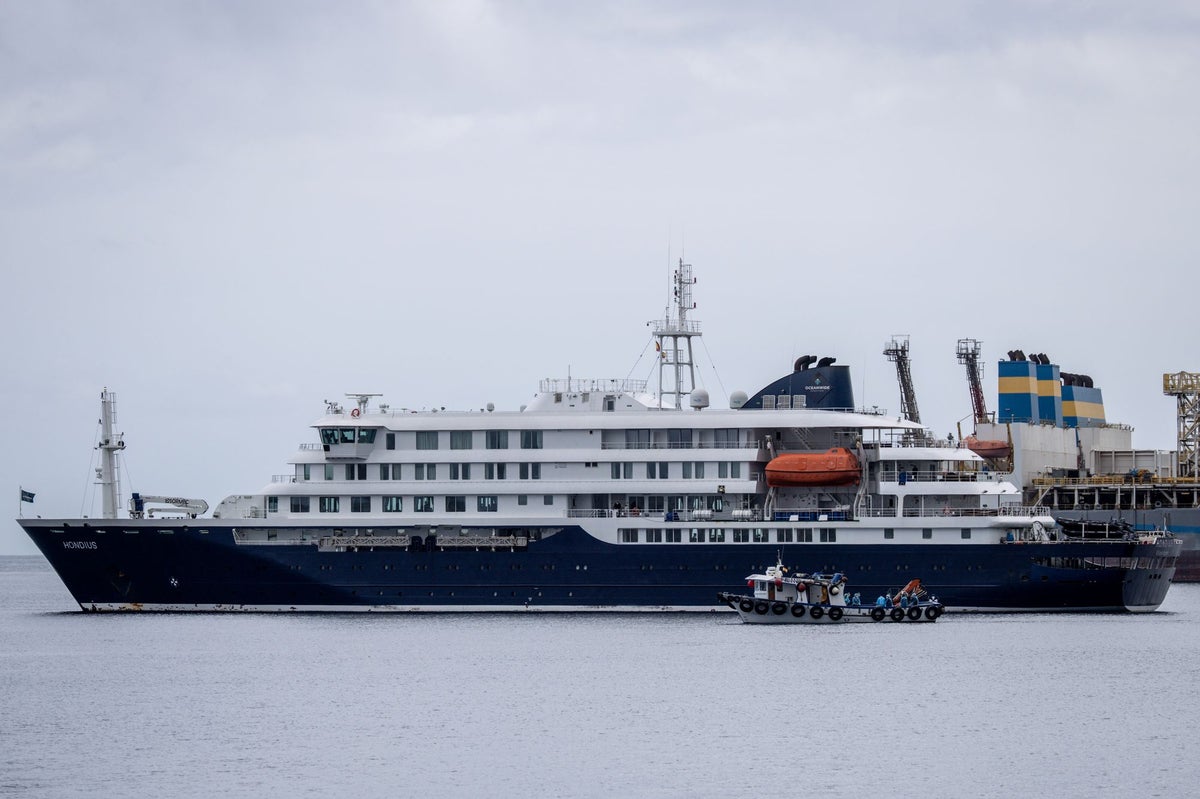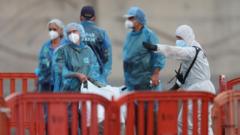
The cabin of a luxury cruise ship is designed to be a sanctuary of controlled variables. High-thread-count sheets, the hum of precision air conditioning, and the gentle, rhythmic pulse of the ocean against the hull create a sense of absolute insulation. You are a world away from the grit of the earth. But for two travelers—one from the United States, the other from France—that insulation was a lie.
They had spent days winding through the jagged beauty of the Chilean fjords. They breathed in the crisp, salt-tinged air of the South Pacific. They walked the rugged trails of the Aysén Region, where the green of the forest is so deep it looks black. They felt invigorated. They felt alive. They had no idea that a microscopic hitchhiker had already settled into their lungs, waiting for the precisely wrong moment to announce its presence.
By the time the ship docked and the passengers dispersed back to their respective corners of the globe, the transformation began. What started as a vague fatigue quickly sharpened into something far more predatory. This wasn't the flu. It wasn't a cold. It was the sudden, suffocating arrival of hantavirus cardiopulmonary syndrome (HCPS).
The Mouse and the Mist
To understand how a dream vacation turns into a struggle for oxygen, you have to look toward the forest floor. Specifically, you have to look for the long-tailed pygmy rice rat. It is a tiny creature, barely weighing more than a handful of paperclips, yet it carries a biological burden that can stop a human heart in days.
The virus doesn't require a bite. It doesn't need an open wound. It survives in the waste the rodents leave behind. When those secretions dry, they become part of the dust. In the quiet corners of a hiking trail or the shadowed floor of a rustic cabin, that dust becomes airborne. You simply breathe. One deep, appreciative lungful of mountain air is all it takes to inhale the viral particles.
In the medical realm, we call this aerosolization. In the narrative of a human life, we call it a tragedy of proximity.
The two passengers in question likely encountered the pathogen while exploring the backcountry of southern Chile. It is a region of stunning, raw power, but it is also the natural habitat of the Andes orthohantavirus. Unlike its North American cousins, which typically don't jump from person to person, the Andes strain is a different beast entirely. It is a shadow that can move between us.
The Collapse of the Inner Sea
Imagine your lungs as a vast, delicate shoreline where air meets blood. When the hantavirus takes hold, it doesn't just cause a cough. It triggers an insurrection. The body’s immune system, sensing the intruder, overreacts with such violence that it begins to destroy the very tissue it is meant to protect.
The capillaries—the tiniest of blood vessels—become leaky. They lose their structural integrity. Fluid that should stay within the vessels begins to seep out, flooding the air sacs of the lungs. It is a terrifying irony: a person can be in a dry room, miles from the ocean, and yet they are drowning from the inside out.
The American traveler and the French national experienced this physiological betrayal shortly after their voyage ended. Health authorities in Chile were alerted when the symptoms shifted from "unwell" to "critical." The timeline is a blur of logistics and urgency. Contact tracing on a cruise ship is a Herculean task, a race to find anyone else who might have shared a meal, a cabin, or a breath with the infected.
Chilean officials acted with a precision born of experience. This isn't their first encounter with the long-tailed rat. They know the rhythm of the virus. They tracked the passengers, notified international health bodies, and began the grim work of sanitization. But the psychological toll on the remaining passengers is harder to scrub away.
The Illusion of Safety
We travel to escape the mundane, but we often forget that we are also stepping out of our biological comfort zones. We trust the ship's manifest. We trust the filtered water. We trust that the wilderness is a backdrop for our photos rather than a living, breathing entity with its own set of rules.
The hantavirus has a long memory. It is a remnant of an older world, one where humans were not the primary inhabitants of the forest. When we push into these spaces—whether for a day hike or a scenic tour—we are entering a contract we haven't fully read. The fine print says that nature is indifferent to our itineraries.
Consider the reality of the French national, now a statistic in a public health report. One day they are admiring the glaciers of Laguna San Rafael; the next, they are in a high-stakes medical unit, their survival dependent on mechanical ventilation and the tireless work of specialists. The stakes are not just "health" in the abstract. They are the ability to take the next breath without conscious effort.
A Lesson in the Invisible
This incident isn't just a news blip about a rare disease. It is a case study in the interconnectedness of our modern world. A virus from a remote Chilean forest can find its way onto a luxury vessel and, within a week, be discussed in offices in Paris and Washington. We are more vulnerable than we like to admit, but that vulnerability is the price of our curiosity.
How do we move forward? We don't stop traveling. We don't stop hiking. But we change how we see the world. We learn to recognize the signs of rodent activity in rural areas. We understand that "fresh air" in a long-closed cabin or a dusty trail needs a moment to settle. We respect the boundary between the wild and the developed.
The hantavirus is a silent teacher. It reminds us that our bodies are fragile ecosystems. It tells us that geography is no longer a shield. Most of all, it forces us to confront the fact that even in our most manicured moments of leisure, we are never truly separate from the earth and the creatures that call it home.
The American and the Frenchman survived the initial onslaught, but the recovery from HCPS is a long, grueling walk back to normalcy. Their lungs will eventually clear. The fluid will recede. But they will never look at a mountain breeze the same way again. They have seen the ghost in the mist.
They know now that the most dangerous things in this world aren't the ones you can see coming from the horizon. They are the things you pull into your chest, unsuspecting and hopeful, while you are busy looking at the view.