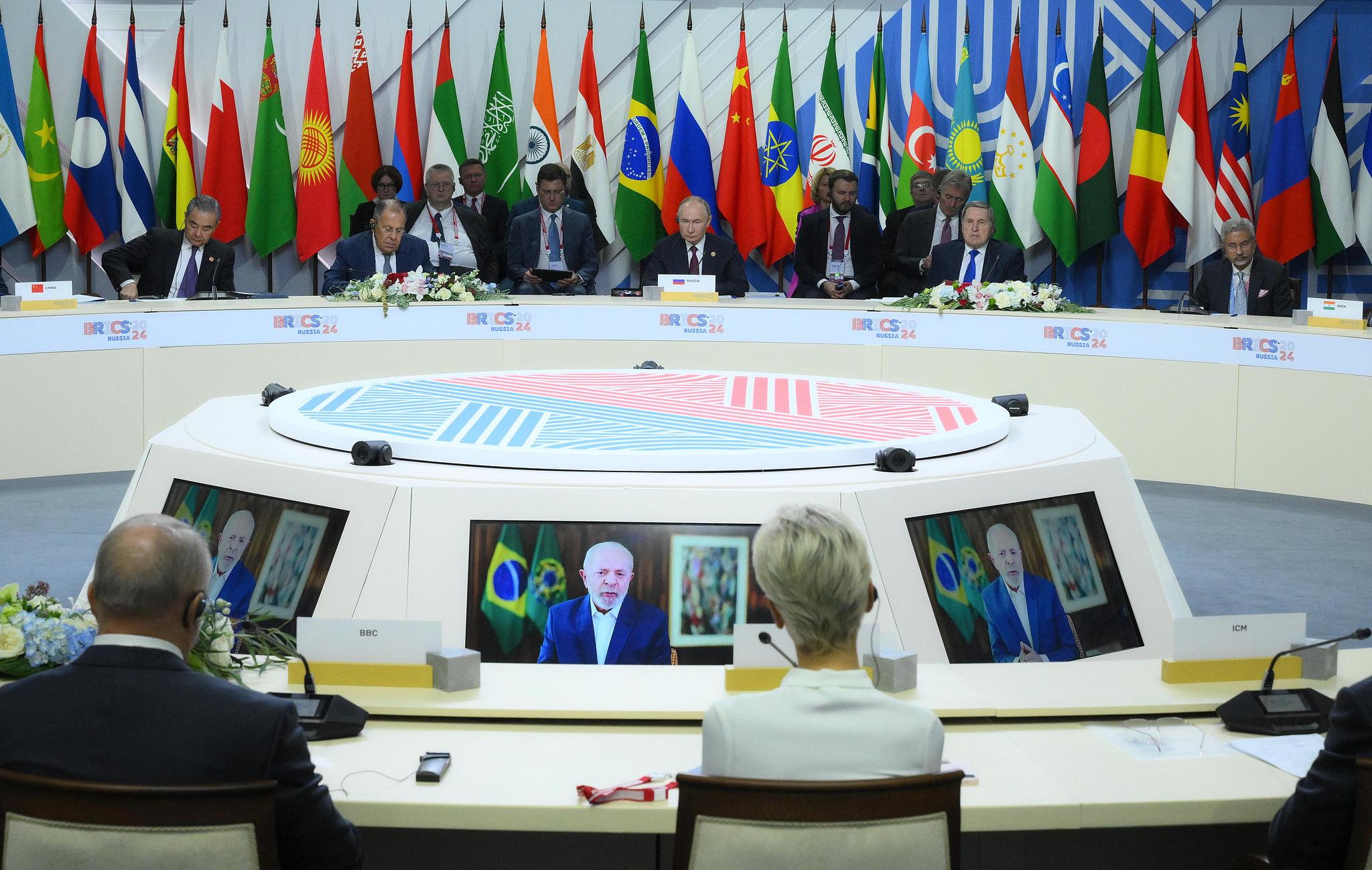
The mainstream media is addicted to the optics of a handshake. When the BRICS summit wrapped without a joint communique regarding the conflict in Iran, the usual suspects in London and D.C. rushed to print the same tired headline: "Division." They see a lack of a signed, glossy PDF as a failure of diplomacy. They see silence as weakness.
They are fundamentally wrong. If you enjoyed this article, you might want to check out: this related article.
In the world of high-stakes geopolitics, a joint statement is often nothing more than a suicide pact of mediocrity. It is a document where every sharp edge has been sanded down to appease the most sensitive member of the room. By refusing to issue a unified stance on Iran, BRICS didn't show its cracks—it showed its teeth. This is the death of the Western-style "consensus theater," and it’s about time someone called it what it is: a strategic masterclass in sovereign flexibility.
The Myth of the Unified Front
Western analysts view international blocs through the lens of the G7 or NATO. These are organizations built on ideological conformity. If you don't march in lockstep, you’re an outcast. BRICS was never meant to be a mini-UN or a mirror of the North Atlantic alliance. It is a plumbing project for the global economy. For another perspective on this event, check out the latest update from Reuters.
The "failure" to agree on Iran is actually a refusal to be trapped by the West's binary moral frameworks. While the U.S. demands that every nation pick a side, BRICS members—specifically China, India, and Brazil—realize that picking a side is a luxury for those who don't have to worry about their energy security or trade routes.
When you see "division," I see optionality.
India needs Iranian oil and the International North-South Transport Corridor (INSTC). China needs a stable Persian Gulf to fuel its manufacturing engine. Russia needs a strategic partner against sanctions. If these nations had signed a joint statement, it would have either been so vague as to be useless or so specific that it would have forced one member to act against its own national interest. They chose the third option: sovereign silence.
Silence is the New Sanction Resistance
The obsession with a joint statement misses the point of how power works in 2026. In my years tracking capital flows across emerging markets, I’ve seen more deals closed in the hallways of these summits than in the televised signing ceremonies.
A joint statement creates a target. It gives the U.S. Treasury Department a roadmap for where to apply secondary sanctions. By not putting pen to paper, BRICS maintains a "fog of diplomacy" that makes it impossible for the West to predict their collective breaking point.
Think about the mechanics of the petroyuan or the expansion of the BRICS Bridge payment system. These don't require a flowery preamble about regional peace in Iran. They require technical integration and a mutual agreement to look the other way while trade continues. The lack of a statement on Iran ensures that individual member states can continue bilateral negotiations with Tehran without the baggage of a "bloc" identity that triggers Western retaliation.
Why the Iran Premise is Flawed
Most "People Also Ask" queries focus on whether Iran’s inclusion will "break" BRICS. This is the wrong question. You’re asking if a new ingredient will ruin the soup, when the soup was designed to be a stew of competing interests from the start.
The real question is: Why does the West think a group of disparate civilizations should agree on a war in the first place?
- India is playing a multi-aligned game, balancing the Quad with its Eurasian interests.
- Saudi Arabia and the UAE (as new invitees/members) are navigating a complex regional rivalry with Iran that doesn't just vanish because they sat in the same room in Kazan or Riyadh.
- China wants to be the mediator, not the enforcer.
Expecting these players to sign a single paragraph on Iran is like expecting a shark, an eagle, and a tiger to agree on a menu. They don't need to agree; they just need to ensure the ocean, the sky, and the forest remain open for business.
The Consensus Theater is For Amateurs
I’ve watched Western corporations blow billions trying to find "synergy" in markets where none exists. They try to force a singular corporate culture onto global branches and wonder why they lose to local competitors who are agile and unburdened by headquarters' edicts.
The BRICS "no-statement" approach is the ultimate lean-startup move in geopolitics. It avoids the "overhead" of forced agreement.
The competitor article claims this is a "setback for the Global South." That’s a fundamental misunderstanding of what the Global South actually wants. They don't want a new hegemon to tell them what to think about Iran. They want a world where they don't have to think about Iran if it doesn't serve their GDP.
The Brutal Reality of Multipolarity
Let's be clear about the downside. The risk of this approach is a total lack of accountability. If no one is responsible for a collective stance, then the "bloc" is just a social club with an expensive catering budget. There is a very real possibility that BRICS becomes a "nothing-burger" if they can’t agree on basic trade settlement standards.
But a disagreement on a hot-button war? That’s not a systemic failure. That’s a feature.
The West is terrified because it can't handle a world that isn't black and white. If there is no joint statement, there is no "enemy" to point at. You can't sanction a lack of words. You can't build a counter-coalition against a group that refuses to define its boundaries.
Stop Looking for a Communique and Start Looking at the Ledger
If you want to know if the BRICS summit was a success, stop reading the news reports about the closing ceremony. Look at the data that actually matters:
- Central Bank Gold Reserves: Are the member states increasing their non-dollar assets? (Yes, at record rates).
- Cross-border Payment Volumes: Is the volume of trade in local currencies growing? (India and the UAE just settled a massive gold deal in rupees).
- Infrastructure Investment: Is the New Development Bank (NDB) funding projects that bypass Western-led ESG mandates?
These are the metrics of power. A joint statement on Iran is a distraction for the Sunday morning talk shows. It’s a shiny object for journalists who don't understand how a ledger works.
The status quo is a world where the U.S. writes a statement and everyone else signs it or pays the price. The "disruption" is a world where everyone stays in the room, talks for three days, and then walks out without giving the West a single quote to use against them.
The BRICS members didn't fail to reach an agreement. They agreed to disagree, which is the highest form of diplomatic maturity. They signaled to the world that the era of forced consensus is over. If you're waiting for a unified BRICS "Foreign Policy," you'll be waiting forever. They don't want a foreign policy. They want a trade policy that works regardless of who is bombing whom.
The silence on Iran isn't a crack in the foundation. It's the sound of the world's largest economies deciding that your opinion of their unity doesn't matter.
Stop looking for the statement. Start looking for the invoices.