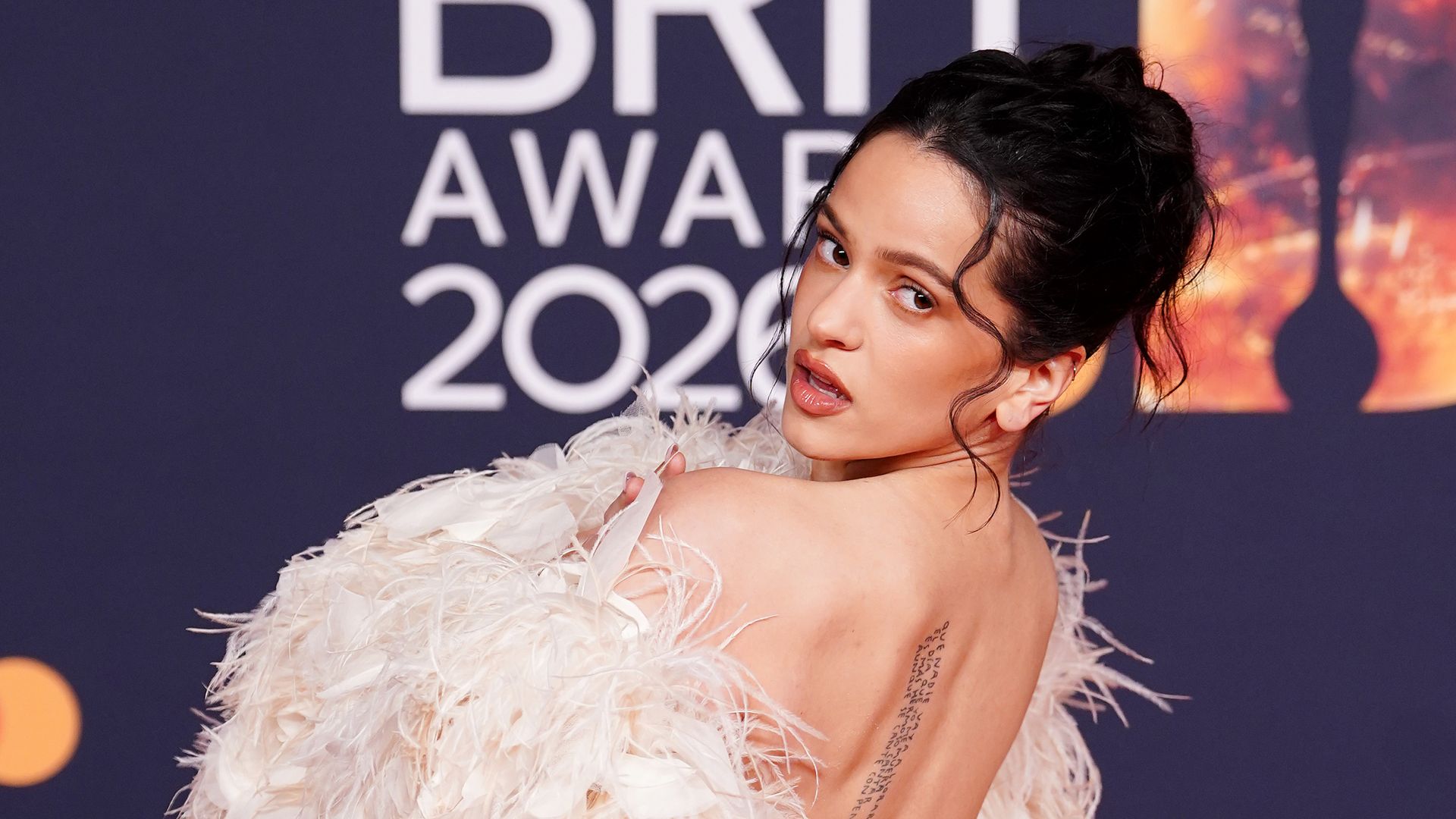
The 2026 Brit Awards were never about the music. If you watched the glitter-drenched spectacle at the O2 Arena expecting a celebration of sonic innovation, you were looking at the wrong map. This year’s ceremony was a high-stakes trade show, a choreographed victory lap for a handful of global streaming giants and major labels that have finally succeeded in turning the UK’s most prestigious music award into a predictable quarterly earnings report.
While the official results show Raye continuing her historic momentum and The Last Dinner Party solidifying their grip on the indie-pop crossover market, the real story lies in the data behind the trophies. The "Artist of the Year" category didn't just reward talent; it validated a specific business model of high-frequency social media engagement and algorithmic compliance. This year, the winners weren't chosen by a diverse jury of peers so much as they were surfaced by a spreadsheet.
The industry likes to talk about "breakthroughs." It’s a comfortable word. But looking at the 2026 winners list, it’s clear that the path to the podium is narrower than ever. The barrier to entry isn't just talent; it’s the ability to fund a massive multi-platform campaign months before a single physical record is pressed.
The Illusion of the Independent Surge
A common narrative emerging from the 2026 ceremony is that independent artists are finally winning the war against the majors. This is a half-truth at best. While several winners technically operate under "indie" banners, a closer look at their distribution and marketing infrastructure reveals the fingerprints of the big three—Universal, Sony, and Warner.
Take the "Best New Artist" category. On paper, the winner represents a victory for the grassroots. In reality, their "independent" status is a branding choice supported by a complex web of "services deals" that provide major-label muscle without the major-label optics. We are seeing a gentrification of independence. True DIY artists—the ones recording in bedrooms without a dedicated TikTok strategy team—were nowhere to be found on the nominee list.
The Brits have become a closed loop. To get nominated, you need radio play. To get radio play, you need a plugger. To afford a plugger, you need a financial backer who expects a return on investment that usually requires a compromise in artistic risk. This isn't a conspiracy; it's just the current plumbing of the British music industry. The result is a ceremony that feels surgically cleaned of the grit and unpredictability that used to define UK pop.
The Algorithm is the Lead Producer
The most telling moment of the night wasn't a speech or a performance. It was the "Song of the Year" result. The winning track followed the exact mathematical requirements for viral success: a 15-second "hook" designed for short-form video, a tempo that fits perfectly into "Focus" playlists, and a lyrical structure optimized for searchability.
Modern songwriting in Britain has been forced into a defensive crouch. Composers are no longer writing for the listener; they are writing for the platform. When a song wins a Brit in 2026, it is being rewarded for its utility, not its soul. It functioned as an effective background for 400,000 lip-sync videos. It successfully stayed in the "Top 50 UK" for twelve consecutive weeks. It triggered the "Up Next" feature more often than its competitors.
The Metrics of a Winner
| Metric | 1996 Winner (Average) | 2026 Winner (Average) |
|---|---|---|
| Track Length | 4:15 | 2:28 |
| Intro Length | 15-20 Seconds | 0-3 Seconds |
| Primary Revenue | Physical Sales | Data Licensing & Synch |
| Marketing Spend | Print/TV/Radio | Influencer Seeding/Social Ads |
This shift has created a "middle-class vacuum" in British music. You are either a global superstar with enough capital to bypass the gatekeepers, or you are struggling to pay for the van. The 2026 Brits reflected this divide perfectly. There was no room for the cult favorites or the artists who sell out mid-sized venues but don't move the needle on a global streaming platform.
A Staged Rebellion
We saw the usual attempts at rock-and-roll defiance. A guitar was smashed. A mild profanity was uttered during an acceptance speech. The host made a "daring" joke about the Prime Minister. But it all felt sanctioned. It was rebellion as a marketing vertical.
In decades past, the Brit Awards were genuinely dangerous. You had the KLF throwing a dead sheep at the audience or Jarvis Cocker interrupting Michael Jackson. Those moments were unscripted and genuinely threatened the brand partnerships. In 2026, the "chaos" is managed by PR firms. Every "outburst" is followed by a pre-written social media post designed to maximize the engagement spike.
This sanitation is a direct result of the awards' reliance on corporate sponsorship. When the logos on the step-and-repeat board include major banks and global tech firms, the "edge" is polished away before the red carpet even begins. The 2026 ceremony was a masterclass in brand safety. It was music as a lifestyle accessory, sanitized for a global audience that demands a predictable, high-gloss product.
The Export Crisis Hidden in Plain Sight
While the Brits celebrate "British" music, the industry is facing a quiet crisis in global influence. For years, the UK was the world's leading exporter of culture. We produced the outliers. We produced the weird kids who changed the world.
The 2026 winners represent a pivot toward homogenization. By rewarding artists who fit the global streaming template, the Brits are inadvertently signaling the end of the "British Sound." If an artist from London sounds exactly like an artist from Los Angeles or Stockholm because they are both using the same AI-driven songwriting tools and the same marketing playbooks, what is the point of a national award?
The "International Artist" categories used to be a way to contrast British eccentricity with global commercialism. This year, the line was invisible. The winners in the domestic categories were indistinguishable from their international counterparts in production style, fashion, and messaging. We are exporting a generic product, and the Brit Awards are the quality control department ensuring nothing too "British" or too "difficult" slips through.
The Missing Class Component
You cannot discuss the 2026 Brit Awards without discussing the death of the working-class artist. If you look at the biographies of the night’s big winners, a pattern emerges. Elite stage schools. Well-connected parents. Financial safety nets that allow for years of "unpaid development."
The infrastructure that once supported working-class talent—youth clubs, local arts funding, affordable rehearsal spaces—has been gutted. In its place, we have a pay-to-play system. This has fundamentally changed the texture of the music being celebrated. There is a lack of urgency, a lack of social friction. The music of the 2026 Brits is the music of comfort. It is the sound of people who have never had to worry about a rent increase.
This isn't an attack on the winners’ talent. Many of them are gifted performers. But talent is no longer enough to get you to the O2. You need a pedigree. The Brits have become a graduation ceremony for the affluent, a celebration of those who had the resources to survive the industry’s brutal "development" phase.
The Real Cost of a Brit Award
- Stage School Fees: £15,000 - £30,000 per year.
- PR Retainers: £3,000 per month for a minimum six-month lead-up.
- Social Media Management: £2,500 per month for content creation and community management.
- The "Independent" Label Buy-in: Often requires the artist to bring their own marketing budget to the table.
The Death of the Album as an Art Form
The 2026 ceremony confirmed that the "Album of the Year" is now a legacy category in spirit, even if it remains the top prize. The winning albums this year were not cohesive bodies of work. They were "playlist anchors"—collections of singles surrounded by filler designed to game the streaming duration metrics.
The industry has moved toward a "track-first" economy. This has a devastating effect on artistic development. When artists are pressured to deliver a hit every eight weeks to satisfy the algorithm, the space for experimentation disappears. You cannot have a Dark Side of the Moon or a Blue in an environment where the first thirty seconds of a track determine its entire financial future.
The 2026 winners were those who mastered the art of the "scroll-stopper." They are creators of moments, not movements. The Brits celebrated the efficiency of these tracks, but in doing so, they acknowledged that the era of the visionary album-artist is being phased out in favor of the high-output content creator.
Turning the Volume Down
The 2026 Brit Awards were a success by every corporate metric. Ratings were stable, the social media "impressions" were in the billions, and the sponsors were happy. But as a barometer for the health of British creativity, the ceremony was a warning light.
When an industry stops rewarding the outsiders and starts rewarding the most efficient participants in its own bureaucracy, it enters a state of stagnation. The music of the 2026 Brits was perfectly produced, expertly marketed, and entirely forgettable. It was a celebration of the system, by the system, for the system.
The "winners" are already seeing their streaming numbers spike. Their managers are fielding calls for global tours. The machine is working perfectly. But somewhere in a basement in Manchester or a community center in Peckham, there is a kid making something that sounds like nothing you’ve ever heard. That kid wasn't at the O2. They weren't invited. And under the current rules of the Brit Awards, they never will be.
If the British music industry wants to survive as more than a regional office for global tech platforms, it needs to stop looking at the spreadsheets and start looking for the people who are willing to break them. The 2026 ceremony proved we are further from that reality than ever before. We have traded our cultural soul for a better position on a weekly playlist.