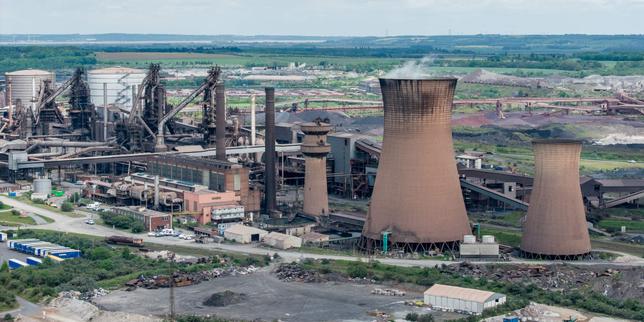
Governments rarely look graceful when they seize private property. The British government found this out the hard way when it completely nationalised British Steel, dragging the long-suffering Scunthorpe steelworks back into full public ownership. It was supposed to be a triumph of industrial strategy. It was supposed to protect thousands of local jobs and safeguard the nation's sovereign ability to manufacture its own heavy infrastructure. Instead, it triggered a furious diplomatic and financial showdown that will likely tie up international courts for years.
The previous owner, China's Jingye Group, did not take the expropriation quietly. Within days of the official takeover, the Beijing-based industrial conglomerate released a blistering statement on the Chinese social media platform WeChat. They accused the UK government of blatant extortion and flagrant violations of international law. They claimed the state offered almost zero compensation for an asset that Jingye bought out of insolvency back in 2020. They are now demanding a payout that insiders suggest could exceed £1 billion, threatening to drag the British state through international arbitration.
It is a mess. It is expensive. It shows exactly how difficult it is to run a modern industrial economy when global politics and local manufacturing collision courses meet. The UK government claims the commercial value of British Steel is nil. Jingye claims they saved the company from outright collapse and poured massive amounts of capital into keeping the lights on. Both sides have a point, but neither side is willing to back down.
The Long Road to a Billion Pound Fight
To understand why this relationship dissolved into toxic public trading of insults, you have to look at how the British steel industry ended up in Chinese hands in the first place. Heavy steelmaking in the UK has been dying a slow death for decades. The Scunthorpe site has a history stretching back over 130 years, built during the peak of the Industrial Revolution. It went through cycles of public and private ownership, nationalised in the 1950s, privatised, nationalised again in the 1960s, and then sold off under Margaret Thatcher in 1988.
By the time the 21st century arrived, the global steel trade belonged to China. The massive expansion of Chinese industrial capacity created a massive glut of cheap steel on the international market, crashing prices everywhere else. British plants could not compete. They were saddled with higher energy costs than their European rivals and lacked the massive state backing enjoyed by Chinese firms.
Ownership of Scunthorpe passed from India's Tata Steel to a private equity firm called Greybull Capital in 2016 for a symbolic single pound. Greybull failed. When they walked away in 2019, the British government scrambled to find a savior to avoid a catastrophic economic collapse in Lincolnshire.
Enter Jingye Group. In 2020, they stepped in to buy British Steel out of liquidation. At the time, politicians cheered the deal as a massive win. A wealthy foreign backer was going to inject cash, modernise the site, and keep 2,700 people employed.
It did not work out that way. The fundamental economic problems did not disappear just because the owner changed. Between 2020 and the end of 2023, British Steel notched up cumulative losses of £350 million. The two remaining blast furnaces at Scunthorpe, affectionally known by generations of steelworkers but built originally in the mid-20th century, were reaching the absolute end of their operational lives. They were hemorrhaging money.
The Seventy Year Old Furnaces Burning a Hole in the Treasury
By early 2025, the situation became unsustainable. Jingye warned the government that running the Scunthorpe blast furnaces was costing them around £700,000 every single day. They threatened to blow out the furnaces and let them cool down.
In steelmaking, letting a blast furnace cool down without a controlled decommissioning is an existential threat. The molten metal inside solidifies, turning the entire structure into a giant, useless block of iron. It ruins the machinery. It means you cannot just flip a switch to turn it back on later.
Faced with the immediate loss of thousands of industrial jobs, the newly elected Labour government panicked. They could not afford the political fallout. They also could not accept losing the UK’s final capacity to produce virgin steel from raw iron ore.
The government took emergency action. Parliament was recalled to ram through legislation allowing officials to take operational control of the business. For over a year, British Steel existed in a strange limbo. Jingye remained the nominal economic owner, but state officials were running the day-to-day operations.
The costs skyrocketed. Documents from the National Audit Office revealed that under state supervision, the daily losses ballooned from £700,000 to a staggering £1.3 million a day. Taxpayers were footing the bill to keep an inefficient, aging plant alive.
Negotiations between the government and Jingye over state aid to modernise the site broke down completely. The state offered a £100 million rescue package tied to transitioning the site to cleaner electric arc furnaces, which melt down recycled scrap steel rather than creating raw steel from scratch. Jingye rejected it. They wanted far more support to cover their mounting debts and historical investments.
When it became clear no commercial deal could be struck, the government decided to go all the way. They passed the Steel Industry Nationalisation Act and officially took full public ownership of the asset.
Beijing Steps In and the Markets Get Nervous
This is not just a localized industrial dispute. It is an international incident. The Chinese Foreign Ministry quickly stepped into the fray, warning that how the UK handles this situation will directly impact how Chinese corporations view the British investment climate.
Jingye is using China’s bilateral investment treaty with the UK to launch its legal assault. These treaties are designed to protect foreign companies from arbitrary state seizures. If a government takes your property, they are legally obligated to pay a fair market rate for it.
Here lies the core of the legal battle. What is a failing steelworks actually worth?
British Steel Financial Realities (2025-2026)
--------------------------------------------------
Daily losses under Jingye:          £700,000
Daily losses under state control:    £1,300,000
Total estimated nationalisation cost: £1.5 billion+
Jingye reported compensation claim:  £1,000,000,000+
UK Government opening valuation:     £0
The Department for Business and Trade argues that because the plant cannot survive without massive taxpayer subsidies, its commercial value is effectively zero. They believe they are doing Jingye a favor by taking a loss-making disaster off their hands.
Jingye sees it differently. They argue that they poured hundreds of millions of pounds into an asset that the British state desperately needed for its own national security and sovereign infrastructure. They believe the UK used them to absorb years of heavy losses, waited until the economic conditions became too tough, and then grabbed the assets back without paying the bill.
Their WeChat statement was remarkably aggressive. They claimed the nationalisation broke promises and warned that those who harm others will inevitably harm themselves. They even claimed they would seek to hold the UK government and British Steel’s management legally liable on behalf of British taxpayers, an unusual legal angle designed to drum up domestic political pressure within the UK.
The Fantasy of Sovereign Virgin Steel
The British government justifies this massive intervention by pointing to national security. If Scunthorpe closes its blast furnaces, the UK becomes the only member of the G7 group of leading economies without the ability to make primary steel from raw materials. Every piece of steel used in British warships, railway tracks, and major infrastructure would have to be imported.
It sounds like a noble goal. In reality, it might be an expensive fantasy.
The UK steel industry is tiny on the global stage. In recent years, the UK produced around 5.5 million tonnes of crude steel annually. China produces over 1 billion tonnes a year. The scale is incomparable.
Furthermore, the rest of the domestic industry is already abandoning the old way of making steel. Tata Steel at Port Talbot turned off its final traditional blast furnace, cutting jobs and transitioning to electric arc technology with the help of state funding. Electric arc furnaces are cheaper to run, require far fewer workers, and produce a fraction of the carbon emissions.
By insisting on keeping the Scunthorpe blast furnaces alive, the state is tethering itself to a dying technology. The cost to taxpayers will not stop with the nationalisation. Analysts estimate that keeping the site functional and managing the eventual green transition could easily cost the public treasury more than £1.5 billion by 2028.
The Legal Process Moving Forward
The fight is now moving from the factory floor to the courts. Under British law, ministers are required to establish an official compensation scheme for the nationalised assets. Regulations for this scheme will be laid before parliament.
An independent valuer will be appointed to look at the books. They will have to decide whether Jingye is owed a massive payout or if the UK government's zero-value assessment holds water. Whatever that valuer decides, you can bet it will be appealed.
Jingye has already reserved its right to go to international arbitration. These tribunals operate outside the standard British court system. They look strictly at international treaties. If a tribunal decides the UK government acted unfairly or destroyed the value of a foreign investment through regulation and forced takeovers, the fines can be enormous.
The Real Cost for International Business
For foreign companies looking at Britain, this story is a major warning sign. The UK has long sold itself as a safe, predictable place to invest capital, a country with strict respect for property rights and the rule of law.
When a government uses emergency laws to push out a foreign owner because an industrial dispute got too difficult, that reputation takes a hit. It does not matter that Jingye was an unpopular owner or that the plant was losing money. The optics are terrible.
Other foreign firms investing in British energy, transport, or technology sectors will look at the British Steel saga and wonder if their assets could be next if political winds shift. Risk premiums go up. Investment decisions get delayed.
The British Steel nationalisation solved a short-term political crisis for the government, but it created a long-term financial and diplomatic headache. The state now owns a money-pit factory that requires over a million pounds of public cash every single day just to stay open, while facing a billion-pound lawsuit from an angry superpower. No one walked away from this deal a winner.
If you are tracking international trade disputes or looking at how sovereign risk is changing in Western economies, watch the independent valuation process closely. The final ruling will set a massive precedent for how states can treat foreign capital when essential infrastructure goes bust. Keep an eye on the parliamentary filings for the specific compensation metrics they intend to use, as that will be the battleground where this billion-pound argument is won or lost.