The rumors circulating through the halls of the State Department and the trading floors of Geneva suggest a seismic shift in American foreign policy. Washington is quietly weighing the removal of specific sanctions on Iranian crude oil, a move that would have been unthinkable just twenty-four months ago. This isn't a gesture of sudden diplomatic goodwill or a sign that the underlying tensions between Washington and Tehran have evaporated. It is a cold, calculated response to a global energy market that has become increasingly volatile and a domestic political environment where gas prices dictate election outcomes.
By entertaining the idea of letting more Iranian barrels hit the global market, the U.S. is attempting to solve a math problem with a geopolitical wildcard. The primary goal is simple: increase supply to suppress global Brent prices. However, the execution is fraught with risks that could inadvertently fund the very regional instability the U.S. claims to oppose.
The Crude Reality of Shadow Fleets
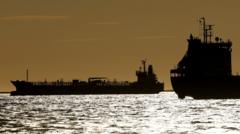
For years, Iran has not been "off the market" in the way many policymakers like to pretend. Despite the "maximum pressure" campaign initiated years ago, Tehran has perfected the art of the ghost trade. Using a sophisticated network of aging tankers, ship-to-ship transfers in the middle of the night, and shell companies based in jurisdictions with lax oversight, Iran has managed to keep its exports flowing, primarily to independent refineries in China.
Lifting sanctions wouldn't necessarily "start" Iranian exports; it would formalize them.
Currently, Iranian oil sells at a significant discount—often $10 to $15 below the benchmark—because of the "risk premium" associated with handling sanctioned goods. Formalizing these exports removes that discount. This means that even if Iran doesn't pump a single extra drop of oil, their revenue per barrel would jump instantly. We are looking at a potential windfall for the Iranian treasury that could reach billions of dollars annually. This is the central tension of the plan. To lower prices for a commuter in Ohio, the U.S. might have to significantly pad the bank account of the Islamic Revolutionary Guard Corps.
Why the SPR Can No Longer Save Us
In previous cycles of energy instability, the U.S. relied on the Strategic Petroleum Reserve (SPR) to blunt the edge of price spikes. That well is running dry. Following massive releases aimed at stabilizing the market after the invasion of Ukraine, the SPR is at its lowest levels in decades. The buffer is gone.
Without the ability to flood the market with domestic reserves, the administration is forced to look at the only two entities with immediate spare capacity: OPEC+ and Iran. OPEC+, led by Saudi Arabia and Russia, has shown a stubborn refusal to increase production in ways that favor Western political cycles. They are focused on price floors, not consumer comfort. This leaves Iran as the only valve left to turn.
Bringing an additional 1 to 1.5 million barrels per day of "official" Iranian crude onto the market would provide a much-needed cooling effect. But it’s a move made from a position of tactical weakness, not strategic strength. It signals to the world that the U.S. energy policy is currently being dictated by the necessity of the moment rather than a long-term vision of independence.
The China Connection and the Middleman Problem
We cannot discuss Iranian oil without discussing Beijing. China is the primary customer for sanctioned Iranian crude, often processing it through "teapots"—small, independent refineries in the Shandong province. These refineries have become the primary sink for the world's sanctioned oil, including Russian and Venezuelan grades.
If the U.S. lifts sanctions, it fundamentally changes the power dynamic in the South China Sea and beyond.
- Transparency: Official trade would move through legitimate banking channels, theoretically making it easier for the U.S. Treasury to monitor where the money goes.
- Quality Control: Global markets prefer the predictability of transparently traded oil over the murky, often blended "Malaysian" or "Middle Eastern" blends that hide Iranian origins.
- Leverage: By bringing Iran back into the fold of legal trade, the U.S. hopes to gain a diplomatic lever it lost when it walked away from the previous nuclear deals.
However, this assumes that Tehran wants to be "legitimate." The shadow economy has created a class of incredibly wealthy and powerful intermediaries within Iran who have no interest in seeing sanctions lifted. These individuals profit from the complexity and the risk. They are the ones who own the tankers and the front companies. To them, a return to the global banking system is a threat to their business model.
The Fragility of the Petroleum Peace
The assumption that more Iranian oil equals lower prices at the pump is also dangerously narrow. The oil market is a psychological entity as much as a physical one. If the market perceives that the U.S. is desperate enough to deal with Iran, it might signal a deeper fear about future supply disruptions elsewhere.
There is also the "OPEC Response" to consider. If 1.5 million barrels of Iranian oil suddenly become "legal," Saudi Arabia might view this as a threat to their market share and price stability. In the past, OPEC has responded to such shifts by cutting their own production to offset the new supply, effectively neutralizing the price drop and leaving the U.S. with the same high prices but a more empowered Iran.
Infrastructure Decay
Then there is the physical reality of the Iranian oil fields. Years of underinvestment and lack of access to Western technology have taken a toll. While Iran claims it can ramp up production almost instantly, industry analysts are skeptical.
- Well Integrity: Many of Iran's older fields require sophisticated secondary recovery techniques that they currently struggle to implement.
- Storage Saturation: Much of their current "available" oil is actually sitting in floating storage—tankers anchored off the coast. Once that initial surge is sold, the steady-state production might be lower than expected.
- Refinery Bottlenecks: Iran lacks the sophisticated refining capacity to handle its own domestic needs, often having to import gasoline despite being an oil giant.
The Geopolitical Cost of Cheap Gas
Every barrel of oil is a political statement. By even signaling a willingness to ease sanctions, the U.S. is telegraphing a shift in its hierarchy of needs. Energy security is now officially higher on the list than the total containment of the Iranian nuclear program or their regional proxy wars.
This shift will not go unnoticed by allies in the Middle East. Israel and the Gulf states have spent the last decade building a security architecture based on the isolation of Tehran. A sudden influx of oil wealth into Iran threatens to upend the Abraham Accords and force a realignment that might not favor Washington.
If the U.S. goes through with this, it will be the most significant admission to date that the era of using the dollar and oil as absolute weapons is coming to an end. We are entering a period of "pragmatic desperation," where the goals are no longer about changing regimes, but simply about keeping the lights on and the voters happy.
The administration must weigh whether the temporary relief of a twenty-cent drop in gas prices is worth the long-term cost of revitalizing an adversary. It is a gamble that assumes the global economy is too fragile to withstand another supply shock, yet robust enough to handle the political fallout of such a controversial reversal.
Monitor the shipping insurance markets in the coming weeks. If we see a sudden drop in the cost of insuring tankers operating out of the Persian Gulf, it won't be because the region has become safer. It will be because the world’s largest economy has decided it can no longer afford to keep its most potent economic weapon holstered._