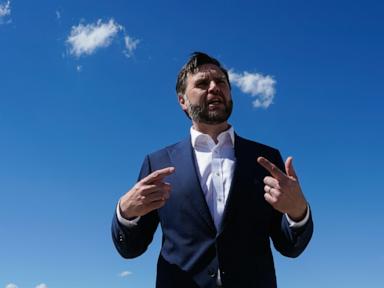
The visual from the alpine peaks of Switzerland suggests a government deeply divided against itself. At the luxury Bürgenstock resort overlooking Lake Lucerne, Vice President JD Vance sat across from top Iranian negotiators, speaking of turning over a new leaf and establishing a permanent framework for peace in the Middle East. Simultaneously, thousands of miles away at Camp David, President Donald Trump fired off a series of volatile social media broadsides, promising to destroy Iran if its regional proxies continued to disrupt global commerce. This striking contrast is not an administrative failure or a communications breakdown. It is a calculated, deliberate execution of transactional foreign policy designed to maximize leverage by running two contradictory operations at the exact same moment.
Understanding the current White House strategy requires moving past the superficial theater of public diplomacy. The objective of this coordinated squeeze is to force Tehran into binding concessions regarding its nuclear ambitions and its regional proxy network while utilizing the immediate threat of overwhelming military force as the ultimate closing tool. The 60-day implementation window for the newly minted Versailles Memorandum of Understanding is rapidly ticking away. The administration has weaponized unpredictability, using the Vice President as the methodical diplomat dangling sanctions relief while the President plays the unhinged enforcer ready to burn down the entire architecture of the negotiation.
The Illusion of Discord on Lake Lucerne
The technical negotiations in Switzerland are being led by an inner circle that reflects the administration's specific brand of personalist diplomacy. Alongside Vance are key figures like real estate magnate Steve Witkoff and former White House adviser Jared Kushner, signaling that Washington views this conflict through an economic lens. They are treating a decades-old theological and geopolitical cold war as a distressed asset restructuring. Vance has adopted a remarkably conciliatory posture on the ground, acknowledging that the process is messy but insisting that structural progress is being made toward regional stabilization.
This diplomatic track operates on the assumption that Iran can be bought off or at least managed through a mixture of economic incentives and financial security guarantees. The Versailles memorandum puts the burden on Washington to deliver early concessions, including the dismantling of specific naval blockades and the unfreezing of billions of dollars in overseas assets. For a cash-starved Iranian economy reeling from years of isolation, these terms represent a critical lifeline.
The problem is that the diplomatic track cannot exist in a vacuum. Every time Vance attempts to build operational trust with Iranian Parliament Speaker Mohammad Bagher Ghalibaf and Foreign Minister Abbas Araghchi, a fresh directive from Washington disrupts the room. This tension boiled over during an 80-minute quadrilateral session involving mediators from Pakistan and Qatar, when the Iranian delegation briefly recessed to digest an aggressive public warning from Trump. Critics argue this erratic approach undermines the credibility of American negotiators, leaving foreign counterparts wondering whether Vance actually possesses the authority to guarantee any deal he signs.
The Mechanics of Madman Diplomacy
The aggressive statements coming from the executive branch are not rogue outbursts. They are a classic application of the madman theory of international relations, updated for the modern media environment. By publicly threatening to hit Iran harder than the military strikes executed just last week, Trump creates a strategic environment where the Iranian regime must constantly calculate the risk of total war.
The strategy relies entirely on contrast. Vance presents the Iranian delegation with a rational, structured exit ramp from their current economic misery. Trump makes it clear that the alternative to that exit ramp is complete annihilation. This structural pressure is designed to strip Tehran of its favorite diplomatic tactic, which is dragging out technical negotiations to buy time for its domestic nuclear advancement.
White House Strategy Framework
├── The Diplomatic Track (Vance, Kushner, Witkoff)
│   ├── Venue: Bürgenstock Resort, Switzerland
│   ├── Carrots: Sanctions relief, asset unfreezing, lifting naval blockades
│   └── Goal: Binding nuclear restrictions and proxy de-escalation
└── The Coercive Track (Trump from Washington)
    ├── Venue: Public social media, phone broadcasts
    ├── Sticks: Immediate military strikes, maritime intervention
    └── Goal: Denying Iran tactical delay options
This approach carries immense operational risk. If the target of this strategy believes the threats are empty, the entire framework collapses into irrelevance. Conversely, if the target believes the threats are too real, they may conclude that conflict is inevitable and choose to launch a preemptive escalation rather than negotiate under duress. The administration is betting that Iran’s current domestic instability will force its leadership to choose submission over survival.
The Economic Pressure Point at the Strait of Hormuz
The immediate flashpoint threatening to derail the Swiss negotiations is the narrow waterway through which roughly twenty percent of the world’s petroleum passes. Following recent military exchanges between Israeli forces and Hezbollah militants in southern Lebanon, Tehran announced a tactical closure of the Strait of Hormuz. The regime claimed that Washington’s inability to restrain Israeli military actions constituted a direct breach of the tentative ceasefire agreement signed just days prior.
The economic reality of this closure explains the intensity of the American response. The conflict has already driven global energy prices to levels that directly threaten domestic economic stability. High gasoline prices have consistently eroded consumer confidence and complicated the administration's internal political standing. Yesterday, the White House claimed that naval operations successfully escorted sixteen million barrels of oil through the strait, setting a short-term record. This public announcement was explicitly designed to show that the American military will enforce freedom of navigation regardless of Tehran’s official decrees.
The administration’s long-term hawks are already looking past the current diplomatic friction. Some prominent figures within the president's circle have suggested that if negotiations fail before the 60-day ceasefire expires, the United States should permanently seize physical control of the Strait of Hormuz. This theoretical plan involves transforming the waterway into a heavily guarded maritime corridor where international shipping would be forced to pay transit fees to fund American military operations. This extreme proposal serves as a secondary layer of coercion, signaling to global oil markets and regional powers that Washington is willing to upend traditional maritime law to achieve its strategic objectives.
Inside the Fractured Iranian Response
The dual-track pressure from Washington has exacerbated existing political rifts within the Islamic Republic. Iranian President Masoud Pezeshkian finds himself trapped between a population desperate for economic relief and a hardline military establishment that views any compromise with the West as an act of treason. Pezeshkian has publicly maintained a defiant stance, stating that Iran will never abandon its legal right to enrich uranium and that Western powers must accept this technical reality.
Behind the scenes, the rhetoric from Tehran reflects deep anxiety. When Trump threatened to launch catastrophic strikes if Hezbollah continued its operations, Ghalibaf fired back on social media, dismissing the warnings as desperate bluffs. He asserted that Iran's armed forces are fully prepared to respond to any aggressive action. This public bravado masks a difficult reality for the Iranian leadership. Their regional proxy strategy, which once provided a reliable ring of deterrence, is fracturing under the weight of sustained military pressure.
The Iranian delegation in Switzerland is operating under incredibly restrictive parameters. They have been instructed to secure immediate sanctions relief and the unfreezing of state funds without offering definitive commitments on their long-term enrichment programs. The mixed signals from Washington make it impossible for Iranian diplomats to pitch a coherent compromise to the Supreme Leader, who retains final authority over all matters of state security. Every time Pezeshkian’s team inches toward a technical concession on nuclear monitoring, a fresh threat from Trump rearms the hardline factions in Tehran who argue that Washington can never be trusted to honor an agreement.
The Vulnerabilities of a Deal Signed in the Shadows
The entire diplomatic edifice constructed over the past two weeks remains remarkably fragile because it excludes the primary combatants on the ground. Neither Israel nor Lebanon is a signatory to the Versailles Memorandum of Understanding. While the text of the agreement calls for a total cessation of military actions in the Levant and demands respect for Lebanese sovereignty, the reality on the ground is dictated by independent actors with their own strategic imperatives.
Israeli leadership has made it clear that they do not consider themselves bound by agreements negotiated in European resorts by American and Iranian intermediaries. The continued exchange of heavy artillery and airstrikes across the Blue Line threatens to shatter the fragile architecture of the 60-day ceasefire before technical teams can even finish drafting the annexes. If Israel continues its campaign to dismantle Hezbollah’s infrastructure in southern Lebanon, Iran will face immense internal pressure to resume active resistance, effectively forcing its delegation to walk away from the negotiation tables in Lucerne.
International mediators are scrambling to construct a verification mechanism that can survive the current political crosswinds. Pakistan and Qatar are working to establish direct, real-time communication channels between the military commands of the involved nations to prevent an accidental escalation from triggering a wider regional war. Rafael Grossi, the chief of the International Atomic Energy Agency, has also arrived in Switzerland to provide technical oversight on the nuclear components of the deal. His presence underscores the stakes of these discussions. The world is watching a high-stakes experiment in coercive diplomacy where the line between a historic breakthrough and a multi-front war is thinner than it has ever been.
The coming days will determine whether this administration can successfully convert public volatility into durable diplomatic agreements. Vance will continue his efforts to pin down the technical details of an accord, while Trump will undoubtedly keep his hand on the trigger from Washington. This strategy requires flawless execution. If the administration miscalculates, they may find that instead of forcing a desperate adversary into submission, they have backed a heavily armed regime into a corner where its only logical move is to fight.


