The 1973 oil crisis was not a spontaneous reaction to the Yom Kippur War, nor was it a simple supply shortage. It was a calculated geopolitical heist that fundamentally broke the Western middle class and permanently shifted the global balance of power. While history books often focus on the tanks crossing the Suez Canal, the real devastation happened in wood-paneled boardrooms in Kuwait and Vienna. For the first time, the "Seven Sisters"—the Western oil giants that had dictated prices for decades—lost their grip. The resulting 300% price spike was a deliberate act of economic warfare designed to punish the United States for its support of Israel, but its lasting legacy was the realization that the American way of life was built on a fragile, borrowed foundation of cheap foreign crude.
The Myth of the Sudden Shortage
To understand why the lights went out in 1973, you have to look back at the decade preceding it. The United States had been the world’s leading oil producer, but by 1970, domestic production peaked. Demand, however, did not. The American economy was addicted to gas-guzzling V8 engines and inefficient suburban sprawls. By 1973, the U.S. was importing six million barrels a day. We weren't just using oil; we were bleeding it.
The Organization of the Petroleum Exporting Countries (OPEC) saw this vulnerability. They didn't just stumble into the embargo. They had been looking for a reason to hike prices and reclaim sovereignty over their natural resources. The outbreak of the Arab-Israeli War on October 6, 1973, provided the perfect moral and political cover. When President Richard Nixon requested $2.2 billion in emergency military aid for Israel, the Arab members of OPEC saw their opening. They didn't just cut production; they declared a total ban on oil shipments to the U.S. and the Netherlands.
How the Embargo Actually Functioned
It is a common misconception that the world simply ran out of oil. The physical oil existed. The problem was the logistics of a weaponized market. OPEC announced monthly 5% production cuts until their political goals were met. This created a psychological panic that far outweighed the actual physical deficit.
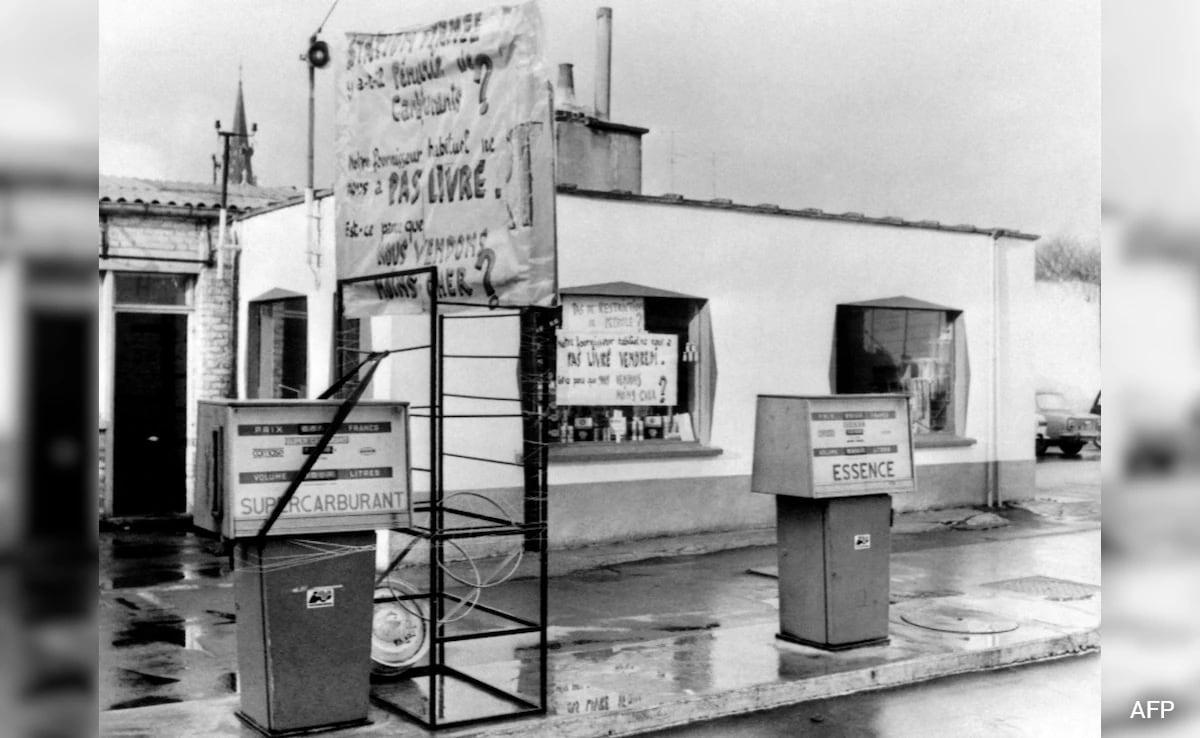
In the U.S., the government’s response was a masterclass in mismanagement. Price controls, originally intended to protect consumers, actually discouraged domestic drillers from increasing production. This led to the iconic, miserable images of the 1970s: lines of Buicks and Fords stretching for blocks, "No Gas" signs taped to pumps, and the implementation of odd-even rationing based on license plate numbers. The price per barrel jumped from $3 to nearly $12 in a matter of months.
The impact was systemic. Because oil is the primary input for almost every stage of industrial civilization—from the fertilizers used in farming to the plastics in consumer goods—inflation exploded. This gave birth to "stagflation," a nightmare scenario where prices rise while the economy remains stagnant and unemployment climbs. Economists previously thought this was impossible. 1973 proved them wrong.
The Secret Diplomacy of the Petrodollar
While the public was fuming in gas lines, a much more cynical game was being played behind the scenes. Washington realized it couldn't win a direct confrontation with OPEC without risking a third World War. Instead, they opted for a "if you can't beat them, make them bankroll you" strategy.
In 1974, Treasury Secretary William Simon traveled to Saudi Arabia with a proposal that would define the next fifty years of global economics. The deal was simple: the U.S. would provide the Saudis with military equipment and protection. In exchange, the Saudis would price all their oil sales in U.S. dollars and "recycle" their massive profits back into U.S. Treasury bonds.
This created the Petrodollar system. It ensured that even though OPEC was draining wealth from American pockets, that wealth was being funneled back into the American financial system to fund the national debt. It turned a geopolitical defeat into a financial tether that forced the rest of the world to hold U.S. dollars if they wanted to keep their factories running.
The Collapse of the American Auto Empire
If you want to see the scars of 1973, look at the ruins of Detroit. Before the embargo, the "Big Three"—Ford, GM, and Chrysler—ignored the small, fuel-efficient imports coming out of Japan. They believed Americans would always want "land yachts."
The crisis shattered that arrogance. Practically overnight, the market for massive, 10-mile-per-gallon vehicles evaporated. Toyota, Honda, and Datsun (Nissan) were ready with compact, reliable cars that actually made sense in a world where gas cost four times what it did a year prior. The American auto industry never truly recovered its total dominance. The embargo forced a rapid, painful downsizing of the American dream, moving it from the expansive highway to the cramped commuter lane.
The Intelligence Failure and the Strategic Reserve
The most damning part of the 1973 crisis was the total failure of Western intelligence to predict the severity of the Arab nations' resolve. The CIA and the State Department had grown complacent, believing that the Arab states needed Western money more than the West needed their oil. They were wrong.
This failure led to the creation of the Strategic Petroleum Reserve (SPR). The U.S. decided it could never again be held hostage by a 30-day supply chain. Huge salt caverns in Louisiana and Texas were filled with millions of barrels of crude. It was a multi-billion dollar insurance policy against the next embargo. However, as we see in modern times, the SPR is a finite tool, often used more for political optics than genuine energy security.
The Nuclear and Coal Pivot
The embargo also sparked a desperate search for "Energy Independence," a phrase that has been a political buzzword ever since. It was the catalyst for the massive expansion of nuclear power in the late 70s. France, for instance, reacted to 1973 by launching a total overhaul of its grid, eventually getting nearly 70% of its electricity from nuclear energy.
In the U.S., the reaction was more fragmented. We turned back to coal, which slowed the environmental movement but kept the lights on. We also saw the first real push for renewable energy, though solar and wind technology at the time were far too primitive to replace the density of fossil fuels. The 55-mph national speed limit was enacted as a fuel-saving measure, a move that was deeply unpopular but statistically effective.
The Lasting Psychological Shift
The 1973 oil crisis ended the "Long Boom" of the post-WWII era. It taught the West that resources are finite and that supply chains are fragile. The swagger of the 1960s was replaced by the anxiety of the 1970s. We learned that a conflict thousands of miles away between nations we barely understood could dictate whether we could afford to heat our homes or drive to work.
We currently live in a world shaped entirely by those few months of 1973. From the militarization of the Middle East to the rise of global financial hubs in the desert, the ripples of the embargo are still moving. It wasn't a temporary hiccup in the markets; it was the moment the world realized that energy is the ultimate form of political currency.
Check the insulation in your attic and the fuel efficiency of your vehicle. Every time you pay at the pump, you are participating in a price structure that was forged in the fire of 1973.