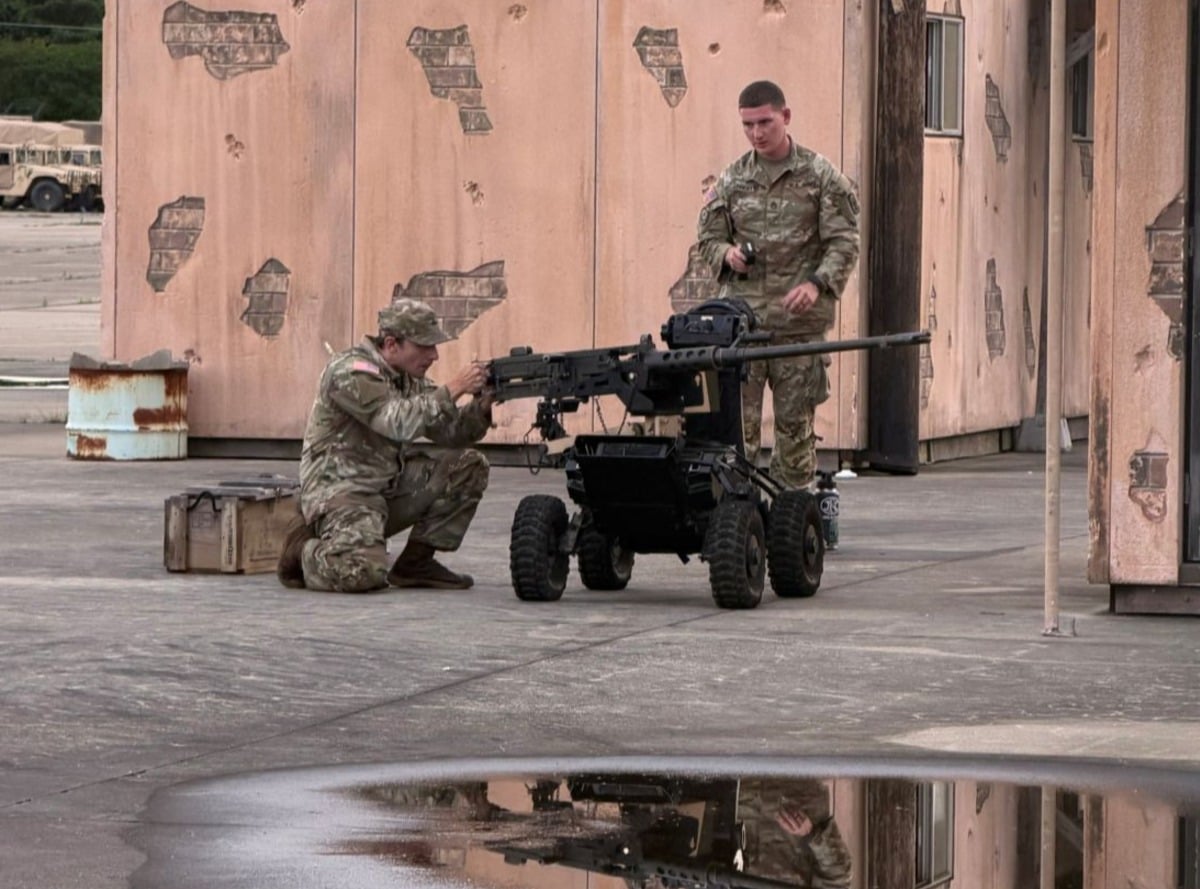
The U.S. Army is testing the Wild Goose robotic pack mule to relieve soldiers of heavy combat loads, but the technology faces severe operational hurdles before it can survive on the modern battlefield. While military planners pitch these autonomous ground vehicles as the ultimate fix for infantry fatigue, the reality on the ground is far more complicated. Infantrymen still carry upwards of 100 pounds of gear, and introducing a noisy, high-maintenance machine into a stealth-dependent environment introduces as many vulnerabilities as it solves. This is not a ready-to-deploy savior; it is an experimental platform facing a steep climb to combat readiness.
The Crushing Weight of the Modern Infantryman
For decades, the Pentagon has tried to engineer a solution to the soldier's oldest enemy: weight. Modern body armor, advanced optics, radios, batteries, and ammunition have pushed the combat load of an average light infantryman to dangerous levels. Physical strain leads to long-term injuries, reduced situational awareness, and slower reaction times during a firefight. For an alternative look, see: this related article.
Enter the Wild Goose. This rugged, multi-wheeled autonomous vehicle is designed to follow squads through rough terrain, carrying their rucksacks, extra ammunition, heavy weapons, and medical supplies. By shifting the physical burden from human spines to an electric chassis, the Army hopes to restore tactical agility to its dismounted troops.
The concept makes sense on paper. In practice, the friction of real-world warfare quickly interferes with engineering ideals. Similar coverage on the subject has been provided by The Next Web.
The Sound and the Fury of Battlefield Robotics
A primary issue with unmanned ground vehicles (UGVs) in forward combat zones is their acoustic and visual signature. Stealth saves lives. When a squad is moving through dense brush or navigating a ridge line, they rely on silence to avoid detection.
The Wild Goose, despite using relatively quiet electric motors, still generates significant noise from its tires grinding over gravel, snapping twigs, and crushing undergrowth. It is a large, metallic box moving through a natural environment. In a near-peer conflict against adversaries equipped with advanced thermal imaging and acoustic sensors, a robotic mule can act as a giant beacon tracking the squad's exact position.
The Autonomy Trap
Terrain navigation remains a massive hurdle for autonomous systems. Sidewalks and paved roads are easy for algorithms to map. A chaotic forest floor is a nightmare.
- Deadfall and Ditches: Mud, loose shale, and fallen logs frequently trap wheeled vehicles. When a robotic mule gets stuck, soldiers must stop, expose themselves to enemy fire, and physically extricate a multi-hundred-pound machine.
- Sensor Blindness: Dust, heavy rain, and thick smoke can obscure the cameras and LiDAR sensors that the Wild Goose uses to follow human leaders. If the sensors fail, the vehicle stops, leaving the squad separated from their heavy gear.
- The Tether Effect: Soldiers cannot afford to spend their cognitive energy babysitting a robot. If an infantryman is constantly looking back to ensure the machine hasn't rolled into a ditch, their ability to scan for threats is compromised.
The Logistics Nightmare of High-Tech Logistics
The ultimate irony of military automation is that platforms built to simplify supply chains often end up complicating them. The Wild Goose runs on high-capacity batteries. These batteries do not last forever, especially when the vehicle is climbing steep inclines or traversing thick mud.
Recharging these units in the middle of a jungle or a desert requires a robust power grid or field generators, which in turn require fuel. If a squad is deployed on an extended mission away from base, a dead robotic mule becomes a massive liability. Soldiers cannot simply leave it behind for the enemy to capture and reverse-engineer. They must either destroy it or carry their gear plus the dead weight of the machine.
Furthermore, field maintenance is a glaring vulnerability. Infantrymen are trained to fix basic mechanical issues on their rifles and vehicles. They are not software engineers or robotics technicians. A loose wire or a corrupted software glitch on a patrol can render the Wild Goose useless, transforming a force multiplier into an expensive paperweight.
Lessons from the Shadow of AlphaDog
This is not the Army's first attempt at a robotic beast of burden. A decade ago, the Marine Corps tested the Legged Squad Support System (LS3), affectionately known as AlphaDog. That platform used hydraulics and legs to mimic an animal, allowing it to traverse terrain that wheeled vehicles could never touch.
The Marine Corps ultimately shelved AlphaDog. The reason was simple: it was too loud. The internal combustion engine sounded like a lawnmower, making it impossible to use in a tactical environment.
The Wild Goose swaps legs for wheels and a gas engine for an electric battery, solving the extreme noise problem but introducing the limitations of wheeled mobility and battery life. History shows that the military's appetite for these systems often outpaces the limitations of current physics and engineering.
The Electronic Warfare Vulnerability
Modern battlefields are saturated with electronic warfare (EW). From the battlefields of Eastern Europe to the Pacific, signal jamming is a standard countermeasure. The Wild Goose relies on GPS and radio frequencies to communicate with its operator or to follow a designated beacon.
If an adversary jams these signals, the vehicle's utility drops to zero. A hijacked or blinded robot can be lured into an ambush or forced to shut down entirely. To make the Wild Goose a viable asset, the Army must develop secure, jam-resistant autonomous software that allows the machine to think for itself when all external signals are cut. True edge computing is required, and that technology is still in its infancy for tactical ground systems.
The Army's experimentation with the Wild Goose is a necessary step toward the future of warfare, but treating it as an immediate solution to soldier load issues ignores the harsh realities of combat environments. Until the system can guarantee absolute silence, navigate unpredictable terrain without human intervention, and survive in an intense electronic warfare environment, the infantry will continue to carry the weight of the war on their own shoulders.