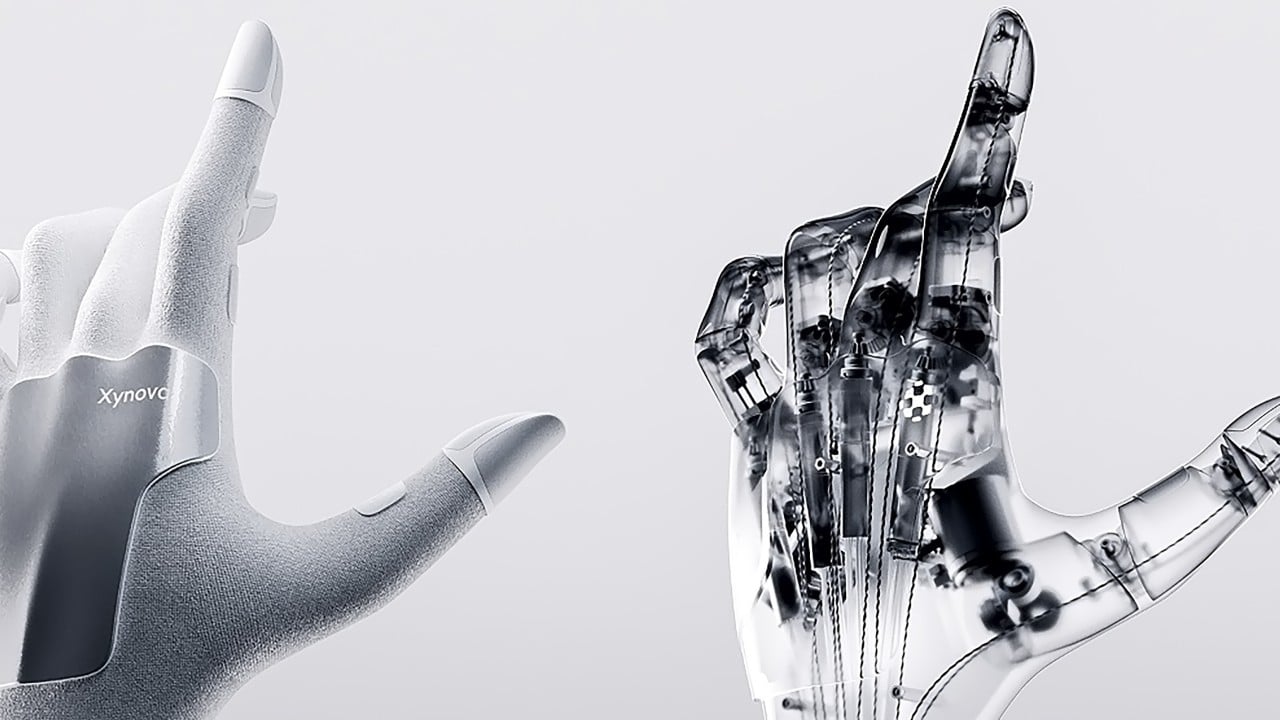
A venture capital panic is quiet until it suddenly becomes deafening. Right now, in Shenzhen and Beijing, that panic is taking the shape of human fingers. Over the past eighteen months, Chinese venture capital firms have poured hundreds of millions of dollars into embodied AI startups, specifically targeting the development of anthropomorphic robotic hands. The trend culminated in a record-breaking valuation milestone, where an ultra-young hardware startup crossed the billion-dollar threshold in less than a year.
This is not a triumph of sudden engineering breakthroughs. It is a manufactured capital rush driven by a hyper-competitive domestic market facing a growth deficit elsewhere. While Western tech giants pour billions into large language models and software architectures, Chinese investors have hedged their bets on the physical manifestation of AI. They want the hardware that touches the real world. Read more on a connected subject: this related article.
Yet, beneath the breathless press releases about multi-joint dexterity and record funding rounds lies a structural vulnerability. The rapid birth of these hardware unicorns masks an uncomfortable reality. Building a robotic hand that looks human is relatively easy; building one that can operate reliably in an unpredictable factory setting for five years without breaking down remains an unsolved problem. The rush to fund these companies has triggered a brutal hardware arms race that prioritizes paper valuations over mechanical durability.
The Mirage of Fast Track Valuations
To understand how a hardware company reaches a billion-dollar valuation in record time, you have to look at the unique pressures currently crushing Chinese private equity. With traditional consumer internet sectors heavily regulated and international public listings complicated by geopolitical friction, local funds are desperate for politically safe, high-technology narratives. Embodied AI fits the mandate perfectly. Additional journalism by Mashable delves into similar views on the subject.
The playbook is remarkably consistent. A group of researchers from a prestigious university like Tsinghua or Harbin Institute of Technology teams up with a couple of supply chain veterans from DJI or Huawei. They build a sleek prototype, film a heavily edited demonstration video of the hand folding a shirt or gripping an egg, and open a funding round.
Because the domestic supply chain for basic components is incredibly dense, prototyping happens at a speed that seems impossible in the West. What takes six months in Silicon Valley takes six days in the Pearl River Delta. Machined parts, custom actuators, and printed circuit boards are turned around overnight. This gives the illusion of hyper-growth. Investors, terrified of missing the next dominant platform, bid up seed and Series A rounds to astronomical heights.
But a fast prototype does not equate to a sustainable business. The capital injected into these companies is not going toward fundamental material science research. It is being spent on poaching talent from competitors and buying market share through heavily subsidized proof-of-concept installations.
The Mechanical Bottleneck
The human hand is a masterpiece of biology, packing 27 bones, dozens of muscles, and thousands of nerve endings into a compact, highly flexible form factor. Replicating this mechanically requires a dense concentration of motors, gears, and sensors.
In the rush to achieve human-like appearance and dexterity, developers are running into a hard wall dictated by physics and materials science. The core challenge is the trade-off between three competing variables.
- Degrees of Freedom (DoF): The number of independent movements the hand can perform. Higher numbers mean more human-like movement but require more parts.
- Payload Capacity: The amount of weight the hand can lift without snapping its internal cables or stripping its miniature gears.
- Mean Time Between Failures (MTBF): How long the hand can operate continuously before requiring human maintenance or part replacement.
Currently, the industry is optimizing for Degrees of Freedom at the absolute expense of reliability.
+------------------------+------------------------+------------------------+
| Design Focus           | Short-Term Advantage   | Long-Term Consequence  |
+------------------------+------------------------+------------------------+
| High Degrees of        | Impressive investor    | Extreme mechanical     |
| Freedom (20+)          | demos, high valuation  | fragility, high cost   |
+------------------------+------------------------+------------------------+
| High Payload           | Industrial utility,    | Clunky movement, loss  |
| Focus                  | manufacturing sales    | of tech-unicorn status |
+------------------------+------------------------+------------------------+
To fit twenty or more active joints into a human-sized palm, engineers must use microscopic coreless motors and razor-thin tendon cables made of synthetic fibers like Dyneema. These cables stretch over time. They fray. The miniature gearboxes, often measuring just a few millimeters in diameter, strip their teeth under sudden impacts.
When a Western laboratory builds a $50,000 robotic hand for an academic research project, a low MTBF is acceptable. The hand breaks, a graduate student spends three days fixing it, and the research continues. But on an automotive assembly line or a logistics sorting floor, a component that breaks every forty hours is worse than useless. It is an expensive liability. The fast-track unicorns are delivering devices that look like science fiction but possess the operational lifespan of a consumer toy.
The Component Trap
Walk through the R&D labs of these newly minted unicorns, and you will hear a common boast: total supply chain independence. The claim is that because China dominates global manufacturing, these startups can source every single screw, motor, and sensor domestically, driving costs down to a fraction of Western alternatives.
This is technically true but operationally misleading. The domestic supply chain excels at commodity manufacturing, but high-end robotics relies on specialized components where quality control is everything.
Consider frameless torque motors and harmonic strain wave gears. These components dictate how smoothly a robotic finger moves and how much force it can exert precisely. While Chinese manufacturers have made massive strides in replicating the designs of market leaders like Japan's Harmonic Drive, the consistency of the metallurgy remains a sticking point. A 1% variance in the alloy composition of a flexspline gear can cut its operational lifespan by 80%.
The same issue plagues tactile sensing. To handle delicate objects, a robotic hand needs electronic skin—arrays of piezoresistive or capacitive sensors that detect pressure, shear force, and temperature. Manufacturing these arrays requires cleanroom facilities and precise deposition techniques. Many startups are using cheap, off-the-shelf pressure matrices that lack the resolution and durability needed for complex manipulation. They drift out of calibration within weeks of continuous use, causing the hand to either crush a delicate object or drop a heavy one.
By relying on lower-tier domestic components to keep costs down and meet aggressive production deadlines, these companies are building on quicksand. They are trapped in a cycle of constant iteration where each new version fixes a mechanical failure identified in the last version, without ever addressing the underlying quality of the components.
AI Cannot Fix Bad Hardware
There is a widespread misconception among venture capitalists that advanced AI software can compensate for mechanical deficiencies. The theory goes that if your neural networks are smart enough, they can adapt to a stretched tendon cable or a failing motor by altering the control algorithms in real time.
This is a dangerous misunderstanding of how machine learning interacts with physical reality. Reinforcement learning models require millions of simulation cycles to learn how to grasp an object securely. When the model is transferred from the perfect digital simulator to the physical robot—a process known as Sim-to-Real transfer—any mechanical inconsistency throws the software into chaos.
If a robotic finger has mechanical backlash, meaning there is a tiny amount of loose play in the gears, the AI cannot precisely predict where the fingertip is in space. The software tries to compensate by sending rapid, jerky correction signals to the motors. These erratic signals cause the motors to overheat, drawing excessive power and accelerating the wear and tear on the gearboxes.
Instead of software solving hardware problems, poor hardware stability is actively breaking the software. A neural network is only as good as its data inputs and its physical outputs. If the tactile sensors are drifting and the actuators are slipping, the smartest AI in the world will still fail to pick up a coffee cup cleanly.
The Imminent Market Correction
The current pace of funding is unsustainable because it is detached from actual industrial adoption. Large manufacturing enterprises, from electronics assembly plants to automotive giants, are notoriously conservative buyers. They do not care about a startup's unicorn status or its sleek promotional videos. They care about cost per hour, return on investment, and integration simplicity.
Right now, a high-dexterity robotic hand costs anywhere from $10,000 to $40,000. To replace a human worker on an assembly line, that cost needs to drop below $5,000, and the device must operate without maintenance for at least two years. None of the current fast-track unicorns can meet these metrics.
We are approaching a point where the first wave of pilot projects initiated during the 2024–2025 funding boom will come to an end. The corporate clients who agreed to test these robotic hands in their facilities are starting to assess the data. The early feedback from the factory floors is sobering: high failure rates, constant recalibration requirements, and a lack of standardized software interfaces.
When these pilot programs fail to transition into large-scale commercial contracts, the venture capital money will dry up just as quickly as it arrived. The companies that spent their war chests on marketing and rapid scaling rather than deep engineering will find themselves stranded.
The survivors of this impending shakeout will not be the ones that reached a billion-dollar valuation the fastest. The winners will be the boring companies. The ones that spent three years perfecting the heat treatment of a single gear, or developing a proprietary sealing method to keep industrial dust out of a finger joint. They are the ones building hardware that can actually survive the brutal reality of the factory floor.