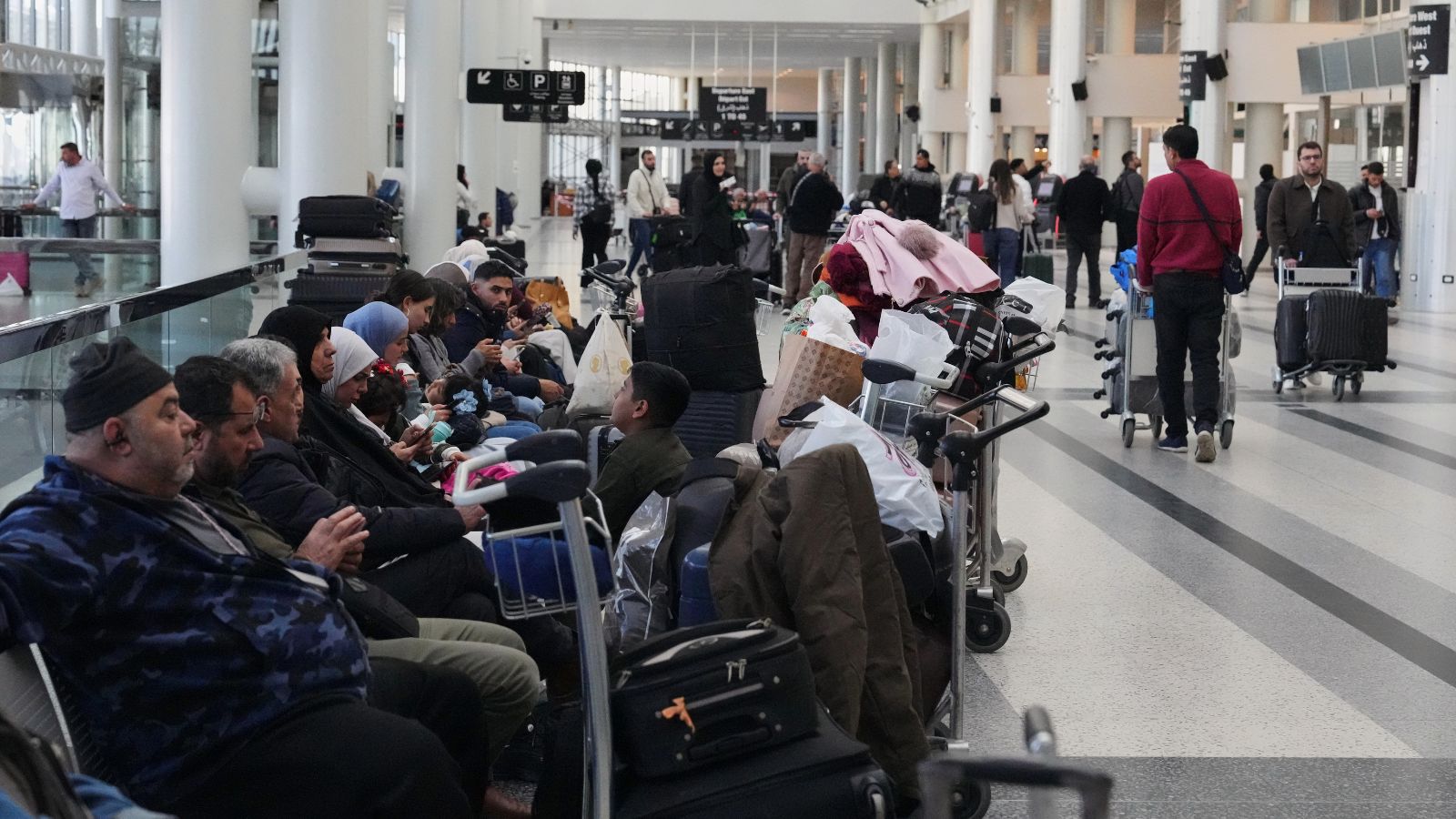
The Ministry of External Affairs (MEA) has officially activated its emergency Standard Operating Procedure (SOP) following the catastrophic escalation of the Iran-Israel war. As of March 1, 2026, Indian embassies across the Middle East have moved to a war-footing, issuing "utmost caution" advisories as commercial airspace collapses and 900-plus strikes dismantle regional stability. This is no longer a localized skirmish. It is a full-scale logistical nightmare for the 26,000 Indians currently trapped between a "decapitation campaign" in Tehran and a high-alert defense posture in Tel Aviv.
India's immediate priority is the safety of 18,000 citizens in Israel—mostly caregivers and IT professionals—and 8,000 in Iran. But the reality on the ground is far grimmer than the official bulletins suggest. With 350 flights cancelled in a single day and the closure of skies over Iran, Iraq, and Qatar, the "available means" of exit have vanished.
The Tehran Deadlock and the Vanishing Exit
In Iran, the situation has turned clinical and terrifying. Following the reported death of Supreme Leader Ali Khamenei on February 28, the Indian Embassy in Tehran has ordered all nationals to stay indoors. This isn't just a precaution against airstrikes; it's a response to a total internal security vacuum.
For the 1,200 Indian students at institutions like Kerman University of Medical Sciences, the choice is impossible. Many stayed behind to complete Ministry of Health examinations just as the "decapitation" strikes began. Now, with the IRGC headquarters in ruins and the internet largely severed, these students are effectively ghosted by the infrastructure they relied on. The MEA has activated a 24/7 helpline, but the true challenge is the physical extraction of people from a country where the command-and-control structure is being systematically erased.
The Israel Trap and the 50,000-Worker Gamble
Only days ago, Prime Minister Narendra Modi and Benjamin Netanyahu were finalizing a deal to send 50,000 more Indian workers to Israel. Today, those same workers are being told to memorize the location of the nearest bomb shelter.
The Indian Embassy in Tel Aviv has issued an urgent mandate for all citizens to register on their portal. This is a precursor to a mass evacuation list. The irony is sharp: while New Delhi has been positioning itself as the primary labor supplier to keep the Israeli economy afloat, it now faces the prospect of having to pull those same workers out of a firestorm.
Emergency Contact Network
If you or a family member are currently in the conflict zone, these are the confirmed, active lines of communication as of March 1, 2026. Do not wait for a formal evacuation announcement to make contact.
| Location | Emergency Phone Number | Email / Digital Contact |
|---|---|---|
| Israel (Tel Aviv) | +972-54-7520711 / +972-54-2428378 | cons1.telaviv@mea.gov.in |
| Iran (Tehran) | +989128109115 / +989128109109 | Register on MADAD Portal |
| United Arab Emirates | 800-46342 / +971-543090571 (WA) | pbsk.dubai@mea.gov.in |
| Saudi Arabia | 00-966-11-4884697 | cw.riyadh@mea.gov.in |
| Qatar (Doha) | 00974-55647502 | cons.doha@mea.gov.in |
| Jordan (Amman) | 00962-770 422 276 | Direct Embassy Line |
The Airspace Blackout
The Directorate General of Civil Aviation (DGCA) has designated 11 West Asian Flight Information Regions (FIRs) as "high-risk." This isn't just about avoiding a missile; it’s about the total loss of civilian safety guarantees. Indian carriers like Air India and IndiGo are now rerouting Europe-bound flights over the Arabian Sea and the Mediterranean, adding nearly 90 minutes of "block time" and massive fuel costs.
For the 60,000 travelers stranded worldwide by these cancellations, the advice is blunt: do not head to the airport. Airlines have initiated "plus-7/-7 day" rescheduling windows, but with Israel's Ben Gurion airport and various Iranian hubs under threat, these vouchers are currently worth little more than the paper they are printed on.
The Looming Crisis of the Undocumented
The most significant factor overlooked by mainstream reports is the thousands of Indians working in the region via "private channels." These individuals are often not registered with the embassies and operate outside the bilateral framework. In an evacuation scenario, they are the invisible victims. The MEA’s "e-Sanjeevani Secure" app is meant to bridge this gap, but in a region facing a sustained internet shutdown, digital tools are failing.
Regional leaders in India, particularly from Punjab and Karnataka, are already pressuring the Prime Minister to launch a full-fledged "Vande Bharat" style airlift. However, unlike previous evacuations, the current theater involves two sophisticated militaries with deep-strike capabilities. An airlift cannot happen until a temporary "humanitarian corridor" is negotiated—something that seems unlikely given Netanyahu's vow to strike "thousands" of more targets.
Operational Survival for Indian Nationals
If you are currently in the region, the protocol has shifted from "vigilance" to "survival."
- Document Hard-Copies: Do not rely on your phone. Keep physical copies of your passport and visa in a waterproof bag.
- The Single-Entry Trap: Relocation firms are warning expatriates in Israel that if they leave now on a single-entry visa, they will likely be barred from re-entry indefinitely.
- Shelter Proximity: In Tel Aviv and Haifa, the Home Front Command instructions are absolute. If the siren sounds, you have seconds, not minutes.
The coming 48 hours will determine if India can execute one of the most complex civilian extractions in its history or if its citizens will become collateral in a war that has moved far beyond the point of diplomatic return. Check the MADAD portal hourly for updates.