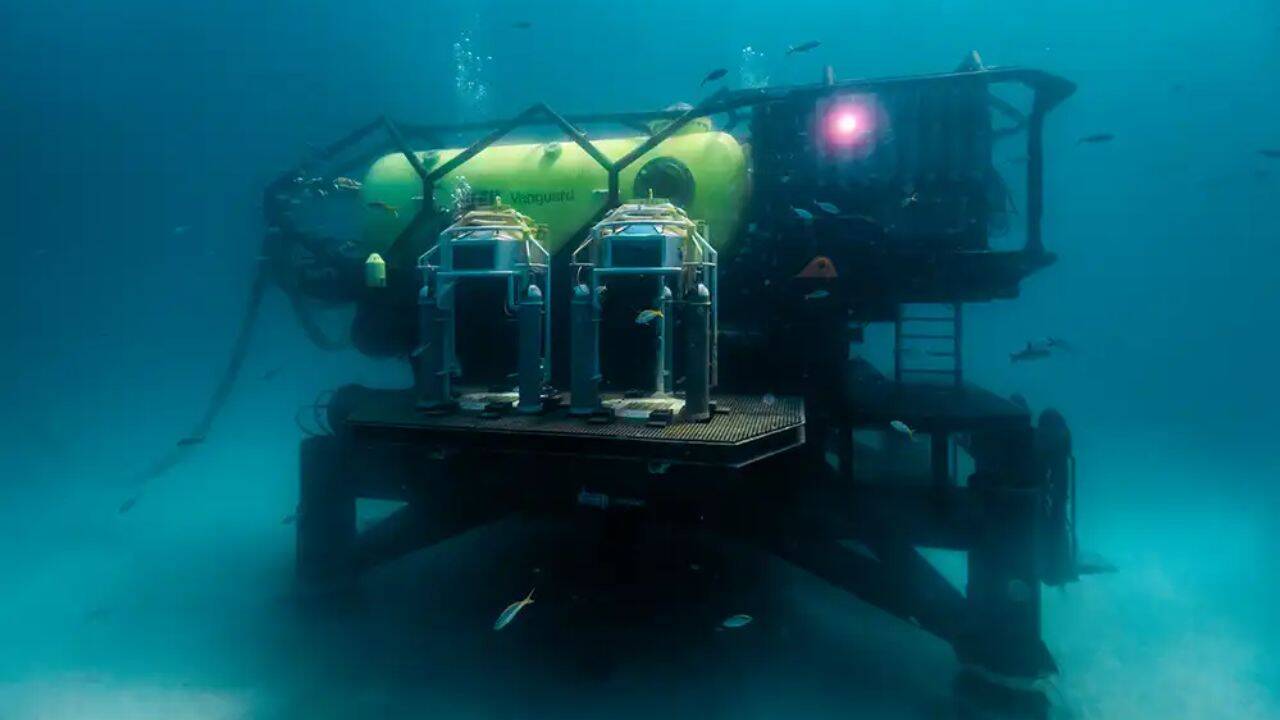
Marine scientists have officially deployed a new underwater habitat 17 meters beneath the surface of the Florida Keys, aiming to provide a permanent seafloor base for long-term oceanographic research. While early reports frame this as a triumphant leap for marine science, the reality of saturation diving and subsea engineering suggests a far more grueling narrative. Building a home at the bottom of the ocean is not an architectural victory. It is a high-stakes battle against physics, physiology, and crushing financial costs that raises a critical question: do the scientific returns justify the immense human toll?
The Crushing Reality of Atmospheric Pressure
To understand what these scientists are actually facing, you have to look past the pristine promotional photos. At 17 meters down, the human body is subjected to nearly two and a half times the atmospheric pressure found at sea level. This is not a standard laboratory environment. It is a hyperbaric pressure cooker.
The habitat utilizes a technique known as saturation diving. In a typical scuba dive, a researcher goes down, stays for an hour, and returns to the surface, carefully managing the nitrogen dissolving into their tissues. In an underwater home, the scientists stay down so long that their bodies completely saturate with inert gas.
Once this saturation point is reached, the clock stops ticking in terms of decompression time. Whether they stay for a week or a month, the required time to safely return to the surface remains identical. However, that return journey is a grueling, multi-day process. If an emergency occurs inside the habitat—a fire, a structural breach, or a medical crisis—the occupants cannot simply swim to the surface. Doing so would cause the gas in their bloodstream to expand violently, leading to severe decompression sickness, permanent paralysis, or death. They are effectively trapped in a steel box, more isolated from immediate medical help than astronauts aboard the International Space Station.
The Physical and Psychological Toll of the Deep
Living in a submerged steel cylinder breaks down the human body in subtle, relentless ways. The air is thick. The humidity is perpetual. Because the ambient pressure is so high, even the simple act of speaking changes, shifting voices to a higher pitch and making communication frustratingly difficult.
Subsea Living Challenges:
+-------------------+------------------------------------------+
| Factor            | Impact on Researchers                    |
+-------------------+------------------------------------------+
| High Humidity     | Constant risk of skin and ear infections |
| Hyperbaric Air    | Altered taste, smell, and vocal pitch    |
| Isolation         | Psychological fatigue and altered sleep  |
| Saturation State  | Zero option for immediate emergency exit |
+-------------------+------------------------------------------+
Everyday tasks become monumental chores. The high humidity means that simple cuts and scratches never fully dry, turning minor abrasions into breeding grounds for stubborn bacterial infections. The human immune system behaves erratically under prolonged pressure, slowing down healing times precisely when the environment demands rapid recovery.
Then comes the psychological erosion. The view outside the viewing ports is a monochrome world of shifting blues and grays. Sunlight is filtered out, destroying the natural circadian rhythms that govern human sleep cycles. Researchers frequently report profound insomnia, vivid dreams, and a compounding mental fatigue that complicates the very data collection they are down there to perform. It takes a specific, hardened breed of scientist to endure these conditions, and even the most resilient individuals return to the surface looking visibly weathered.
The Economics of Fixed Subsea Infrastructure
The sheer financial cost of maintaining a manned outpost on the seafloor is the elephant in the room that oceanographic institutions rarely want to discuss publicly. Marine environments are fiercely hostile to human engineering. Saltwater corrodes steel, biofouling organisms clog intake valves, and underwater currents exert constant, rhythmic stress on structural supports.
- Continuous Life Support: Air must be constantly scrubbed of carbon dioxide and replenished with oxygen.
- Surface Tethering: Power and communications lines must run continuously to a surface buoy or shore station, creating a single point of failure.
- Logistical Resupply: Food, fresh water, and dry clothes must be packed into pressurized canisters and ferried down by support divers daily.
When you tally the line items, the operational cost per day of a human occupant in an underwater habitat dwarfs the cost of deploying automated systems. Remote operated vehicles (ROVs) and autonomous underwater gliders can remain at depth for months, collecting high-fidelity chemical, thermal, and biological data without needing a single calorie of food or a breath of oxygen.
Proponents argue that human observation captures nuance that sensors miss. A scientist can watch a predator-prey interaction in real time, noting behavioral subtleties that a fixed camera script would ignore. Yet, critics within the financial offices of major research foundations quietly question whether these fleeting moments of human insight are worth the millions of dollars required to keep a handful of people breathing at 17 meters.
The Looming Threat of Extreme Weather
The Florida Keys location introduces another layer of operational vulnerability: hurricane season. The Atlantic Ocean has grown increasingly volatile, with storms intensifying at rates that defy historical models.
When a major hurricane barrels toward an underwater habitat, the logistical nightmare reaches a crescendo. Because the scientists inside are saturated, they cannot simply pack up and leave when a storm warning is issued. The decompression process takes days. Project managers must make the call to evacuate long before the first outer bands of the hurricane hit the coast.
If they miscalculate, or if a storm intensifies too quickly, the surface support crew must evacuate, leaving the habitat entirely reliant on its internal emergency life support systems. While the habitat itself sits below the violent surface wave action, the massive storm surges can shift bottom sediments, tear away external power tethers, and obscure the water column with zero-visibility silt. An isolated habitat during a Category 4 hurricane is a nightmare scenario where help is days away, hidden behind a wall of impenetrable surface froth.
A Testing Ground for Outer Space
If the immediate scientific returns of seafloor habitats face heavy skepticism, their secondary utility as analog environments for space exploration remains highly valid. Aerospace agencies have long recognized that the isolation and life-support dependencies of an underwater base perfectly mimic the psychological realities of a lunar or Martian outpost.
In the deep, as in space, a mistake can be fatal. Astronauts train in these habitats to learn how to manage interpersonal friction under extreme stress, how to execute complex maintenance tasks while wearing restrictive gear, and how to operate under the assumption that the outside world is an instantly lethal vacuum.
This crossover appeal often keeps the funding flowing. When marine biology budgets dry up, defense and space exploration grants frequently fill the void. The scientists on the seafloor may be studying coral bleaching and fish populations, but the organizations keeping the lights on are often watching how those scientists cope with the claustrophobia of a metal tube.
The Technological Alternatives Gaining Ground
While the deployment of this new Florida Keys habitat captures headlines, a quiet revolution in autonomous oceanography is threatening to render the concept of manned underwater bases obsolete. The modern data-gathering landscape relies heavily on persistent, uncrewed tech.
Consider the capabilities of modern autonomous platforms. A single wave-glider can traverse thousands of miles of open ocean, powered entirely by solar panels and the kinetic energy of surface waves, transmitting real-time climate data back to a laboratory via satellite. Below the surface, autonomous underwater vehicles (AUVs) equipped with artificial intelligence can track shifting thermal plumes, map the topography of the seafloor with millimeter precision, and collect biological samples without human intervention.
These machines do not require decompression chambers. They do not get ear infections from the humidity, and they do not require a multi-million dollar support vessel sitting on the surface to keep them alive. The argument for putting flesh-and-blood scientists on the seafloor is shrinking every year as sensor technology improves and machine learning algorithms become more adept at identifying anomalies in ocean data.
The human element remains a powerful public relations tool. A photograph of a scientist looking out of a porthole at a passing shark inspires public imagination and drives philanthropic donations in a way that an anonymous aluminum torpedo glider never will. But true progress in ocean science is increasingly driven by the data streams coming from these automated systems, leaving the underwater habitat as a beautiful, dangerous, and incredibly expensive relic of a bygone era of exploration.
The true value of this new base in the Florida Keys will not be measured by the papers published in scientific journals or the glamorous video feeds sent back to classrooms. It will be measured by its ability to survive the harsh economic reality of subsea maintenance and the inevitable fury of the next major Atlantic storm. If the project fails to deliver groundbreaking data that cannot be replicated by drones, it may well be the last time human beings attempt to build a home in the deep.