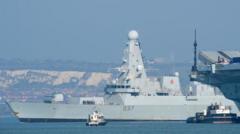
The traditional surface fleet is facing an existential crisis. Faced with skyrocketing maintenance costs and the staggering price tag of building new Arleigh Burke-class guided-missile destroyers, naval strategists are quietly shifting their bets. The emerging plan involves abandoning direct, one-for-one replacements of aging warships in favor of smaller, modular vessels equipped with autonomous aerial, surface, and subsurface drones. It is a radical pivot driven by necessity. By distributing firepower across a fleet of cheaper, unmanned platforms, naval planners hope to counter modern anti-ship missile threats that render multi-billion-dollar hulls dangerously vulnerable.
But this transition is not just a technological upgrade. It represents a desperate scramble to fix a math problem that Western militaries are currently losing.
The Mathematical Trap of the Modern Destroyer
Naval warfare has become a game of unfavorable economic exchange ratios. A modern destroyer costs upwards of two billion dollars to construct and requires hundreds of highly trained sailors to operate. Yet, a swarm of anti-ship cruise missiles or low-cost loitering munitions costing a fraction of that amount can take that vessel out of the fight entirely.
Consider the sheer logistics of missile defense. A destroyer carries a finite number of vertical launching system cells. When those interceptors are spent, the ship must retreat to a specialized port to reload. In a high-intensity conflict, a massive concentration of cheap enemy drones can easily deplete a warship's magazine, leaving a multi-billion-dollar asset defenseless.
By shifting the payload from a single massive hull to multiple uncrewed vessels, the navy aims to alter this calculus. If an adversary spends a million-dollar missile to destroy a cheap, autonomous drone boat, the economic ledger tilts back in favor of the defender. This concept, known as distributed maritime operations, spreads sensors and weapons across a vast geographic area. The goal is to make the fleet harder to find, harder to target, and far more resilient to losses.
The Fiction of Ready Automation
Moving from crewed hulls to autonomous swarms looks flawless on a PowerPoint presentation. The reality on the open ocean is far messier. Saltwater destroys electronics. Mechanical parts fail constantly.
On a standard destroyer, a massive portion of the crew's daily routine involves preventive maintenance. Sailors scrape rust, replace seals, troubleshoot electrical shorts, and manually patch together malfunctioning hardware. When you remove the human crew from a vessel and send it into rough seas for weeks at a time, who handles the critical repairs?
Current drone ship designs rely heavily on redundancy, packing duplicate systems into the hull so that if one engine or generator fails, another kicks in automatically. This approach adds weight, complexity, and cost. Furthermore, a fully automated ship requires highly sophisticated artificial intelligence to handle navigation, avoid collisions with civilian shipping, and manage power distribution without human intervention. The software required to operate these vessels safely in chaotic, contested waters is still in its infancy, plagued by bugs and vulnerabilities to electronic warfare.
The Silent Threat of Electronic Warfare
An uncrewed fleet is completely tethered to its data links. For drone-equipped warships to operate effectively, they must constantly transmit sensor data back to a human command element, often located hundreds of miles away on a command ship or a shore base. This dependency creates a massive vulnerability.
Sophisticated adversaries possess advanced jamming and cyber warfare capabilities. If the encrypted communication links between a drone ship and its controllers are severed, the vessel becomes a floating liability. It must either operate on pre-programmed autonomy, which limits its flexibility, or go completely dark. A dark drone ship cannot share its radar data, fire its weapons on target, or coordinate with the rest of the fleet.
+------------------+                   +------------------+
|   Human Command  | <--- Data Link -> | Autonomous Drone |
| (Command Ship/   |    (Vulnerable    |   Warship (Vulnerable|
|    Shore Base)   |    to Jamming)    |   to Cyber Attack|
+------------------+                   +------------------+
Worse still is the risk of cyber hijacking. A captured or compromised autonomous warship could theoretically be turned against its own fleet, transforming a high-tech asset into a catastrophic threat. Naval engineers are attempting to build "fail-safe" protocols into these vessels, instructing them to return to home port or self-destruct if communications are permanently lost. But executing these commands under fire is a logistical nightmare that has yet to be proven in actual combat conditions.
The Shipyard Bottleneck
The decision to stop building legacy destroyers and pivot to drone carriers ignores the structural decay of the domestic shipbuilding industrial base. Building an entirely new class of modular, drone-equipped warships requires a flexible, modern manufacturing apparatus that simply does not exist right now.
Existing shipyards are severely bottlenecked by a shortage of skilled labor, outdated infrastructure, and supply chain disruptions that stretch back years. Forcing these facilities to pivot from heavy hull construction to precision, tech-heavy automated platforms could result in massive delays. The navy risks entering a dangerous transitional valley where the old destroyers are retired due to age, but the new drone-heavy fleet is stalled in production, leaving a gaping void in maritime defense capabilities.
Replacing human crew members with algorithms also creates an unforeseen personnel crisis. The military will need fewer traditional sailors, but vastly more data scientists, software engineers, and cybersecurity experts. The private tech sector already competes fiercely for this talent, offering salaries and working conditions that the armed forces struggle to match. Without a complete overhaul of military recruitment and compensation, the high-tech fleet may find itself sitting idle in port for lack of qualified technicians to program and monitor the systems.
The romanticized era of the massive, heavily armored surface combatant dominating the horizon is nearing its end. But rushing into an unproven, software-dependent autonomous fleet without addressing the brutal realities of maintenance, communication jamming, and industrial decay is a gamble that could leave the seas entirely unprotected.