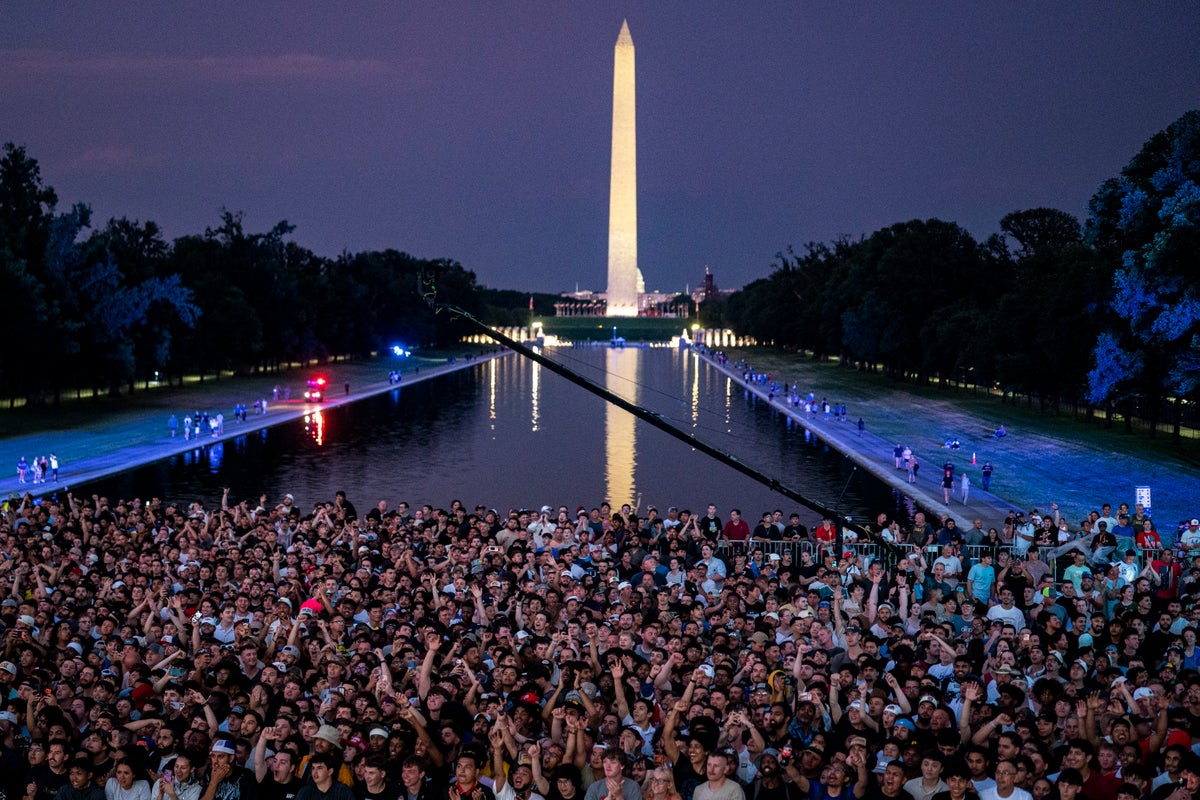
The South Lawn of the White House, historically reserved for state arrivals, marine transport, and solemn presidential declarations, has been transformed into a corporate gladiatorial arena. UFC Freedom 250 is not merely an eccentric birthday celebration for an octogenarian president or a conventional commemoration of the American semiquincentennial. It represents a calculated convergence of state power, private capital, and populist theater, turning the executive mansion into a high-stakes marketing vehicle. While casual observers focus on the surreal image of an octagon flanked by the executive mansion, the real story lies in the corporate underwriting, the legal maneuvers that enabled it, and the fundamental restructuring of political access.
A federal judge cleared the way for the event by denying an emergency injunction from advocacy groups who argued the spectacle weaponized public property for private profit. The decision cemented a precedent where corporate logos share the frame with federal monuments.
The Anatomy of the Claw
Dominating the executive estate is "the Claw," a 92-foot, 600-ton steel open-air superstructure shipped from Europe and reassembled on the lawn. TKO Group Holdings, the parent company of the mixed martial arts promotion, absorbed the $60 million production cost, which includes a explicit $700,000 allotment for post-fight turf restoration. The structure features no roof, leaving the multi-million-dollar broadcast vulnerable to shifting Washington weather forecasts.
This architectural intrusion is not paid for by the taxpayer, but it is heavily monetized by private interests.
| Sponsor | Activation and Presence | Strategic Alignment |
|---|---|---|
| Crypto.com | Co-presenting partner; funding a $1 million athlete bonus pool in digital currency | High-risk financial tech integration with populist appeal |
| Polymarket | Octagon canvas and structural branding | Prediction market capitalization on political and athletic outcomes |
| Exodus | Official broadcast payments partner | Digital banking normalization via sports entertainment |
| Bud Light / Monster | Primary cage posts and uniform integration | Traditional consumer goods anchoring the anti-elite aesthetic |
Corporate logos now wrap the very geography where global diplomacy is traditionally conducted. This isn't accidental branding. It is an intentional merging of executive authority with modern corporate interests that bypasses traditional regulatory scrutiny.
The Price of Admission and the Access Loophole
While the event is technically framed as a public celebration of America's 250th anniversary, the guest list tells a different story. The stands are tightly controlled, populated heavily by select military personnel who met rigorous physical presentation standards. Beyond the government-sanctioned crowd, the real movement of capital occurs in the VIP echelons.
Corporate lobbyists and high-net-worth donors have found a new avenue for influence. The promotion offered bespoke partnership packages priced at $1.5 million, providing unprecedented proximity to executive decision-makers under the guise of an athletic sponsorship. Because the funds flow directly to a private entertainment entity rather than a political campaign or a federal agency, the transactions exist outside the purview of traditional campaign finance disclosure laws.
A federal lawsuit highlighted that executive financial disclosures filed earlier this year showed personal stock acquisitions in TKO Group Holdings valued up to $50,000. The administration defended the arrangement by citing historical precedents of athletic activity at the executive mansion, pointing to Theodore Roosevelt’s White House boxing matches.
Roosevelt sparred privately with personal friends and military aides. He did not erect a 600-ton commercial structure on the lawn, nor did he allow commercial sponsors to plaster logos across the executive estate while charging millions for corporate access.
Cultural Subversion as Political Capital
The demographic draw of mixed martial arts is distinctly young, intensely male, and increasingly resistant to traditional corporate media structures. By bringing this subculture directly into the institutional heart of American democracy, the administration is executing a sophisticated cultural rebrand.
This is the ultimate anti-establishment performance. Placing a blood sport on the immaculate grass of the South Lawn is designed to signal a direct rejection of traditional institutional norms to a specific voting bloc. It deliberately offends traditional sensibilities to solidify loyalty among a base that views those sensibilities as elitist.
The addition of heavyweights like Derrick Lewis to the fight card—done via direct intervention from the Oval Office—underscores the personalized nature of the event. Federal agencies have been synchronized to support the narrative. The Office of National Drug Control Policy held an official media day event to present athletic anti-doping commendations, blending federal policy announcements with sports promotion.
The long-term consequence of UFC Freedom 250 is the normalization of the state as a commercial partner. When the steel structure is dismantled and shipped back across the Atlantic, the lawn will be reseeded, but the boundary between public service and private enterprise will remain permanently altered.