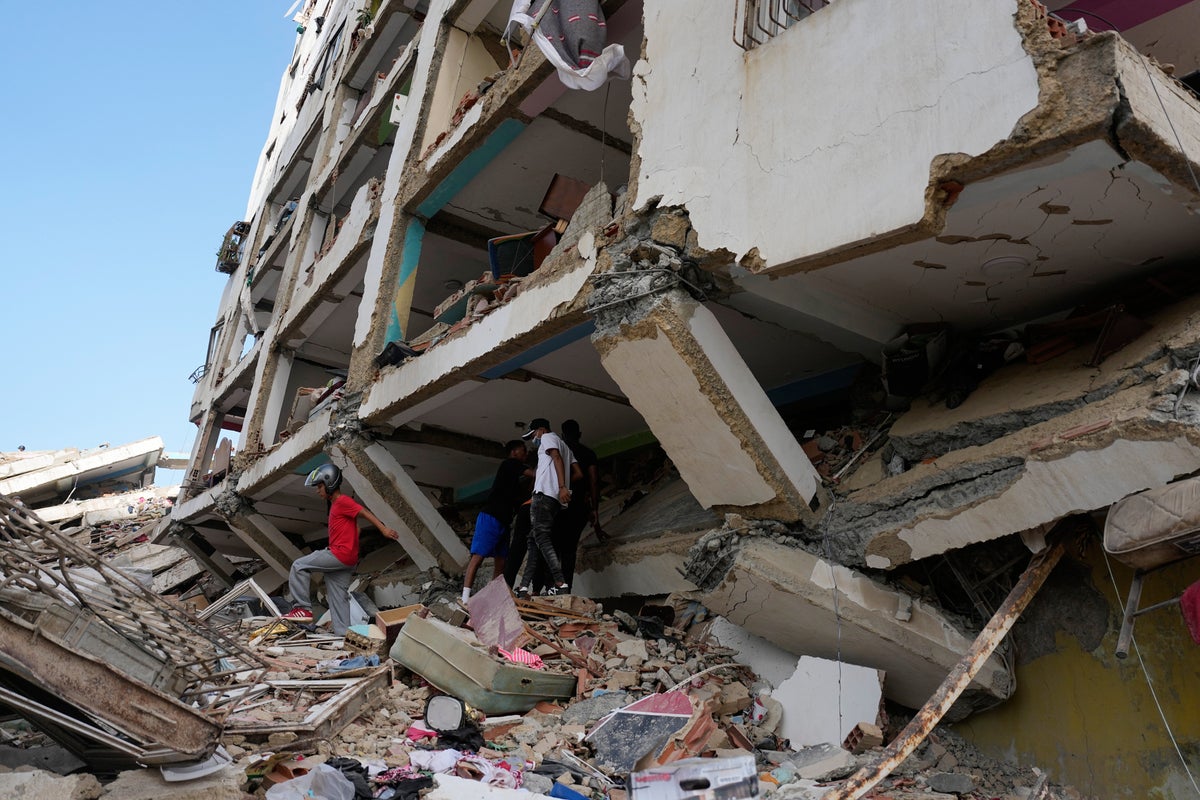
A devastating earthquake has left an estimated 51,000 people missing under the rubble in Venezuela, and the window for finding survivors is rapidly closing. While early reports focus entirely on the ticking clock, the grim reality of this disaster is not just a matter of time. It is a crisis compounded by crippled infrastructure, fractured international diplomacy, and years of economic isolation. Rescue teams are on the ground, but they face a logistical nightmare that makes extracting survivors nearly impossible.
The immediate priority in any seismic disaster is the "golden window"—the first 72 hours where the probability of survival is highest. In Venezuela, that window is slamming shut. Heavy machinery cannot reach the hardest-hit zones due to fuel shortages and collapsed bridges. Specialized search equipment is bottlenecked at checkpoints. To understand why this rescue operation is failing, one must look beyond the tectonic shift and examine the systemic rot that preceded it.
The Logistics of a Stalled Rescue
International urban search and rescue teams rely on a precise formula to save lives. They need heavy-duty concrete cutters, acoustic listening devices, trained K9 units, and an uninterrupted supply of aviation fuel. Venezuela lacks almost all of these components in the quantities required for a catastrophe of this scale.
Local emergency services are working with shovels and bare hands. The few pieces of heavy machinery available are plagued by a lack of spare parts, a direct consequence of long-term economic sanctions and domestic mismanagement. When a excavator breaks a hydraulic line in a disaster zone, it becomes an expensive roadblock rather than a lifesaver.
Furthermore, the geography of the affected regions complicates the arrival of foreign aid. Many of the worst-hit communities are nestled in mountainous terrain or dense urban barrios where narrow roads were never designed to handle heavy recovery vehicles. A single collapsed overpass can isolate an entire valley, turning a rescue mission into a waiting game that trapped citizens cannot afford to win.
The Geopolitical Standoff Costing Human Lives
Disaster response should be entirely humanitarian, but politics always forces its way into the rubble. Offers of assistance from neighboring countries and global superpowers are currently caught in a web of diplomatic vetting. The Venezuelan government remains deeply suspicious of foreign intervention, fearing that the influx of international personnel could be used as a cover for political destabilization.
- Aid Bureaucracy: Foreign search teams are stranded on tarmacs in neighboring Colombia and the Caribbean, awaiting visas and security clearances that should be granted in seconds.
- Equipment Seizures: There are unverified but persistent reports from local NGOs that specialized communications gear brought in by early response teams has been confiscated at ports of entry due to "dual-use" military concerns.
- Distribution Failures: Even when aid packages manage to clear customs, there is no centralized, transparent authority to ensure they reach the areas with the highest casualty counts rather than politically favored districts.
This suspicion is a two-way street. Western nations are hesitant to cut blank checks or hand over high-tech equipment directly to state agencies without strict oversight, fearing funds will be diverted. While both sides bicker over compliance and sovereignty, the silence beneath the concrete grows deeper.
The Myth of the Fifty-One Thousand
The figure of 51,000 missing individuals has been widely circulated by international media, but any seasoned analyst knows that disaster statistics in a closed state are highly suspect. This number represents a worst-case baseline calculated from pre-disaster census data and the footprint of the structural collapses. It is not a verified list of names.
The true count could be lower, or terrifyingly, it could be much higher. Venezuela’s massive internal displacement over the last decade means that official census data is wildly out of date. Informal settlements, which are the most vulnerable to seismic activity due to substandard construction, often exist completely outside the government's ledger. Entire families may have perished without anyone left to report them missing to the central authorities.
The Structural Failure of the Built Environment
Earthquakes do not kill people; falling buildings do. The staggering scale of the potential body count in Venezuela is the direct result of a total failure in building code enforcement over the past thirty years.
In the capital and surrounding urban centers, corruption allowed developers to bypass basic seismic engineering standards. Concrete was mixed with too much sand to cut costs. Structural steel rebar was spaced too far apart. Inspection reports were signed off in exchange for bribes under the table.
When the ground shook, these buildings did not sway; they pancaked. A pancaked structure leaves almost no void spaces—the pockets of air where victims can survive for days. Instead, floors stacked directly on top of each other, crushing everything and everyone inside. This specific type of collapse requires highly specialized cranes to lift individual slabs, a capability that the domestic civil defense force simply does not possess.
Grid Failure and the Medical Collapse
Finding survivors is only half the battle. Once extracted, a victim of a structural collapse requires immediate, sophisticated medical intervention to survive crush syndrome, a condition where toxins from damaged muscles flood the bloodstream after pressure is released.
Venezuela's healthcare system was in a state of collapse long before the earthquake. Hospitals in the disaster zone are operating on flickering back-up generators that lack the fuel to run indefinitely. There is a critical shortage of basic medical supplies.
- Intravenous fluids are being rationed.
- Dialysis machines, crucial for treating crush syndrome, are offline due to water shortages.
- Surgical theaters lack sterilized instruments and basic anesthetics.
Taking a person out of the rubble only to have them die on a hospital floor forty-five minutes later is the tragic reality facing field doctors. Without a massive, immediate airlift of field hospitals and medical staff from organizations like Médecins Sans Frontières, the survival rate for those pulled from the debris will remain abysmally low.
The Failure of Regional Leadership
The Organization of American States and regional trade blocs have proven entirely ineffective at coordinating a rapid response. South America possesses the resources to mitigate this disaster. Brazil has a highly capable military logistics network; Chile possesses some of the world's foremost experts in seismic rescue and recovery.
Yet, regional rivalries and ideological divisions have prevented the creation of a unified South American disaster response command. Every country is attempting to negotiate bilateral entry, creating a chaotic patchwork of aid that duplicates efforts in some areas while completely ignoring others.
The time for diplomatic posturing ended the moment the first tremor hit. If regional leaders cannot set aside their political differences to save thousands of people buried alive, then the concept of a pan-American community is entirely dead. The tragedy in Venezuela is a stark warning that in the modern era, the bureaucracy of disaster is just as lethal as the event itself.