The Federal Communications Commission did not just issue a regulatory update. It drew a permanent line in the digital sand. By expanding its Covered List to ban new models of foreign-made advanced mobile robots and connected power inverters, the Trump administration has effectively locked Chinese-manufactured hardware out of the American market. Official statements point to acute supply chain vulnerabilities, potential espionage, and shadowy cybersecurity threats to critical infrastructure.
Yet the bureaucratic prose obscures a far more visceral reality. This is an all-out economic containment strategy disguised as national security protocol. Learn more on a connected issue: this related article.
Anatomy of a Calculated Exclusion
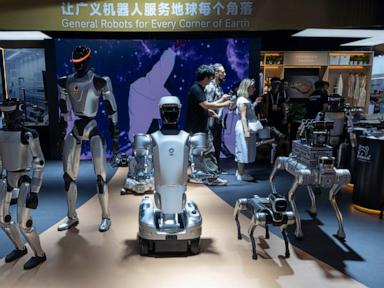
Look past the diplomatic rhetoric and examine the mechanics of the decree. The restrictions target humanoid and quadruped robotic systems alongside the grid-tied power inverters that anchor modern solar installations and artificial intelligence data centers. Companies like Unitree Robotics, which commands a massive footprint in the global humanoid market, find themselves frozen out of the world's most lucrative consumer and industrial sandbox.
The policy is surgical, not total. It grandfathers in previously authorized models and leaves an opening for conditional waivers handled by the Department of Defense and the Department of Homeland Security. More journalism by Gizmodo explores similar views on this issue.
This distinction matters. Total bans invite immediate international trade litigation. A targeted, authorization-based veto allows Washington to choke off future market penetration while keeping existing commercial operations intact. It is a high-stakes squeeze play. The White House is signaling to domestic automation developers that they have breathing room to scale without facing hyper-efficient overseas competitors.
The Grid and the Machine
Why robots and power inverters? To the casual observer, combining bipedal mechanical units with solar grid components looks like an arbitrary pairing of unrelated technologies.
It is actually a masterclass in modern infrastructure threat assessment.
Modern power inverters are not simple analog transformers. They are computerized nodes connected directly to the electrical grid, running firmware that communicates constantly with cloud servers. They manage the flow of volatile renewable energy into data centers hungry for artificial intelligence compute power. An integrated backdoor in these inverters could allow a hostile state actor to trigger localized brownouts or manipulate frequency loads at will.
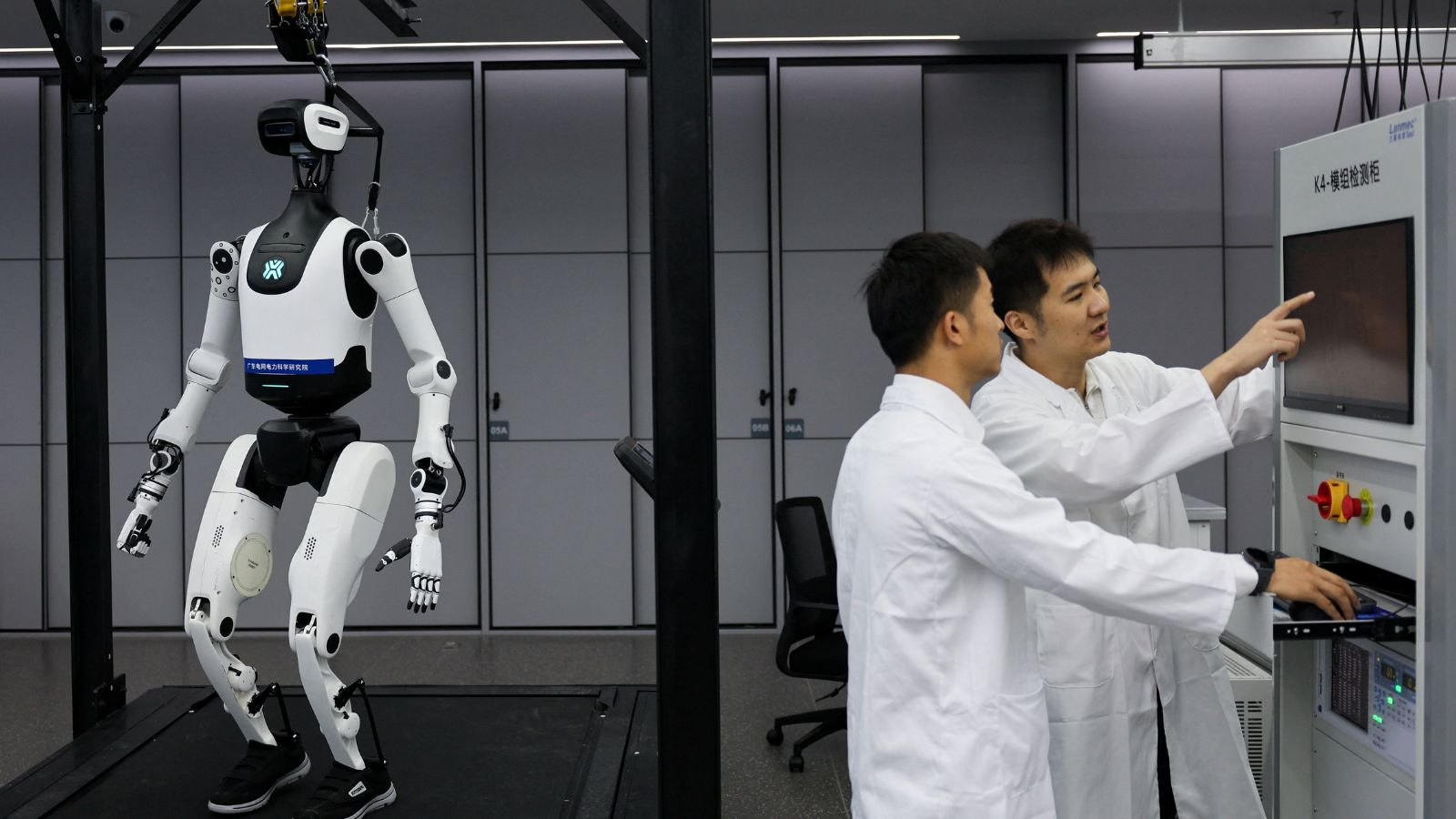
Robotic systems represent an even more intimate vector of exposure. Advanced mobile units possess spatial mapping capabilities, high-definition optical sensors, and autonomous navigation hardware. A quadruped or humanoid chassis moving through an industrial facility, a logistics hub, or a research installation is essentially an uncomplaining scout. The data collected by these machines maps physical vulnerabilities in a way satellite imagery never could.
The Domestic Manufacturing Illusion
Washington wants these critical components built on home soil. That goal sounds noble in a congressional hearing room, but the industrial pipeline required to execute it does not currently exist at scale.
Building advanced robotics requires a dense, hyper-specialized ecosystem of actuator manufacturers, rare-earth refiners, and precision component fabricators. Decades of outsourcing mean that much of that foundational infrastructure migrated across the Pacific long ago. Slapping an import ban on foreign hardware does not instantly generate domestic factories, skilled assembly technicians, or cost-effective supply chains.
Domestic startups will cheer the temporary shelter from foreign competition. Industrial buyers, however, face a sobering reality. Automation costs are set to rise sharply. Deployment timelines for warehouses, manufacturing plants, and clean energy projects will face delays as firms scramble to vet alternative suppliers who lack the manufacturing maturity of their overseas counterparts.
Collateral Damage in the Automation Race
The global race for artificial intelligence embodiment is entering its most volatile phase. When hardware deployment hits geopolitical roadblocks, innovation slows.
By walling off American markets from dominant foreign engineering, regulators risk creating an insulated domestic bubble. Protected industries historically struggle with cost efficiency and rapid iteration. Without the pressure of competing against cheap, highly capable foreign platforms, American robotics firms may lack the fierce incentive required to drive down unit economics for mass adoption.
The strategy also invites retaliation. Beijing holds significant leverage over critical mineral supplies and manufacturing components that American tech giants rely upon. As bilateral tensions escalate toward the upcoming diplomatic summits, hardware bans will likely be met with counter-measures that target different sectors of the transatlantic and transpacific supply web.
The border is closed to the next generation of foreign mechanical labor. Whether domestic manufacturers can step into the vacuum before project costs spiral out of control remains the multi-billion-dollar question hanging over the entire enterprise.