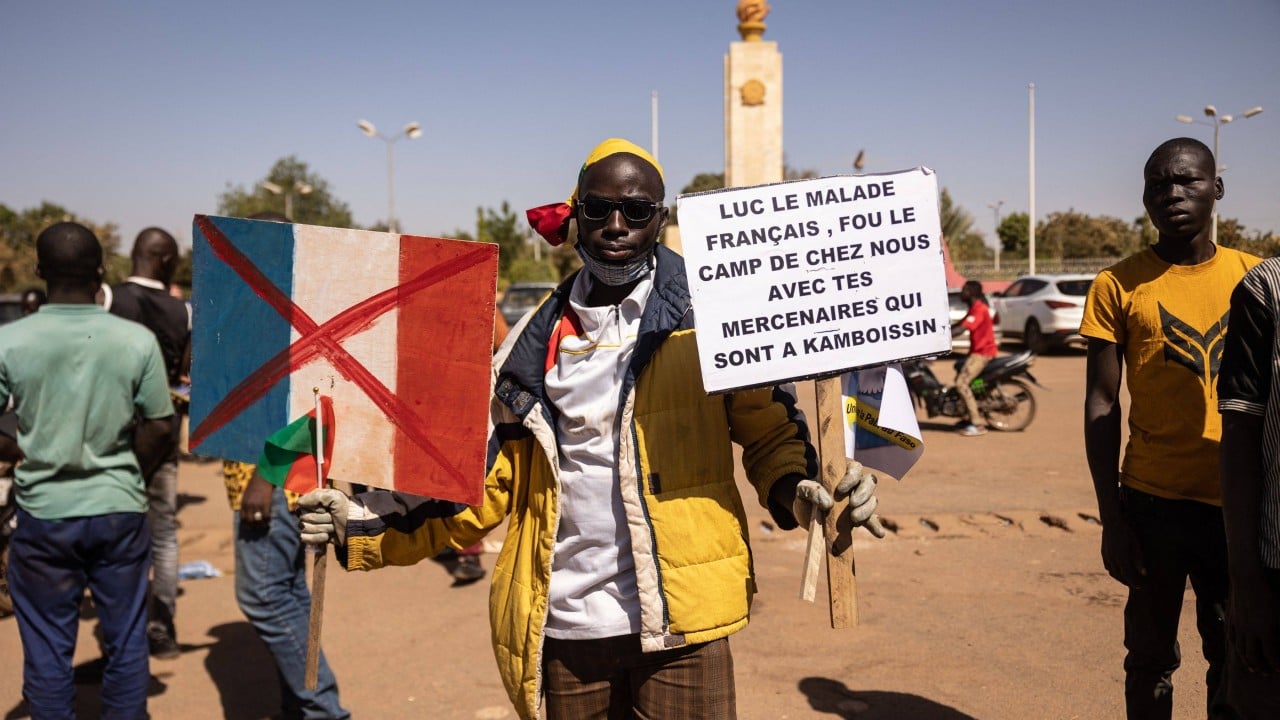
The mainstream media is treating the diplomatic rupture between Burkina Faso and France as a historic anti-colonial revolution. Cable news analysts look at Captain Ibrahim Traoré kicking out French diplomats, suspending French media, and revoking military accords, and they see a textbook case of a developing nation finally breaking its chains.
They are missing the entire point.
What is happening in Ouagadougou is not a declaration of independence. It is a change of management. The lazy consensus insists that Burkina Faso is reclaiming its sovereignty by purging French influence. In reality, the military junta is trading a fading European patron for a predatory Russian security franchise, all while the fundamental economic structures keeping the country broke remain completely untouched.
The Sovereignty Lie: Trading Paris for Moscow
Let’s dismantle the premise that Burkina Faso is suddenly steering its own ship. For decades, France maintained an overbearing grip on its former colonies through the system known as Françafrique—a mix of military interventions, political meddling, and economic strings. It was a broken, deeply resented system. But the idea that kicking out the French army magically creates self-reliance is pure fantasy.
When Traoré’s regime demanded the departure of French special forces, they did not replace them with a self-sufficient Burkinabè defense strategy. They filled the vacuum by rolling out the red carpet for Russia’s Africa Corps—the rebranded mercenary apparatus formerly known as the Wagner Group.
This is not a liberation strategy. It is an outsourcing strategy.
I have watched regimes across sub-Saharan Africa pull this exact lever for years. They frame the arrival of Russian instructors and mercenaries as a partnership based on mutual respect. Look closer. Moscow does not provide charity. The price tag for Russian security assistance is almost never paid in cash; it is paid in mining concessions. By inviting in Russian state-backed mercenaries to protect the junta from coups and secure key urban centers, Burkina Faso is simply swapping a European master that answers to an electorate for an authoritarian partner that answers to no one.
The Security Paradox: Brute Force Cannot Kill an Insurgency
The core justification for the geopolitical pivot was security. The junta claimed that French forces were failing to contain the jihadist insurgency tearing through the Sahel region. The narrative was simple: France is holding us back; let us fight our way.
Let’s look at the brutal data. Since the military took power and severed ties with Western intelligence and logistics, the security situation has not improved. It has cratered.
Insurgent groups affiliated with Al-Qaeda and Islamic State now control over 40 percent of Burkina Faso's territory. Massacres of civilians have escalated. The strategy shifted from a flawed, intelligence-led counter-terrorism model to a scorched-earth approach favored by Russian tactical doctrine.
In asymmetric warfare, you cannot bomb your way to stability when the state cannot provide basic services, courts, or economic survival to the population outside the capital. The junta is using heavy-handed military displays to project strength on state television while losing systemic control of the countryside. They traded access to French aerial surveillance and precision targeting for Russian small arms and mercenary infantry. It is a catastrophic tactical downgrade wrapped in a nationalist flag.
The Currency Contradiction: The Elephant in the Room
If Burkina Faso were serious about a total break from French neo-colonialism, they would have walked away from the CFA franc on day one. They haven't.
The CFA franc is the currency used by 14 African nations, pegged directly to the Euro and guaranteed by the French treasury. Critics rightly argue that it limits monetary sovereignty, prevents competitive devaluations, and allows Paris to retain veto power over major monetary policies. It is the ultimate symbol of financial dependency.
Yet, despite all the fiery anti-French rhetoric echoing through the streets of Ouagadougou, Burkina Faso remains firmly within the West African Economic and Monetary Union (WAEMU). Why? Because the junta knows that exiting the CFA franc without an incredibly sophisticated economic transition would cause immediate hyperinflation, capital flight, and the total collapse of the banking sector.
It is easy to kick out a French ambassador. It is terrifyingly difficult to build a sovereign currency from scratch when your treasury is empty and your main export is gold mined by artisanal laborers working in active war zones. The regime feeds the public a diet of anti-French theatricality while quietly relying on the financial stability guaranteed by the very nation they claim to despise.
Dismantling the "People Also Ask" Nonsense
The public discourse surrounding this conflict is driven by fundamentally flawed questions. Let’s correct the record on what people are actually asking about this crisis.
Will cutting ties with France fix Burkina Faso’s economy?
Absolutely not. France is no longer the dominant economic player in Burkina Faso. Over the last two decades, China has become the top import partner, and Swiss and Canadian firms dominate formal gold mining operations. The economic stagnation of Burkina Faso is driven by a lack of industrial diversification, systemic corruption, and an insurgency that has displaced over two million people and shut down agricultural production. Blaming France for 100 percent of the current economic misery is a convenient distraction for a military regime that has no viable macroeconomic plan.
Is Russia a better ally for West Africa than the West?
Define "better." If you are a military officer who took power in a coup and you want to ensure your own physical survival without being lectured about human rights, rigged elections, or civil liberties, then Russia is an exceptional ally. They will provide you with bodyguards, combat drones, and diplomatic cover at the UN Security Council. But if you are an ordinary citizen looking for structural development, foreign direct investment, healthcare infrastructure, or educational funding, Russia offers virtually nothing. Moscow's entire African strategy is low-cost, high-yield extraction. They export security to elites and import raw resources.
Why is anti-French sentiment so high if the alternative is worse?
Because emotional nationalism is a powerful narcotic, and France earned every bit of this hostility through decades of arrogance. Generation after generation of West Africans watched French corporations extract wealth while French political masters backed brutal dictators across the region under the guise of "stability." The anger is real, justified, and deeply rooted. But the tragedy is that this valid historical grievance is being weaponized by a new military elite to justify a pivot toward an even more extractive, less accountable foreign power.
The Hard Truth of Sahelian Geopolitics
There is a massive downside to taking a contrarian, clear-eyed view of this shift: it offers no happy endings. It forces us to admit that Burkina Faso is trapped in a structural vice.
The Western model of conditional aid, heavy-handed lecturing, and slow-moving bureaucratic military assistance failed completely. It didn't stop the terrorists, and it didn't fix the poverty. But the populist alternative—inviting in mercenaries, silencing domestic journalists, and pretending that a nation can eat sovereignty slogans—is actively accelerating the state's collapse.
True independence requires industrial capacity, an educated workforce, food security, and a domestic tax base that doesn't rely entirely on selling gold to Swiss refineries or handing mines to Russian oligarchs.
Until a government in Ouagadougou addresses those structural realities, changing the flags outside the embassies is nothing more than theater for a desperate population. The actors have changed, the script has been translated into Russian, but the tragedy remains exactly the same.