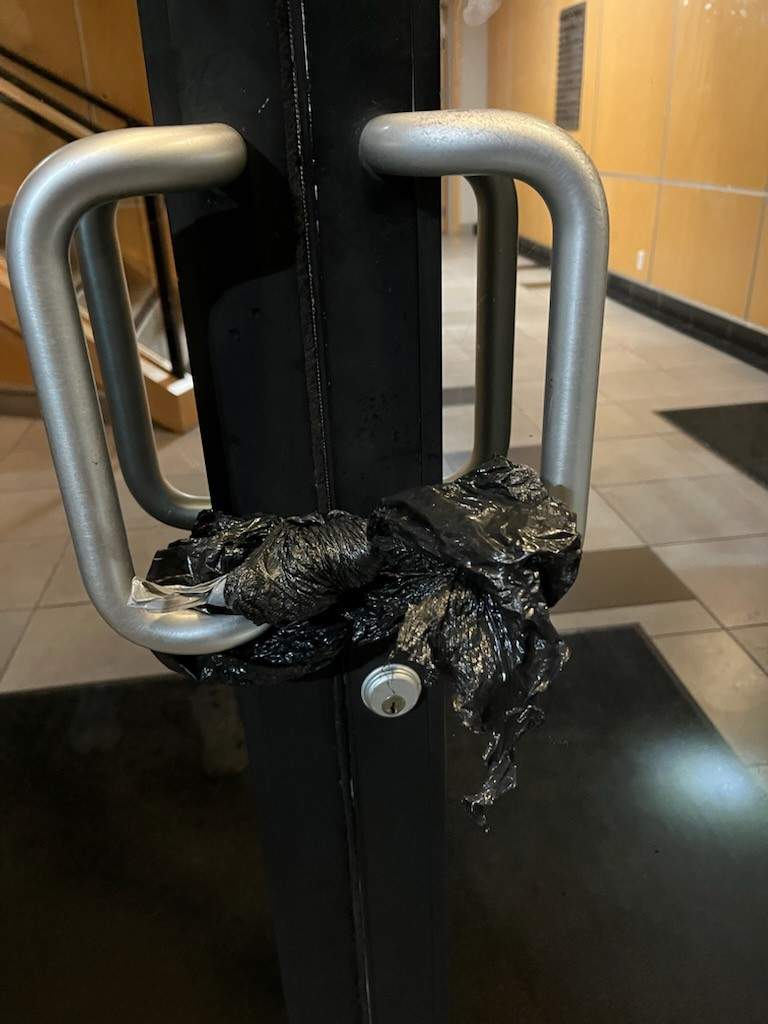
You didn't start your business to moonlight as a daytime security guard or clean up biohazards off your front doorstep. Yet, for entrepreneurs operating along Commerce Avenue in Kelowna, this has become the exhausting daily reality.
Property crime and street disorder aren't abstract municipal talking points here. They are immediate threats impacting bottom lines, employee safety, and mental health. When local business owners speak out, they aren't looking for sympathy. They want accountability, and they want structural change. Meanwhile, you can read similar events here: Why the East-West Pipeline Attacks Change the Energy Game Completely.
The Ground Reality on Commerce Avenue
Walk down Commerce Avenue today and you'll notice a stark disconnect between municipal data sheets and what is actually happening on the ground. While city reports often point to stabilization or minor decreases in broad property crime categories, individual operators tell a completely different story.
Business owners who have anchored themselves in the area for over a decade report a sharp, undeniable shift in local conditions. Much of this friction is tied by local business operators to the 2018 opening of the Hearthstone Supportive Housing complex. What followed was a steady accumulation of discarded drug paraphernalia, human waste, and aggressive loitering. To understand the complete picture, we recommend the recent article by The Wall Street Journal.
For veteran operators like Gerald and Janine Goertsen, the situation has escalated past routine property theft. They've dealt with people wandering onto their property openly carrying weapons like knives, alongside direct threats of violence. Janine recounts a terrifying close call where an erratic individual attempted to bypass her husband to get to her.
Other local workers share similar accounts. Staff members have faced terrifying moments of isolation, such as intruders breaking into washrooms after hours or wandering uninvited into administrative offices. In response, businesses have had to reinforce their properties with commercial-grade security systems, upgraded fences, and constant patrols just to maintain basic operational safety.
The True Cost of Chronic Disorder
Property crime hits small businesses differently than it hits large corporations. A broken window or a stolen inventory batch isn't a minor line item write-off. It eats directly into survival margins.
Take Mary-Claris Hair Extensions and Beauty Products as a prime example. The shop suffered a string of break-ins, culminating in a shattered front window and hundreds of dollars in high-end merchandise stolen in a single morning. When a bystander confronted the intruder, the response wasn't remorse. It was a casual admission: "I need a wig."
This nonchalant criminality creates an atmosphere of constant anxiety. Employees shouldn't have to weigh the risk of physical confrontation every time they unlock their office doors in the morning. When small businesses are forced to spend thousands on reinforced glass, security cameras, and constant repairs, that capital is pulled directly away from growth, hiring, and wages.
Why Standard Municipal Responses Fall Short
Local business owners argue that municipal leaders and community organizations are treating symptoms rather than solving structural failures. Appeals to local government and police often yield standard advice: don't engage, call the non-emergency line, and let insurance handle it.
That advice rings hollow when you're the one facing down an individual high on unknown substances right outside your reception desk. Police resources are stretched thin, and officers routinely warn business owners that confronting trespassers carries severe personal risk.
Critics of the current framework argue that simply placing housing facilities in commercial and industrial zones without adequate wraparound support, second-stage sober housing, and strict accountability measures guarantees friction. If supportive housing models lack internal security and active management, the surrounding neighborhood inevitably absorbs the overflow.
What Needs to Happen Now
Fixing the crisis on Commerce Avenue requires moving past political platitudes and implementing practical, hard-headed solutions:
- Demand Higher Accountability: City councils must tie supportive housing funding directly to strict neighborhood safety metrics and on-site security compliance.
- Implement Second-Stage Sober Living: Transitioning individuals out of chaotic environments and into structured, sober-support facilities prevents chronic recidivism.
- Streamline Business Support Grants: Municipalities should offer immediate tax credits or security infrastructure grants to businesses forced to upgrade surveillance and physical hardening due to rising local crime.
- Reinforce Law Enforcement Presence: Routine, proactive patrols along commercial corridors can deter opportunistic property crime before it turns violent.
Business owners aren't asking for miracles. They just want a safe place to work, employ people, and build value without looking over their shoulders. Until local leadership takes bold ownership of the problem, the breaking point on Commerce Avenue will only spread to other commercial sectors across the city.