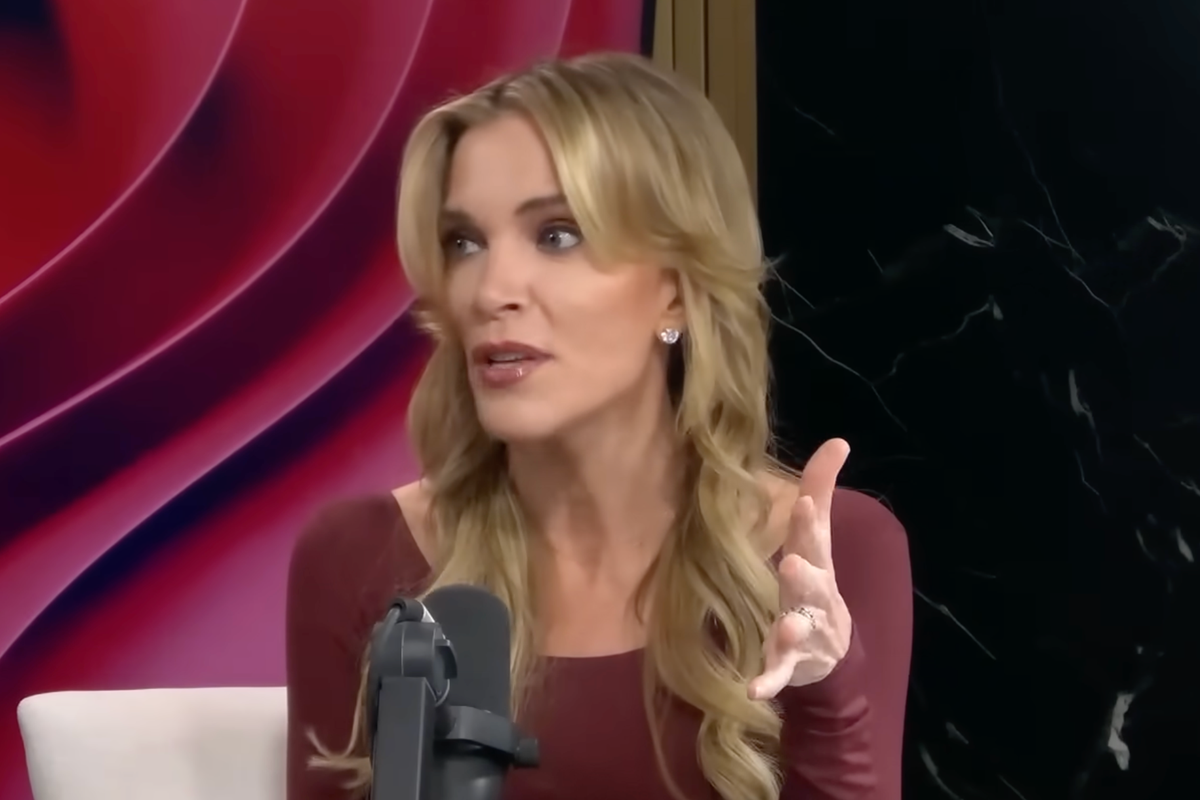
The shift was sudden, but for those watching the machinery of modern media, it was entirely predictable. Megyn Kelly, the broadcaster who spent the better part of the 2024 election cycle acting as a formidable shield for Donald Trump’s populist movement, has pivotally altered her rhetoric. She now states plainly that the president is not a moral man. This isn't a lapse in memory or a sudden discovery of character traits that were previously hidden. It is a strategic recalibration. Kelly is a creature of the law and the lens, and her recent commentary reflects a sophisticated understanding of where the political wind is blowing and how to maintain her relevance in a post-election vacuum.
To understand the "why" behind this pivot, one must look past the headlines and into the business of being an independent media mogul. Kelly is no longer tethered to the corporate mandates of Fox News or the morning-show constraints of NBC. She is the captain of her own digital ship. In that space, the currency isn't just loyalty; it's the ability to appear as an objective truth-teller to an audience that feels constantly lied to by mainstream outlets. By criticizing Trump’s morality while still supporting his policies, she carves out a niche that allows her to keep the MAGA base while regaining the intellectual high ground that she lost during the heat of the campaign.
The Professional Pivot and the Performance of Principles
The tension between Megyn Kelly and Donald Trump is historical. It dates back to a single question about the treatment of women on a debate stage in 2015. That moment defined her career for years, casting her as the feminist foil to a rising titan. Yet, as the 2024 election approached, the frost melted. Kelly’s platform became a vital stop for Trump surrogates and the candidate himself. She defended him against legal onslaughts and framed his movement as a necessary correction to institutional rot.
Now that the victory is secured, the defense is no longer a professional necessity. Kelly’s recent assertions that Trump lacks a traditional moral compass serve a dual purpose. First, it satisfies the part of her brand that prides itself on "rigorous" independent thinking. She can point to these statements as proof that she is not a sycophant. Second, it creates a buffer. If the administration falters or enters a period of significant controversy, Kelly has already established her "I told you so" credentials. She isn't jumping ship; she is just making sure everyone knows she can see the holes in the hull.
The Morality Gap in Political Analysis
There is a fundamental difference between political efficacy and personal morality. Kelly is banking on her audience being able to make that distinction. Her argument suggests that a leader can be a "vessel" for correct policy without being a paragon of virtue. This is a common theme in high-level political analysis, but Kelly is delivering it with the sharpened edge of a prosecutor. She isn't just saying he's imperfect; she’s saying the immorality is an inherent part of the package.
This creates a fascinating dynamic for her listeners. They are invited to join her in a cynical, "grown-up" view of power. The message is clear: we didn't hire him to be a priest; we hired him to be a wrecking ball. By vocalizing this, Kelly removes the burden of moral defense from her audience. She gives them permission to support the agenda while acknowledging the flaws of the man. It is a masterclass in psychological branding.
The Ghost of Fox News and the Independence Trap
Every move Kelly makes is shadowed by her departure from traditional cable news. When she left Fox, she was searching for a broader appeal. When she left NBC, she was a pariah. Her current independent success is built on the ruins of those two experiences. She knows better than anyone that the middle ground is a graveyard for media personalities. You either have to be the loudest voice in the room or the most "authentic" one.
The "moral man" commentary is her attempt at authenticity. In a media environment where everyone is either 100% for or 100% against the president, Kelly is trying to occupy a third space. It’s a dangerous game. If she leans too hard into the moral critique, she risks alienating the populist base that pays her bills. If she doesn't lean hard enough, she remains a footnote in the history of the Trump era.
The Audience Factor
Who is actually listening to Megyn Kelly in 2026? It is a demographic that values "tough talk" and "no-nonsense" delivery. They are people who feel the traditional news cycle is a theater of the absurd. When Kelly says Trump isn't moral, she is validating the private thoughts of millions of his voters who feel the same way but don't want to say it out loud in a polarized social environment. She is the voice of the reluctant supporter, the person who votes for the tax cuts and the judges but winces at the late-night social media posts.
Analyzing the Power Dynamics
This isn't just about a podcast host and a president. It’s about the shift of power from centralized newsrooms to individual influencers. Kelly holds a level of power that few journalists ever achieve because she owns her distribution. She doesn't have a producer in her ear telling her to tone it down for advertisers. She is the advertiser.
When she critiques Trump, she is testing the limits of that power. She is seeing if her brand is strong enough to survive a break from the party line. Most partisan influencers would never dream of calling their leader "immoral." They know their audience would vanish overnight. Kelly is betting that her audience is loyal to her, not to the person she covers.
The Risk of Irrelevance
The greatest fear for any media figure is not being hated; it is being ignored. By creating a friction point with the president, Kelly ensures she stays in the conversation. Conflict is the engine of the attention economy. If she were just another voice praising the administration, she would be indistinguishable from a dozen other commentators. By throwing a stone, even a small one, she forces the media ecosystem to react to her.
The Legalistic Framework of Her Argument
Kelly’s background as a litigator is visible in every word of this critique. She isn't making an emotional plea. She is laying out a series of facts and reaching a logical conclusion based on a specific set of criteria. To her, morality isn't an abstract concept; it’s a standard of conduct. By her standards, Trump fails.
This legalistic approach allows her to remain detached. She isn't "angry" at the lack of morality; she is simply "observing" it. This detachment is her greatest weapon. It makes her seem like the only adult in the room, watching a chaotic scene with a cold, analytical eye. It’s a persona she has spent decades perfecting, from the courtroom to the prime-time anchor desk.
Looking at the Timing
Why say this now? The election is over. The appointments are being made. The policy agenda is being set. The "war" for the presidency has been won, and now the "peace" of governance begins. In this phase, the stakes are different. Criticizing Trump during the campaign could have been seen as an act of sabotage. Criticizing him now is seen as oversight.
It is also a reaction to the specific people Trump has surrounded himself with in this second term. Kelly has been vocal about her opinions on various cabinet picks and advisors. Her "not a moral man" comment may be a foundational argument she intends to use when she disagrees with future administration actions. She is setting the stage for a four-year run where she can be both an ally and a critic, depending on the day's news cycle.
The Fragility of the Independent Media Ecosystem
The rise of independent media has created a gold rush, but it has also created a volatility that traditional outlets didn't have to face. If a Fox News host loses 10% of their audience, they still have a paycheck. If an independent host loses 10% of their subscribers, it’s a direct hit to their bottom line.
Kelly’s pivot is a high-stakes gamble on the intelligence and nuance of her listeners. She is gambling that they want a complex narrative rather than a simple one. If she’s right, she becomes the most important independent voice in the country. If she’s wrong, she might find that the "moral high ground" is a very lonely place to stand.
The Counter-Argument
Critics of Kelly argue that this is too little, too late. They suggest that after years of carrying water for the movement, she cannot suddenly claim the role of the objective moral arbiter. They see this as a cynical branding exercise designed to rehabilitate her image for a post-Trump future. There is a weight to this argument. Media history is littered with people who tried to pivot away from a movement once it served its purpose.
However, this ignores the reality of how her audience perceives her. They don't see her as a "refugee" from the mainstream; they see her as a leader who escaped. To them, her critiques are not betrayals; they are "truth bombs."
A Lesson in Media Survival
Megyn Kelly's career has been a series of reinventions. She has been the rising star, the feminist icon, the victim, the villain, and now, the independent sage. Each version of Kelly is a response to the specific pressures of the time. Her current stance on Trump is no different. It is a survival mechanism wrapped in the language of principle.
The lesson for anyone watching the media today is that consistency is less important than positioning. Kelly has positioned herself as the only person who can speak "truth to power" on both sides of the aisle. Whether or not she actually believes what she is saying is almost irrelevant. The fact that she is saying it, and that people are listening, is what matters.
The political landscape is shifting. The alliances that defined the last decade are fraying as the reality of governance takes over from the excitement of the campaign. Kelly is simply the first to publicly acknowledge the new reality. She is telling her audience that the man they elected is a tool, not a hero. It is a brutal, honest, and deeply cynical message that perfectly matches the tone of the current era.
Watch the numbers. If her audience stays, she has cracked the code of the post-partisan future. If they leave, she will be forced to reinvent herself once again. But don't bet against her. She has a habit of finding the exit just before the building starts to burn.
The next few months will reveal if this "moral" critique is a one-off comment or the start of a new editorial direction. If she begins to hammer this point, it will signal a significant rift in the conservative media landscape. For now, it is a warning shot. She is reminding the White House, and her audience, that she is not anyone's property. She is Megyn Kelly, Inc., and her primary loyalty is to the brand she built in the wreckage of her former career.
The administration will likely ignore her, for now. But as the pressures of the second term mount, voices like Kelly’s will become either the most dangerous threats or the most valuable assets to the president. By stating he is not a moral man, she has ensured that she is no longer just a supporter. She is an observer with a very large megaphone and a very long memory.
Understand the game. The play isn't about Trump's character; it's about Kelly's future. She is building a fortress of "objectivity" one controversial statement at a time, ensuring that no matter what happens in the West Wing, her microphone stays on.