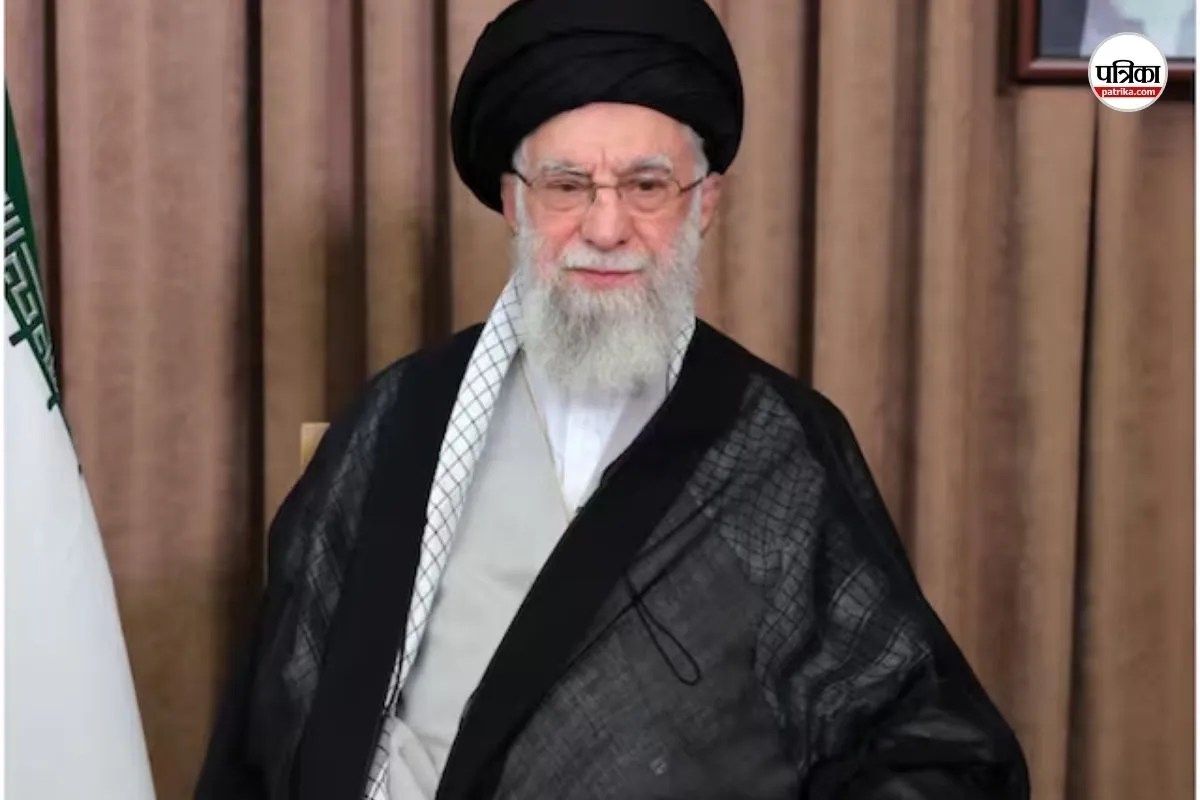
The re-emergence of Supreme Leader Ali Khamenei following a direct kinetic exchange with Israel is not a gesture of defiance, but a calibrated signal of state continuity designed to manage internal stability and external deterrence. In the high-stakes environment of Middle Eastern geopolitics, "visibility" functions as a primary asset in the Iranian strategic arsenal. When a head of state whose physical safety is synonymous with the survival of the governing ideology appears in public immediately after an escalation, it serves to invalidate the opponent's psychological operations. This is the Doctrine of Managed Optics, where the physical presence of the leadership acts as a counter-measure to rumors of decapitation or structural collapse.
To understand the mechanics of this appearance, one must deconstruct the current Israel-Iran friction through three specific analytical lenses: Kinetic Signaling, Internal Legitimacy Buffers, and The Threshold of Total War.
The Architecture of Kinetic Signaling
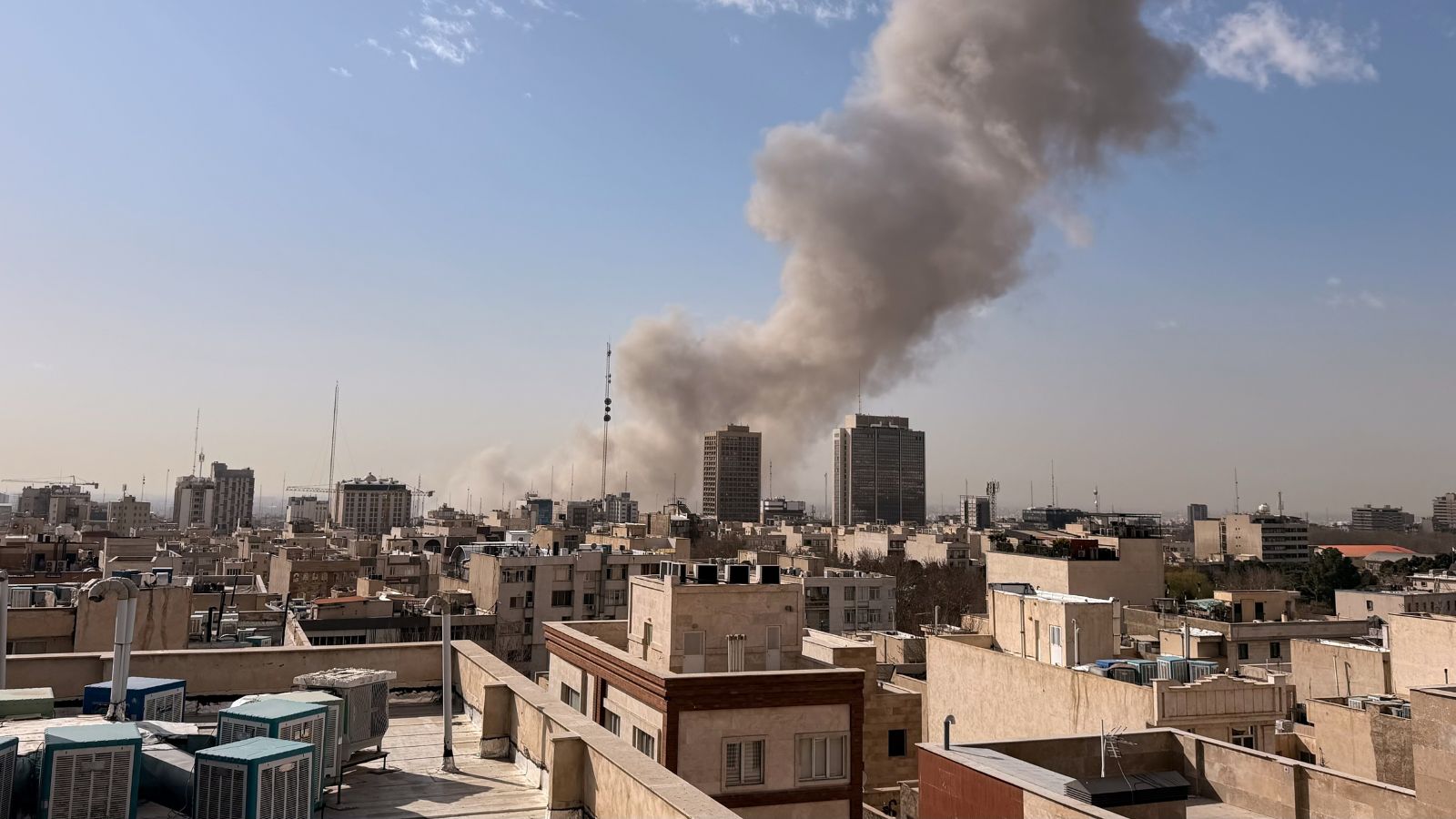
The recent exchange of fire marks a departure from the "shadow war" era into a phase of Direct Overt Engagement. Unlike previous decades where Iran utilized "strategic depth" via proxies—Hezbollah, the Houthis, and various militias—the current cycle involves direct territorial strikes. This shift changes the cost-benefit analysis for both Tehran and Jerusalem.
The Iranian response to Israeli actions is governed by a principle of Calibrated Reciprocity. Every missile launched or drone deployed is measured against the potential for an uncontrolled escalatory spiral. Khamenei’s subsequent public meeting and declarations are the "non-kinetic" half of this strategy. By appearing in a controlled, yet public setting, the leadership communicates two specific messages to the Israeli defense establishment:
- The command-and-control structure remains decentralized and resilient.
- The state is prepared to absorb a certain level of kinetic cost without altering its long-term regional objectives.
The "big announcement" often referenced in state media during these times usually centers on "national strength" or "punitive measures." From a strategic consulting perspective, these are Rhetorical Deterrents. They lack the immediate impact of a ballistic missile but provide the necessary domestic narrative to avoid the appearance of weakness, which is the most dangerous currency in autocratic governance.
The Internal Legitimacy Buffer
The Iranian government faces a dual-front challenge: external military pressure and internal socio-economic friction. The visibility of the Supreme Leader is a tool used to reinforce the Pillar of Ideological Cohesion.
- The Information Vacuum: In the immediate aftermath of an attack, an information vacuum is created. If the state does not fill this vacuum with images of its leader, the space is occupied by opposition narratives or foreign intelligence leaks. Khamenei's appearance is a preemptive strike against domestic panic.
- The Loyalty Signal: For the Islamic Revolutionary Guard Corps (IRGC) and the Basij, seeing the Commander-in-Chief active and issuing directives is a "re-enlistment" signal. It stabilizes the rank-and-file who are tasked with maintaining order on the ground.
This creates a Stability Feedback Loop. The more visible the leader remains during a crisis, the lower the perceived risk of internal fracturing, which in turn makes the state appear more formidable to external observers.
Decoding the Strategic Ambiguity of "The Big Announcement"
When the Iranian leadership speaks of a "big announcement" or a "harsh revenge," they are utilizing Strategic Ambiguity. By not defining the timeline, method, or scale of their response, they force the adversary to maintain a high state of alert, which is economically and psychologically draining.
The "cost function" of staying on high alert includes:
- Economic Attrition: The suspension of international flights, the mobilization of reservists, and the halting of normal commerce.
- Psychological Fatigue: Civil populations cannot remain in a state of hyper-vigilance indefinitely without a breakdown in social trust.
- Resource Depletion: Constant operation of air defense systems like the Iron Dome or Arrow 3 incurs massive financial and technical costs.
Iran’s strategy is to win the "war of nerves" by showing that while they may have been hit, their leadership is calm, visible, and planning. This is not "fearlessness" in a vacuum; it is a calculated performance of Resilience Hegemony.
The Mechanism of Deterrence Breakdown
A critical risk in this current cycle is the Threshold Miscalculation. Both Israel and Iran are operating on the assumption that they understand the other's "red lines." However, red lines are dynamic, not static.
The transition from proxy conflict to direct strikes has shortened the Decision Window. In previous years, an attack on an Iranian asset in Damascus might have taken weeks to generate a response. Now, the response time is measured in hours. This compression increases the probability of a "Type I Error" in military intelligence—reacting to a perceived threat that was actually a de-escalatory signal, or vice-versa.
Khamenei’s public stance serves as a "governor" on this engine. By framing the conflict in ideological and long-term terms, he gives his military commanders the "strategic patience" needed to avoid a reflexive, catastrophic overreaction. He is signaling that the Iranian state views this as a marathon of attrition, not a sprint to total destruction.
Geopolitical Constraints and the Role of Global Players
The Iranian leadership's confidence is partially buoyed by the Multipolar Shield. Tehran understands that a full-scale war in the Middle East is a scenario that neither Washington nor Beijing desires.
- The Energy Bottleneck: Any conflict that threatens the Strait of Hormuz would send global oil prices into a vertical climb, triggering a global recession. This provides Iran with a "suicide vest" style of deterrence.
- The Diplomatic Buffer: Russia and China provide Iran with a degree of diplomatic cover in the UN Security Council, ensuring that "maximum pressure" remains primarily a Western policy rather than a global mandate.
Khamenei’s appearance after the attack is a signal to these global players as much as it is to Israel. It says, "We are still the undisputed interlocutors of this territory; you must deal with us."
The Strategic Recommendation for Regional Stability
If the objective is to prevent a regional conflagration, the focus must shift from "punishment" to "equilibrium." The current cycle proves that kinetic strikes do not deter Iran; they merely recalibrate their method of engagement.
The most effective play for the opposition is to target the Connectivity of the IRGC. Instead of symbolic strikes that allow for "bravery" narratives, the strategy should focus on the logistical and financial nodes that allow the Iranian state to project power. However, this must be balanced with a "Golden Bridge"—a clear, non-humiliating path for de-escalation that allows the Iranian leadership to maintain their domestic "face."
The Supreme Leader’s appearance confirms that the Iranian regime currently values Continuity over Chaos. They are not looking for a "final battle" that could end the 1979 project; they are looking to normalize direct engagement as a standard tool of their foreign policy. To counter this, the response must be a systematic degradation of their ability to project power, rather than high-profile attacks that only serve to provide the Supreme Leader with a fresh stage for a public rally.
The final strategic move is to ignore the rhetoric and monitor the Logistical Displacement. If Iranian assets begin moving away from known civilian hubs or if there is a sudden shift in domestic energy allocation, those are the true indicators of a coming escalation—not a televised meeting in Tehran. The visibility of the leader is the curtain; the movement of the IRGC’s hardware is the play. Focus on the play, not the curtain.