Calgary streets turned into a danger zone on a single Tuesday night. Within just a few hours, two separate collisions left three people in the hospital with serious injuries. It’s a pattern we keep seeing. We talk about Vision Zero and improved urban planning, yet the numbers don’t lie. People are getting hit while trying to cross the street in their own neighborhoods.
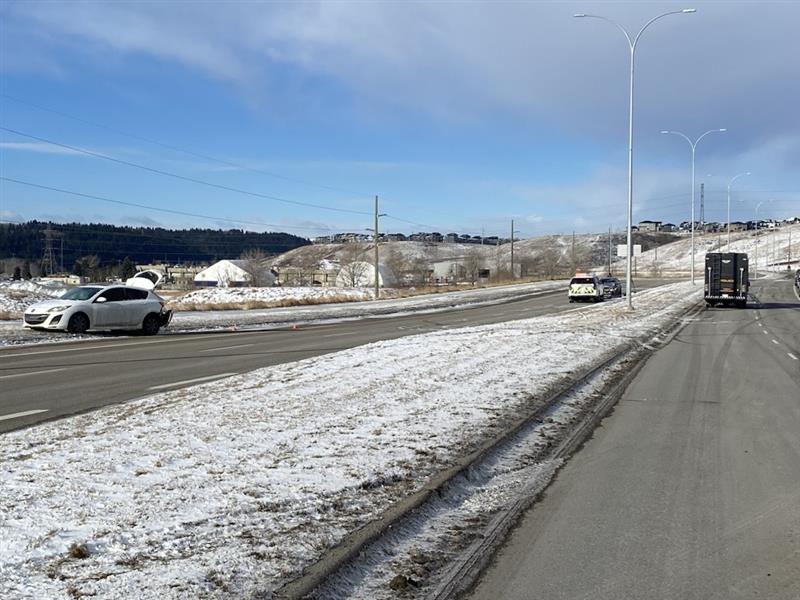
The first incident happened in the city’s southwest. Emergency crews rushed to the intersection of 17th Avenue and 37th Street SW around 6 p.m. A vehicle struck two pedestrians. Paramedics transported both to the hospital in stable condition, but the trauma of a metal frame hitting a human body stays long after the bruises fade. Then, less than three hours later, it happened again. This time in the southeast. A man in his 20s was hit near 52nd Street and 26th Avenue SE. He wasn't as lucky. He ended up in the hospital in serious, life-threatening condition.
The Intersection Problem in Calgary
If you've ever stood at 17th Avenue and 37th Street during rush hour, you know it's a mess. It’s a high-volume area where drivers are often more focused on making their turn before the light changes than looking for someone in the crosswalk. This isn't just a "bad driver" problem. It's a design problem.
When we build roads that prioritize moving cars quickly, we inherently make them less safe for everyone else. The southeast collision at 52nd Street follows a similar narrative. These are wide, multi-lane arterial roads. They feel like highways. Naturally, people drive on them like they're on a highway. When a pedestrian enters that environment, the margin for error is basically zero.
Why 52nd Street SE Is a Danger Zone
The incident involving the young man in his 20s highlights a specific failure in our infrastructure. 52nd Street SE is notorious. It’s a massive North-South corridor that cuts through industrial and residential patches. The lighting often sucks. The distances between marked crosswalks are too long, which tempts people to dash across where they shouldn't.
I’ve seen it a hundred times. A person needs to catch a bus on the other side. The nearest light is a five-minute walk away. They take the risk. If a driver is doing 60 or 70 km/h—or more—they don't have time to react. At those speeds, a collision is almost always catastrophic. The physics are brutal. A human body doesn't stand a chance against two tons of moving steel.
Human Error Versus System Failure
Police often look at these cases and check for "pedestrian error" or "driver impairment." While those factors matter, they don't tell the whole story. We need to stop blaming individual choices and start looking at the environment.
- Poor Visibility: Many Calgary intersections lack "daylighting," which is the practice of removing parking spots near corners so drivers can actually see people waiting to cross.
- Inadequate Signal Timing: If a senior or someone with a disability starts crossing, they often can't finish before the light turns.
- Speed Limits: We lowered residential limits to 40 km/h, but our major collectors and arterials are still built like drag strips.
The Calgary Police Service Traffic Unit is still investigating these two specific crashes. They'll look at dashcam footage. They'll talk to witnesses. But the investigation shouldn't stop at who had the right of way. It should ask why the road allowed this to happen in the first place.
The Real Cost of Hospitalization
When news reports say someone is in "stable condition," it sounds okay. It’s not. It usually means they survived the initial impact but might be facing months of rehab, broken bones, or permanent mobility issues. For the young man in the southeast with life-threatening injuries, the road back is even steeper.
These aren't just stats on a police Twitter feed. They're neighbors. They're people whose lives changed because they tried to cross a street in 2026. The city spent millions on the 17th Ave BRT and various upgrades, yet the conflict points between cars and humans remain deadly.
Immediate Steps for Calgary Pedestrians and Drivers
You can’t wait for the City Council to redesign every road before you leave the house tomorrow. You have to navigate the reality we have right now.
If you're driving, get off your phone. Seriously. Distraction is the leading cause of these "didn't see them" moments. When you're turning at a major intersection like 17th Ave, look twice. Then look again. The "A-pillar" in modern cars—the part of the frame between your windshield and side window—is thick enough to hide an entire human being.
If you're walking, don't assume a green light means it's safe. Make eye contact with drivers. It sounds old-school, but if they haven't looked at you, they don't know you're there. Wear something reflective if you're out after dark in areas like 52nd Street where streetlights are sparse. It shouldn't be your responsibility to stay alive, but until the infrastructure catches up, it is.
The Calgary Police haven't laid charges yet in either of these Tuesday night collisions. They’re still piecing it together. If you saw anything or have dashcam footage from 17th Ave and 37th St SW around 6 p.m., or 52nd St and 26th Ave SE around 8:45 p.m., call the non-emergency line. Your footage might be the only way the victims get any form of justice.
Stay alert. The roads aren't getting any friendlier.