The narrative surrounding California's technology sector has devolved into a lazy, self-congratulating fairy tale. If you read the mainstream tech press, the story of Silicon Valley is a triumphant epic of legislative agility and resilient innovation. They point to the 2024 veto of the draconian AI bill SB 1047, followed by the highly managed, industry-friendly compromise of SB 53—the Transparency in Frontier Artificial Intelligence Act—as proof that the state knows how to protect its golden goose. The consensus tells you that California successfully dodged a bullet, avoided stifling its most valuable startups, and established a "holistic balance" between public safety and cutting-edge progress.
It is a complete delusion. For a different view, read: this related article.
The existential threat to California’s dominance as the global capital of artificial intelligence was never a compliance bill or a heavy-handed politician in Sacramento. The real threat is far more basic, brutally physical, and completely indifferent to software code.
California is running out of juice, and its crumbling, hyper-expensive energy grid is about to starve its tech economy to death. Similar analysis on the subject has been provided by MIT Technology Review.
While VCs and founders spent the last two years high-fiving each other over policy compromises, the physical reality of training and running frontier models has collided with a state power infrastructure that is fundamentally broken. You cannot run a trillion-parameter model on press releases and political goodwill. You need gigawatts. And in California, gigawatts are a luxury item.
The Trillion-Parameter Power Illusion
Let’s dismantle the policy myth first. The tech ecosystem spent millions lobbying against SB 1047 because it feared "kill switches" and catastrophic liability thresholds tied to computing power ($10^{26}$ integer or floating-point operations). When the state pivoted to the softer SB 53 framework, enforcing transparency reports and risk-monitoring protocols rather than outright existential bans, the industry sighed in relief.
This relief is a symptom of extreme nearsightedness. I have watched tech executives pour billions into algorithms while treating the underlying physical infrastructure as an afterthought. They treat the grid like a cloud API—an invisible, infinite resource that just works when you call it.
It doesn’t.
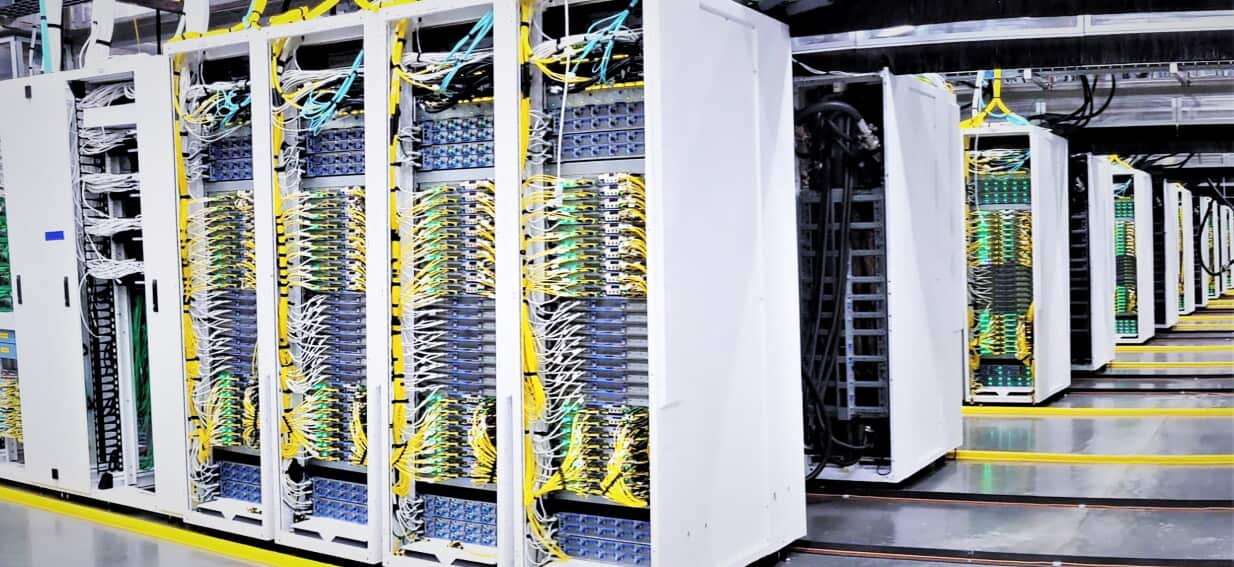
To train the next generation of AI models, data center capacity in California needs to scale exponentially. In Pacific Gas and Electric’s (PG&E) northern territory alone, pipeline demand for new data centers is projected to add 3.5 gigawatts of peak demand. That is a tenfold increase over existing capacity.
To put that in perspective, 3.5 gigawatts is roughly the output of nearly two full-scale nuclear power plants operating at peak capacity.
Where is that power coming from? It isn't. The California Independent System Operator (CAISO) is already balancing on a knife-edge. The state's residential electricity rates have surged to an average of $0.34 per kilowatt-hour, nearly double the national average. For commercial and industrial buyers, the wholesale market is a volatile nightmare. Peak-period power spreads are projected to skyrocket to $240–$270/MWh by 2030 due to massive load growth across the Western Interconnection.
The industry bragged about beating a bad AI bill, but they are losing the far more critical war for electricity.
The True Cost of Green Mandates
The lazy consensus blames California's energy crisis entirely on wildfire liabilities. It’s true that PG&E’s billions in liabilities and subsequent bankruptcy reorganization forced massive infrastructure costs onto ratepayers. But the deeper, unmentionable bottleneck is the state's aggressive clean energy mandate.
Under SB 100, California is legally committed to achieving 100% clean electricity by 2045. To meet this, the state has aggressively decommissioned natural gas peaker plants and traditional baseload generation, replacing them with massive solar arrays and utility-scale battery storage.
This looks phenomenal on a corporate ESG brochure. In practice, it creates a fatal mismatch for AI infrastructure.
AI training workloads are not intermittent; they are massive, steady, 24/7 baseload monsters. They require constant, unyielding power. Solar generation creates a massive supply glut during the midday hours, cratering wholesale prices to near zero. But when the sun goes down, solar production drops off a cliff precisely when residential time-of-use demand and electric vehicle charging spikes.
To bridge this evening gap, California relies on out-of-state power imports and an expensive, fragile network of lithium-ion batteries. With the federal Bureau of Reclamation projecting up to a 40% cut in hydropower output from the Hoover Dam due to ongoing water scarcity, the state is losing its most reliable, low-cost clean baseload. The replacement power comes from the highly volatile wholesale spot market, driving costs into the stratosphere.
If you are an AI infrastructure provider, looking at California’s energy landscape means accepting three brutal realities:
- Your power costs will be 70% to 100% higher than if you built in Ohio, Texas, or Virginia.
- Your expansion plans will face years of bureaucratic delays as PG&E struggles to upgrade transmission lines and substations.
- You risk facing severe curtailment or public backlash during summer grid emergencies when the state prioritizes keeping residential air conditioners running over training your LLM.
Why the "Remote Compute" Cop-Out Fails
The standard counter-argument from Silicon Valley apologists is simple: We don’t need to build the data centers here. We can design the models in Palo Alto and train them in the Midwest or the Pacific Northwest.
This argument ignores the reality of latency, data gravity, and modern corporate engineering.
Yes, the physical clusters can be built elsewhere—and they are being built elsewhere at a staggering pace. But when you decouple the physical infrastructure from the talent cluster, the nature of the ecosystem shifts. I have seen companies blow tens of millions trying to manage massive, multi-modal model training pipelines across geographically fractured teams and remote infrastructure. The friction is real.
More importantly, data gravity is a powerful economic force. Where the data centers go, the infrastructure engineers, the hardware specialists, and eventually the venture capital follow. When Microsoft, Google, and Meta decide to build their next multi-billion-dollar clusters in Virginia, Iowa, or Texas because those states can actually guarantee 500 megawatts of continuous power, California loses its status as the gravity well of the industry.
California is effectively exporting its most valuable commodity—the computing infrastructure of the future—because its state regulators cannot figure out how to build a transmission line.
Dismantling the Premise of "Safe AI"
People frequently ask: How can California regulate AI safety without driving companies out of the state?
The question itself is completely flawed because it assumes regulations happen in a vacuum. It assumes that if a company leaves, it’s because they are throwing a tantrum over an audit requirement or a whistleblower protection law.
The reality is a calculated trade-off. A technology company might tolerate California’s aggressive regulatory environment, its high corporate taxes, and its astronomical cost of living if—and only if—the state offers an unparalleled ecosystem that cannot be replicated anywhere else.
But when the state fails to deliver the absolute baseline requirement of industrial civilization—cheap, reliable, abundant electricity—the math changes instantly. The regulatory friction of laws like SB 53 ceases to be a minor cost of doing business and becomes the final straw.
A developer can handle filling out transparency reports. What they cannot handle is an electricity bill that eats their entire operating margin, or a five-year waiting list just to get a grid connection for a new cluster.
The Downside of Moving Out
Let’s be brutally honest about the alternative. Leaving California isn't a magical cure-all. If an AI startup packs up and heads to Texas or Virginia, they enter markets with their own deep structural flaws.
The Texas ERCOT grid is a volatile wild-west experiment that has proven remarkably fragile during extreme weather events. Northern Virginia, the data center capital of the world, is facing its own severe transmission bottlenecks as local utilities struggle to keep pace with the sheer volume of power demanded by corporate tech campuses.
Furthermore, leaving California means exiting the densest concentration of elite machine learning talent on the planet. For a seed-stage startup, proximity to that talent pool is worth the premium.
But for growth-stage companies and tech giants scaling up to frontier models, the physical constraints override the talent benefits. You can hire remote engineers or fly them into Austin; you cannot download a power substation.
The Actionable Verdict for Tech Leadership
Stop celebrating the watering down of SB 1047. Stop believing that a compromise on AI safety policy means California is safe for tech innovation. The legislative theater is a distraction from a catastrophic failure of basic physical infrastructure.
If you are building a venture-backed tech company or managing an enterprise AI roadmap, you must completely re-engineer your geographic strategy:
- De-risk the California Grid Immediately: Treat California solely as a design and management hub. Do not commit capital to local physical infrastructure under the assumption that the state's grid capacity issues will be solved by 2030. They won't.
- Audit Your Co-location Providers on Power Firmness: If you are renting compute within California, demand transparent data on your provider's power purchase agreements (PPAs). If they are relying on unhedged CAISO spot market power or intermittent solar without dedicated battery backup, your margins are exposed to extreme price spikes during the peak summer months.
- Build Infrastructure Relationships Directly with Basements: Look to regions that possess true baseload abundance—specifically those with dedicated nuclear or deep, stable natural gas reserves coupled with proactive, pro-growth utility commissions.
The future of technology belongs to whoever can secure the power to run it. California chose to spend its political capital arguing over hypothetical AI doomsday scenarios while its actual energy grid degraded into a real-world bottleneck. The golden goose isn't leaving because it's angry; it's leaving because the lights are going out.